
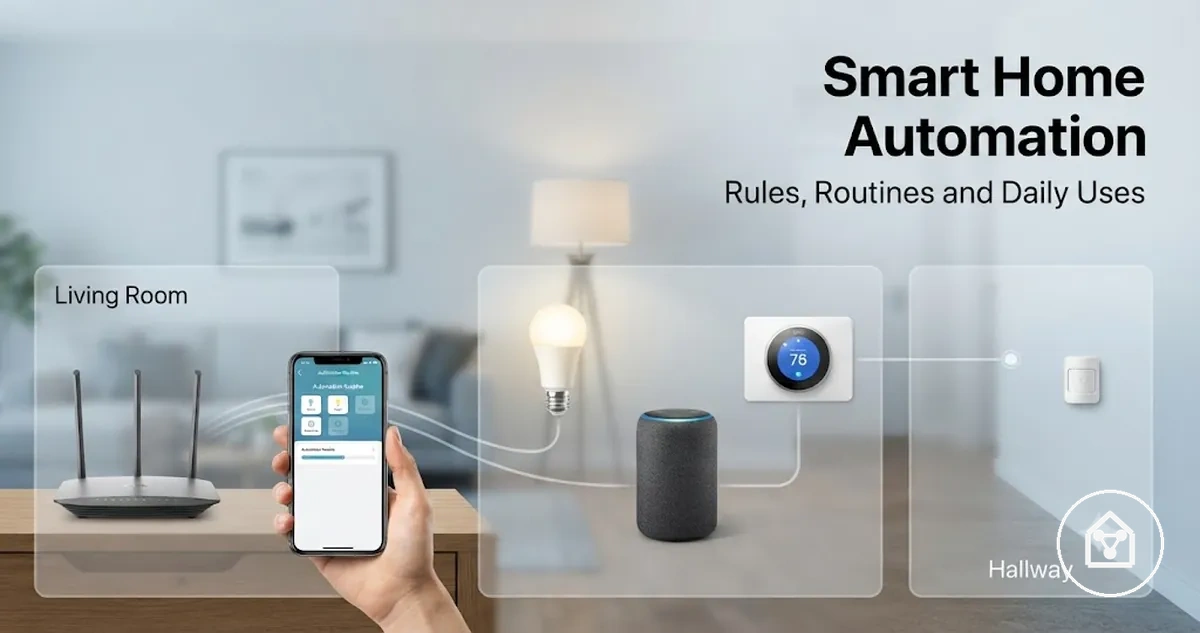
Smart Home Device Automation for Everyday Use
Smart home device automation is a way for connected devices to respond to configured rules, routines, scenes, sensors, schedules, and manual controls during everyday activities. Unlike simple remote control, automation uses a defined trigger or condition to produce a device response without requiring a separate command each time. This makes automation a rule-led form of connected device behaviour.
This makes automation a rule-led form of connected device behaviour.
For example, a smart home routine can use a schedule to activate a lighting response at a chosen time or use a sensor input to trigger a connected device action when the configured condition is met. These everyday uses show how automation connects household situations with repeatable device responses.
These everyday uses show how automation connects household situations with repeatable device responses.
Smart home device automation is shaped by the platform, connected devices, connectivity conditions, and user configuration. The same automation idea can operate differently depending on device compatibility, available controls, and the environment where the devices are used, so reliability depends on how the connected system is configured rather than on automation alone.
Smart home device automation is shaped by the platform, connected devices, connectivity conditions, and user configuration.
Understanding this daily-use meaning provides the foundation for examining how rules, routines, scenes, sensors, schedules, and manual controls create different automation behaviours.
Table of Contents
What smart home device automation means in daily use
Smart home device automation is a system where connected devices act from configured triggers, schedules, routines, or manual scenes to create a specific device response. The automation relationship follows a simple sequence: a trigger starts the process, a condition determines whether the rule applies, and an action changes the connected device behaviour.

For example, a smart home device automation routine can use a motion sensor as a trigger, a time schedule as a condition, and a light change as the action when the configured rule is supported by the connected system. This differs from smart home devices hub control through an app, where a person sends a manual command instead of activating a predefined automation rule.
Smart home device automation depends on the connected devices and the platform supporting the required trigger, condition, and action functions.
Smart home device automation depends on the connected devices and the platform supporting the required trigger, condition, and action functions. A routine can only perform the intended response when the device capabilities and platform controls match the automation logic being configured.
How automation rules, routines, and scenes work
Automation rules, routines, and scenes are connected control patterns that define how smart home device automation responds to inputs, conditions, and actions. Rules create condition-led automation, routines create repeated patterns for everyday behaviour, and scenes group multiple device commands into a single control pattern.
Each automation pattern uses an input, a condition or timing factor, and an output through platform logic.
Each automation pattern uses an input, a condition or timing factor, and an output through platform logic. Sensors, schedules, timers, buttons, or app commands can provide the input, while the configured condition determines when the connected device response occurs.
The table below organises how automation rules, routines, and scenes work by control pattern, input, condition or timing, and device output.
For example, a routine may repeat a scheduled lighting change at a chosen time, while a scene may combine several device actions into one manual command from a button or app. The table below organises how automation rules, routines, and scenes work by control pattern, input, condition or timing, and device output.

| Control pattern | Typical input | Condition or timing | Device output |
|---|---|---|---|
| Rule | Sensor event or app command | Configured condition is met | Connected device action |
| Routine | Schedule, timer, or repeated command | Specified time or recurring condition | Repeated device behaviour |
| Scene | Button or app command | Manual activation | Grouped device actions |
| Schedule | Clock-based input | Selected time or recurring period | Timed device response |
| Timer | Countdown or delay setting | Defined duration | Delayed device action |
| Button | Physical or app button press | User-triggered command | Assigned routine or scene response |
| Sensor | Detected event or state change | Configured sensor condition | Automated device response |
Triggers, conditions, and actions in automation rules
Triggers, conditions, and actions define how an automation rule processes an input, checks a condition, and creates a device response. The sequence is simple: a trigger starts the rule, a condition filters when it should apply, and an action changes the connected device behaviour.
Triggers, conditions, and actions define how an automation rule processes an input, checks a condition, and creates a device response.
For example, motion detection can act as a trigger, a time of day condition can determine whether the rule runs, and a light change can be the resulting action. A door opening event may also trigger a response, while an occupancy condition can prevent an unnecessary action when the required state is not met.

| Trigger | Condition | Action |
|---|---|---|
| Motion detection | Time of day is after sunset | Light switch activates |
| Door opening | Home is in away mode | Notification is sent |
| Device status change | Required device state is reached | Connected device response starts |
Schedules, timers, and presence-based routines
Schedules, timers, and presence-based routines shape repeated automation behaviour by using time signals or presence signals as inputs. Time-based routines use clock time, countdown timers, sunrise, or sunset schedules, while presence-based routines use occupancy, geofencing, or sensor-based presence conditions when supported by the connected platform.
Schedules, timers, and presence-based routines shape repeated automation behaviour by using time signals or presence signals as inputs.
For example, a lighting routine can use a sunset schedule to create a response at a selected time, while a presence-based routine can respond when an occupancy signal changes. The reliability of a presence-based routine can be affected by sensor behaviour, platform support, and the environment where the routine operates.

The checklist below compares which signal type fits a routine and the limitation to consider.
- Schedule: Best fit for clock time events such as sunrise or sunset routines; limitation: it follows a set time instead of detecting a changing situation.
- Timer: Best fit for countdown timer or delayed actions; limitation: it uses a defined duration instead of recognising a presence signal.
- Presence-based routine: Best fit for occupancy routines using geofencing or sensor-based presence; limitation: the response depends on supported detection and platform conditions.
A practical case where a timer is safer than a presence-based trigger is a device that should stop after a known delay. A countdown timer can follow a fixed duration, while a presence signal may not identify every situation in the same way.
Scenes and buttons for grouped device behaviour
Scenes and buttons create grouped device behaviour by combining multiple device actions into one intentional command. A scene switch, routine button, or manual control can trigger a grouped command that changes connected devices together for a specific room-level behaviour.
Scenes and buttons create grouped device behaviour by combining multiple device actions into one intentional command.
For example, a manual scene can combine lighting and other supported device actions through one button command, while automatic rules can continue responding to their own conditions. This means manual override can provide intentional control without replacing automatic rules that operate separately when their conditions are met.

Button-led scenes are intentional commands, while sensor-led rules are automatic responses. These examples show how a button or scene input can create grouped device behaviour with different room-level outcomes.
Devices that enable smart home automation
Automation devices are functional categories that enable smart home automation by providing coordination, input signals, or controlled outcomes. These devices can be grouped by role, including coordinating devices that manage automation behaviour and input devices that provide signals or conditions for automated responses.
The key distinction is that input devices provide information, while coordinating devices process or apply automation actions.
Controllers, hubs, and platforms can coordinate connected device behaviour when the required support is available, while sensors, timer switches, relays, scene switches, and routine buttons provide signals or manual commands. The key distinction is that input devices provide information, while coordinating devices process or apply automation actions.
The table below maps automation devices by role, signal or condition, and typical automation outcome.
For example, a sensor can provide a motion signal, while a relay can apply a controlled circuit outcome when the automation logic supports that response. The table below maps automation devices by role, signal or condition, and typical automation outcome.
| Device category | Automation role | Signal or condition | Typical outcome |
|---|---|---|---|
| Controllers | Coordinate automation behaviour | Configured signals or conditions | Connected device response |
| Hubs | Coordinate supported connected devices | Device communication or automation logic | Grouped automation behaviour |
| Platforms | Provide automation management functions | User settings or device signals | Automation coordination |
| Sensors | Provide input signals | Motion, state, or environmental condition | Triggered automation response |
| Timer switches | Apply timed control | Clock time or scheduled condition | Timed device operation |
| Relays | Control connected circuits | Automation command or signal | Controlled circuit outcome |
| Scene switches and routine buttons | Provide manual grouped control | Button input or scene command | Multi-device action or room-level behaviour |
Controllers, hubs, and platforms that coordinate automations
A controller, hub, or platform coordinates automation logic by connecting supported devices, signals, and automation responses. These coordinating components help manage device grouping and automation behaviour, with the local job being the coordination of connected devices rather than replacing every underlying device function.
A controller, hub, or platform coordinates automation logic by connecting supported devices, signals, and automation responses.
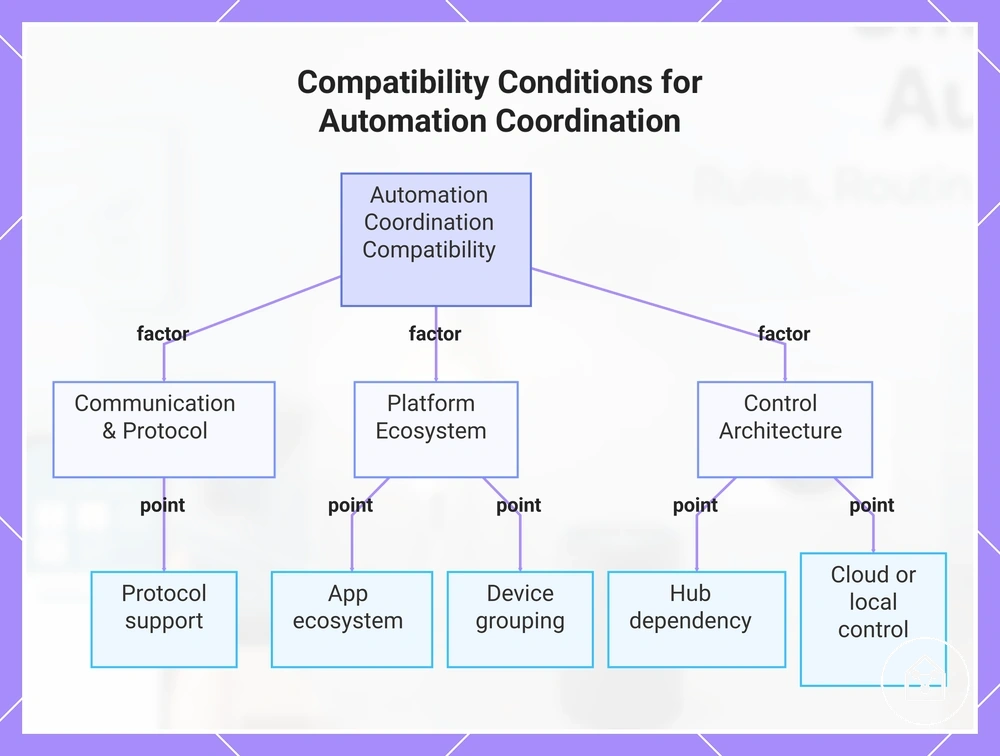
Compatibility depends on factors such as protocol support, app ecosystem, and whether a system uses hub dependency, cloud control, or local control. Checking these conditions helps identify potential limitations before building automations, while deeper network and hub communication details belong to the broader connectivity context.
The checklist below verifies the main compatibility conditions that influence automation coordination.
The checklist below verifies the main compatibility conditions that influence automation coordination.
- Protocol support: Check whether the controller, hub, or platform supports the communication protocol used by connected devices; this influences whether device signals can be coordinated.
- App ecosystem: Check whether the platform provides the required automation controls and routines; this influences available management and grouping options.
- Hub dependency: Check whether connected devices require a coordinating hub or another control method; this influences the system structure and available automation paths.
- Cloud control or local control: Check whether automation relies on cloud services or local processing; this influences reliability under different connection conditions.
- Device grouping: Check whether the platform can group supported devices together; this influences multi-device automation outcomes.
This chart shows the main compatibility conditions to verify when selecting a controller, hub, or platform for automation coordination.
Motion sensors, door sensors, and timer switches as automation inputs
Motion sensors, door sensors, and timer switches act as automation inputs that provide signals for shaping device behaviour. These inputs differ by the type of condition they provide, including movement detection, open or close states, and time-based signals.
Sensor outcomes should therefore be evaluated with the surrounding conditions, power state, and device environment in mind.
A practical example is a motion sensor used for lighting: the same sensor input may create different outcomes depending on placement, delay settings, trigger reset behaviour, and the rule conditions applied. Sensor outcomes should therefore be evaluated with the surrounding conditions, power state, and device environment in mind.
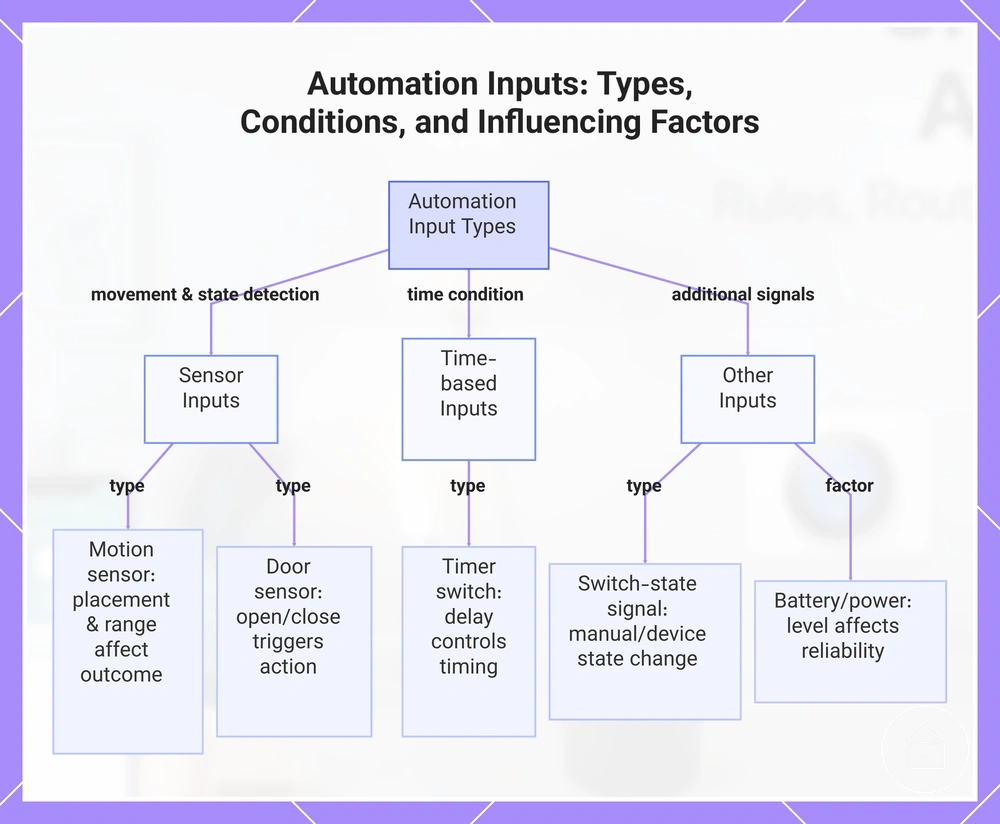
- Motion sensor: Uses detected movement as an automation input; placement and detection range influence the condition being checked and the possible outcome, such as activating a connected light response.
- Door sensor: Uses an open state or close state as an input; the automation condition can create an outcome such as a notification or a device action when the trigger state changes.
- Timer switch: Uses a time input or schedule condition; a configured delay can shape the outcome by controlling when an automation action occurs.
- Switch-state signal: Uses a manual or device state change as an input; the outcome depends on the connected condition and supported automation response.
- Battery or power state: Influences whether an input device can continue providing signals; changes in battery level or available power can affect reliability and expected outcomes.
This chart categorizes the main automation inputs, their condition types, and the battery power factor that affects reliability.
Scene switches and routine buttons for manual control
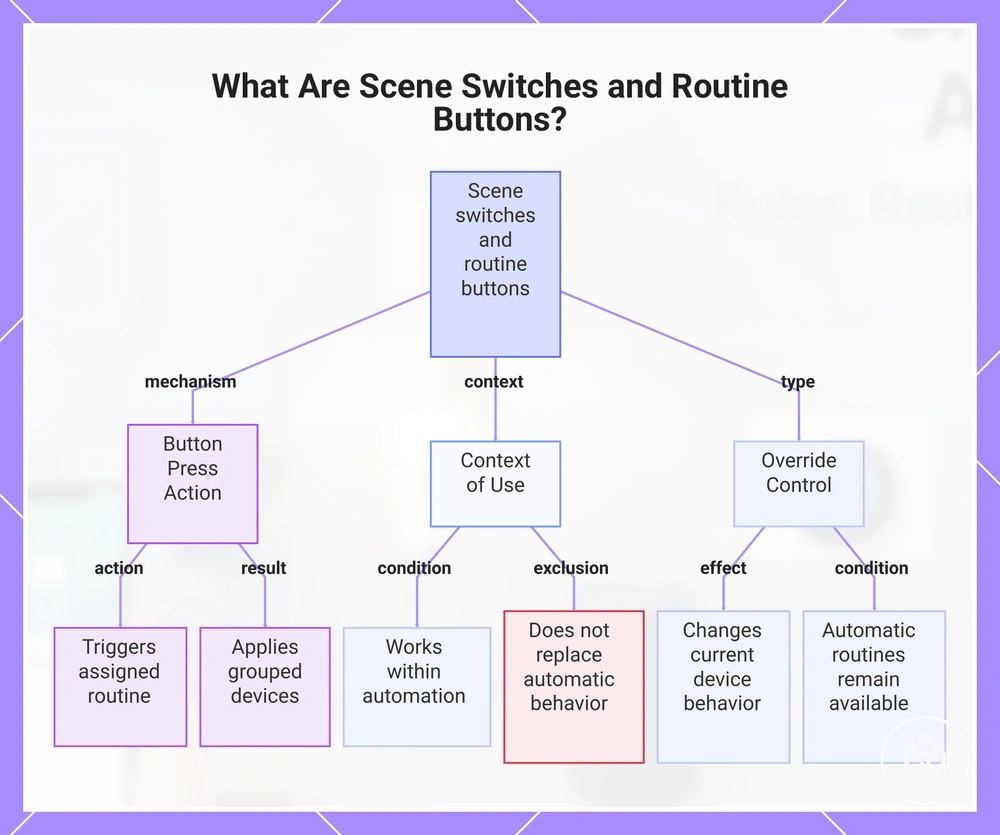
A scene switch and routine button provide manual control by allowing a user to trigger an assigned routine through a button press. This control method works inside automation by adding a deliberate manual trigger for grouped devices without replacing automatic behaviour.
A scene switch and routine button provide manual control by allowing a user to trigger an assigned routine through a button press.
For example, a routine button in a room location can activate an assigned routine when a person wants a specific response without waiting for an automatic trigger. The button press can apply grouped devices according to platform support and the configured routine, providing override behaviour when automatic conditions are inconvenient.
- Room entry: A scene switch at an entry location can use a button press to trigger an assigned routine that controls grouped devices such as supported room lighting.
- Living area: A routine button in a room location can activate a manual control command that applies a selected routine to grouped devices for a planned activity.
- Task shortcut: A button press can trigger an assigned routine for a specific task when a manual trigger is more suitable than an automatic trigger.
- Override control: A scene switch can provide manual control that changes the current device behaviour while automatic routines remain available when their conditions are met.
This chart shows how scene switches and routine buttons provide manual control by triggering assigned routines via button press, and how they work within automation and override behavior.
Everyday smart home automation examples by room and situation
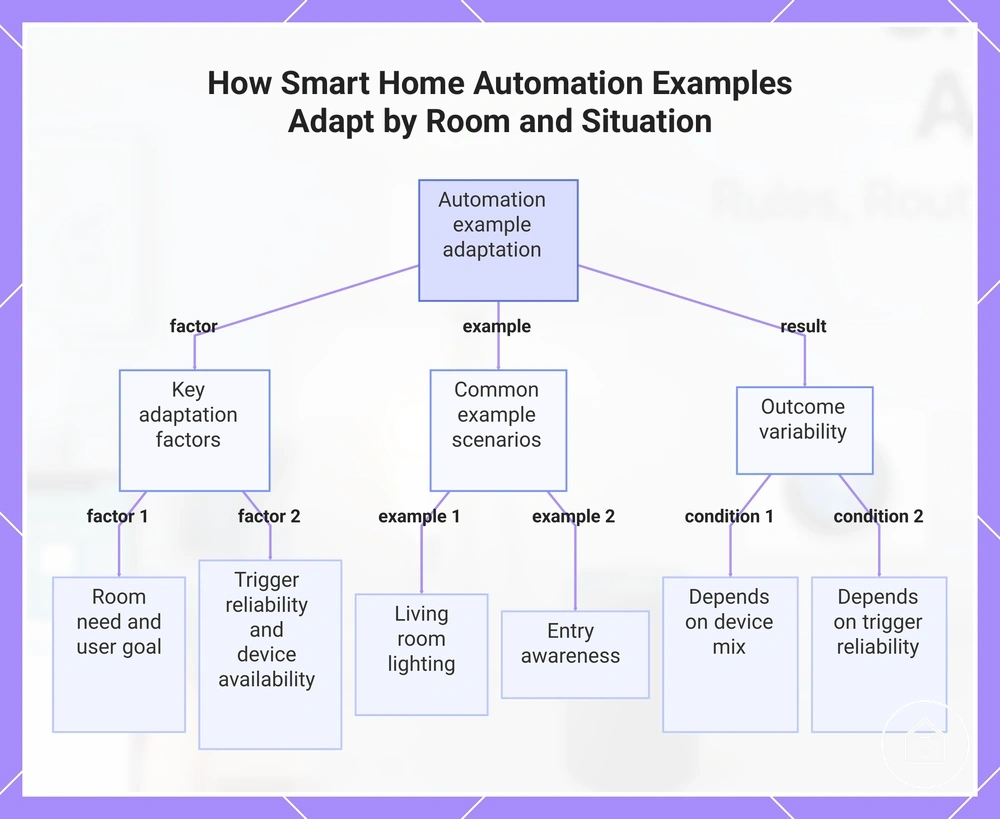
A smart home automation example shows how a room, situation, or user goal can shape device behaviour through a configured routine. A living room, entry area, or daily task may use different automation approaches because the required outcome depends on the household routine and device mix.
Automation examples are adapted by room need, trigger reliability, and device availability rather than copied as fixed templates.
Automation examples are adapted by room need, trigger reliability, and device availability rather than copied as fixed templates. The same routine idea can produce different outcomes depending on the devices connected, the conditions used, and how reliably the automation responds in that situation.
A practical home scenario usually connects a trigger, controlled device, and expected outcome to solve a specific need.
A practical home scenario usually connects a trigger, controlled device, and expected outcome to solve a specific need. For example, a presence-based routine may work differently from a scheduled routine because each depends on different conditions and reliability factors.
- Living room lighting: A room situation may use a schedule or manual trigger to control supported lighting devices, creating a lighting outcome suited to evening use.
- Entry awareness: An entry situation may use a door-related trigger or manual command to control connected devices, creating an awareness outcome such as a notification or lighting response.
- Comfort routine: A comfort use case may use a time or presence condition to adjust supported devices, with the outcome depending on the available device mix and household routine.
- Reminder routine: A reminder situation may use a scheduled condition to create a notification or device response when a household task requires attention.
- Away mode: An away mode routine may use a presence condition to change supported device behaviour, while the outcome depends on how reliably the system identifies the required situation.
- Energy-related routine: An energy-related routine may use schedules and device behaviour rules to organise automation decisions; further considerations are covered in energy use and automation.
Choosing an automation example requires matching the room, situation, and user goal with the available devices and expected reliability. A useful routine adapts to the home scenario instead of assuming one setup will operate unchanged in every household.
A useful routine adapts to the home scenario instead of assuming one setup will operate unchanged in every household.
This chart explains how smart home automation examples are adapted by room, situation, and user goal, showing the key factors, common scenarios, and outcome variability.
Lighting, entry, comfort, and reminder routines
A lighting routine, entry routine, comfort routine, or reminder routine can support everyday convenience by connecting a trigger source with a room context and a device action. These routine examples show comfort and convenience outcomes without assuming the same setup will suit every home.
Each example depends on the available devices, chosen conditions, and household needs.
Each example depends on the available devices, chosen conditions, and household needs. The expected benefit and limitation can change when the trigger source, room context, or device behaviour changes.
- Lighting routine: A hallway or living room may use a motion or schedule trigger source to control lighting as the device action, with the expected benefit of convenient brightness changes; the limitation is that placement and trigger conditions can affect the response.
- Entry routine: An entry area may use a door sensor trigger source to create a device action such as lighting or notification control, with the expected benefit of improved awareness; the limitation is that the outcome depends on the sensor condition and configured routine.
- Comfort routine: A room may use timing or a supported comfort device signal as the trigger source to adjust a comfort device action, with the expected benefit of a more convenient environment; the limitation is that results depend on device availability and household preferences.
- Reminder routine: A workspace or kitchen may use a button, sensor, or schedule as the trigger source to create an alert or reminder device action, with the expected benefit of task awareness; the limitation is that reminders still rely on the selected trigger and context.
- Convenience automation: A room situation may combine a trigger source with grouped device actions to reduce manual steps, with the expected benefit of simpler routines; the limitation is that reliability depends on the device mix and configured conditions.
A reminder routine can be more useful than a fully automatic action when a person needs a prompt before deciding the next step. For example, a scheduled reminder may suit a task where user choice matters more than an automatic device response.
Security, presence, and away-from-home automations
Presence automation and away-from-home automation support awareness routines by using signals such as occupancy status, door activity, and motion detection to influence connected device behaviour. These routines are designed to support awareness through notifications, lighting simulation, and remote status checks rather than act as a dedicated security system.
These routines are designed to support awareness through notifications, lighting simulation, and remote status checks rather than act as a dedicated security system.
For example, an away-from-home routine may use a presence condition to adjust supported lighting behaviour while a home is unoccupied, or use door activity as a trigger source for a notification. These scenarios can provide useful awareness in specific situations, but their outcomes depend on device availability, configured conditions, and the reliability of the selected signals.
- Occupancy signal: A presence routine may use an occupancy signal to adjust supported devices or create a notification; the awareness outcome depends on how the system detects and interprets occupancy conditions.
- Door activity: An entry-related routine may use door activity as a trigger source to create a notification or device action; the limitation is that the response depends on the configured routine and available device support.
- Motion detection: A motion detection routine may use detected movement to influence lighting or notifications; the limitation is that placement and detection conditions can affect the resulting awareness outcome.
- Lighting simulation: An away-from-home automation may use scheduled lighting simulation to create an awareness routine while a home is unoccupied; the limitation is that this supports awareness but does not replace a dedicated security plan.
- Remote status: A presence routine may provide remote status information about supported devices; the limitation is that status awareness does not provide the functions of a dedicated security system.
What devices need before automations work together reliably
Devices need compatible systems, stable connections, and suitable operating conditions before automations can work together reliably. Device compatibility and connectivity are reliability conditions because platform logic, physical placement, and the available device mix determine how well connected devices can coordinate.
Checking connectivity for automation helps evaluate whether connectivity conditions support the intended automation behaviour.
A setup gap may be fixable when a requirement such as hub support, network availability, or routine permissions is missing, while a device limitation may require a different device mix. Checking connectivity for automation helps evaluate whether connectivity conditions support the intended automation behaviour.
Reviewing automation requirements helps separate configuration issues from limitations caused by the selected devices.
Reviewing automation requirements helps separate configuration issues from limitations caused by the selected devices. Checking conditions through set up smart home devices can clarify whether the setup condition, permissions, or device mix needs adjustment before adding more automation routines.
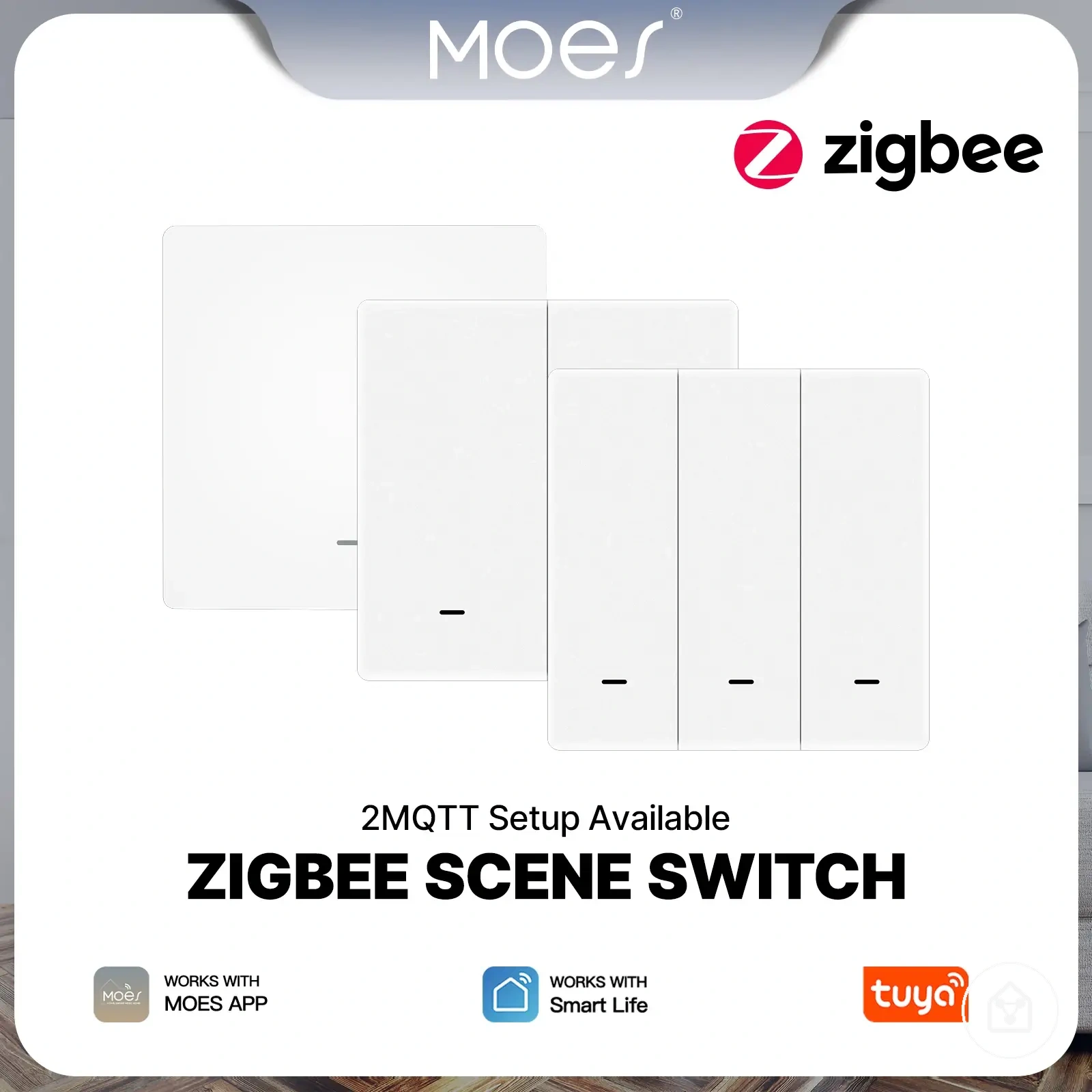
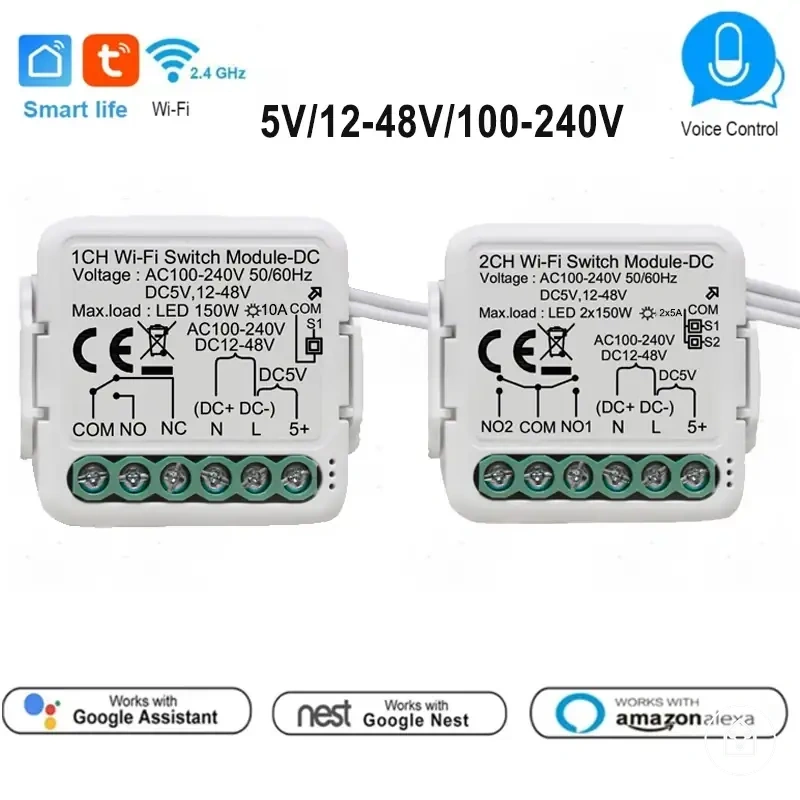
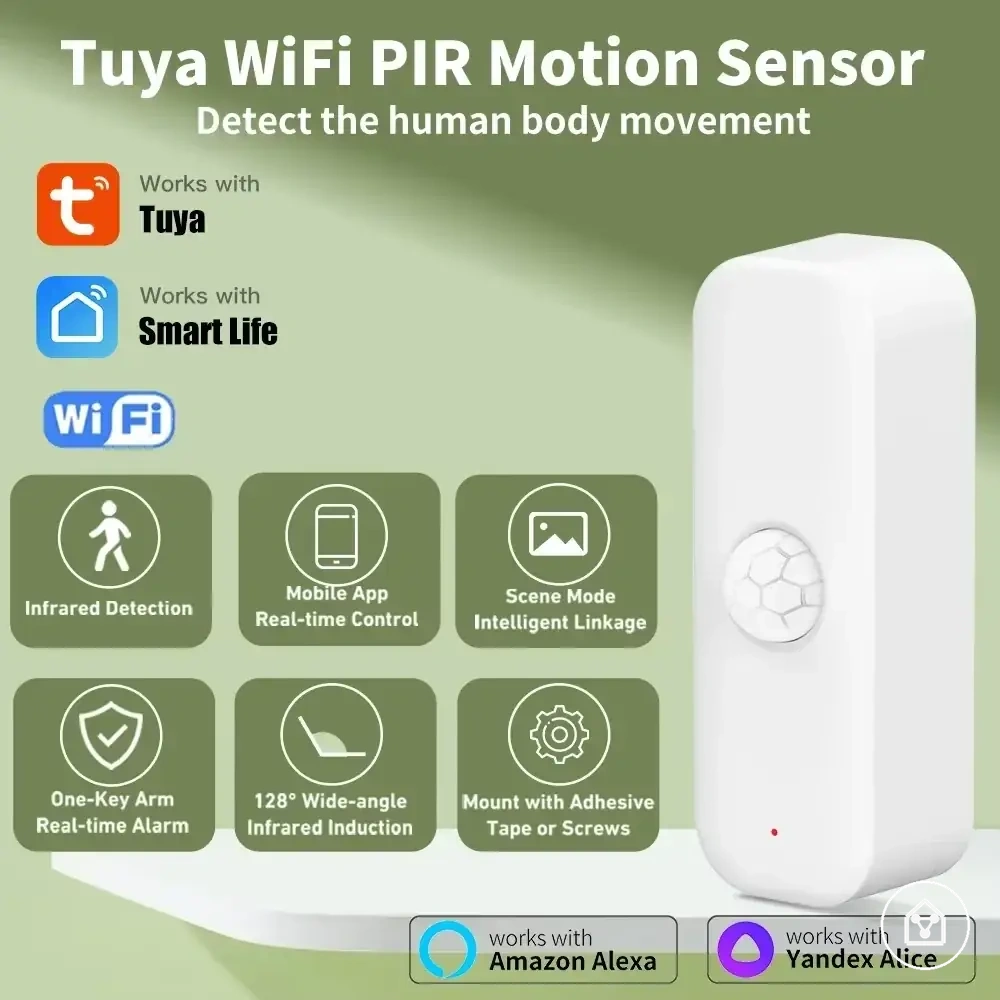
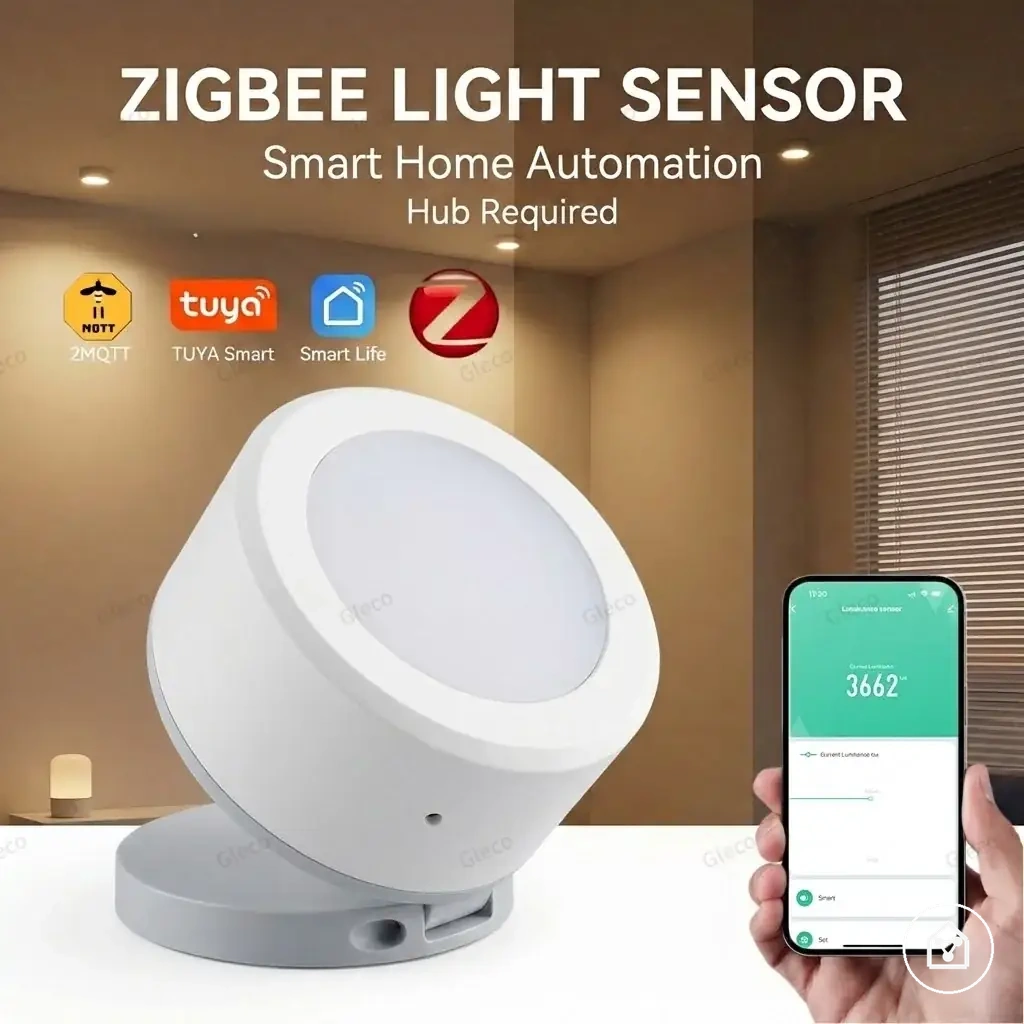
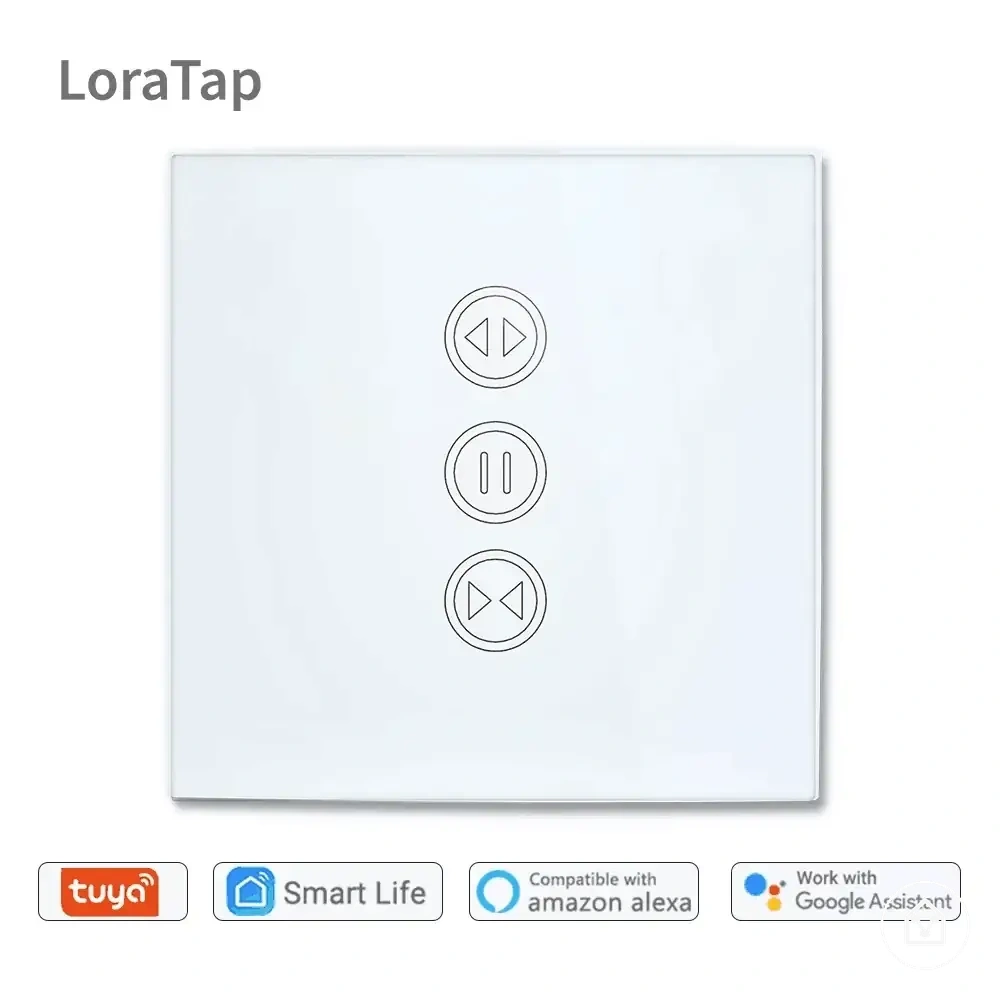
Here are product examples that may make comparison easier.
Here are product examples that may make comparison easier. Before buying, always review the compatibility criteria, essential features, and product details.
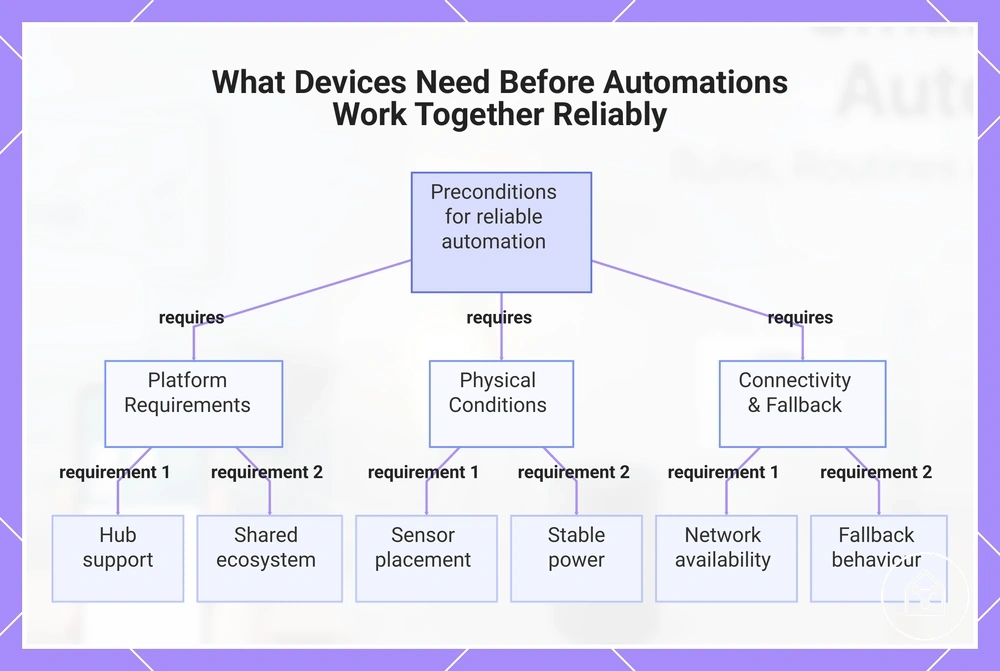
- Hub support: The requirement is a hub or platform that can coordinate supported devices; the condition to verify is whether connected devices can communicate through the available system, which affects automation coordination.
- Shared ecosystem: The requirement is a shared ecosystem for device control; the condition to verify is whether devices can use compatible platform logic, which affects routine creation and grouped device behaviour.
- Sensor placement: The requirement is suitable physical placement; the condition to verify is whether sensors provide the intended input from their location, which affects automation reliability.
- Stable power: The requirement is a stable power state; the condition to verify is whether devices remain available as expected, which affects consistent automation responses.
- Network availability: The requirement is suitable connectivity where required; the condition to verify is whether devices can maintain communication, which affects response consistency.
- Routine permissions: The requirement is correct automation permissions; the condition to verify is whether the platform allows the required actions, which affects whether routines can execute as configured.
- Fallback behaviour: The requirement is a defined fallback response; the condition to verify is how the system handles unavailable conditions, which affects practical reliability.
This chart shows the key requirements devices must meet for reliable automation coordination, grouped into platform, physical, and connectivity categories.
Common automation problems and rule conflicts
Automation problems often appear as rule conflicts where a routine creates an unexpected action or does not respond as expected. Common patterns include rule overlap, duplicated routines, disconnected devices, and mismatches between automation conditions and device states.
Automation problems often appear as rule conflicts where a routine creates an unexpected action or does not respond as expected.
When an automation failure occurs, the symptom, likely cause, and next check can help organise a diagnostic approach without assuming a single platform-specific fix. The table below separates common patterns so a user can identify whether the issue is related to a rule condition, device connection, or another setup factor.
A local rule issue may affect one routine, while a broader device issue may appear across multiple automations.
A local rule issue may affect one routine, while a broader device issue may appear across multiple automations. For example, a duplicated routine may create an unexpected action in one area, while disconnected devices or weak signals may affect several automations at the same time.
| Symptom | Likely cause | First check | What it means |
|---|---|---|---|
| Unexpected action after a trigger | Rule overlap between multiple automations | Check whether more than one routine controls the same device condition | A rule conflict may be causing competing automation responses |
| Repeated or conflicting routine behaviour | Duplicated routines using similar triggers or actions | Review active routines with matching conditions | A duplicated routine may create an unexpected action sequence |
| Device does not respond | Disconnected devices or unavailable connections | Check whether the device is reachable through the automation system | The issue may relate to device availability rather than the rule logic |
| Inconsistent trigger response | Weak signals affecting the automation input | Check the signal condition and relevant device placement | The automation may receive unreliable input conditions |
| Automation runs later than expected | Delayed triggers or timing conditions | Check the configured trigger timing and routine condition | The delay may relate to how the automation processes its conditions |
| Routine does not complete the expected action | App permissions limiting automation access | Check whether the platform has the required app permissions | The routine may not be able to complete the requested action |
| Device state does not match the routine condition | Device state mismatch | Compare the current device state with the automation condition | The rule may be responding to a different state than expected |
If rule review does not explain repeated issues across multiple devices, a broader diagnostic path may be needed. The automation conflicts and fixes guidance provides a separate troubleshooting context for wider automation problems.
Offline devices, weak connections, and delayed triggers
An offline device, weak connection, or delayed trigger can indicate a local automation reliability issue caused by different connection, power, or timing conditions. These symptom groups should be checked separately because an offline state, signal issue, and delayed response can have different likely causes.
These symptom groups should be checked separately because an offline state, signal issue, and delayed response can have different likely causes.
The first checks should identify whether the problem relates to the device online state, connection path, or trigger timing before changing multiple settings. A diagnostic checklist helps separate possible causes such as hub reachability, router reachability, sensor battery, cloud latency, distance, and interference.
- Offline device: Check the device online state and app status to confirm whether the device is reachable; this indicates whether the issue may relate to an offline state or connection gap.
- Weak connection: Check hub reachability, router reachability, distance, and possible interference; this indicates whether the signal path may be affecting communication reliability.
- Delayed trigger: Check the trigger timing, latency conditions, and trigger reset behaviour; this indicates whether the delayed response may relate to processing time or timing conditions.
- Sensor battery: Check the sensor battery and power state when sensor responses become unreliable; this indicates whether reduced power availability may affect the automation input.
- Cloud latency: Check whether the automation uses cloud communication and whether delays occur during the connection path; this indicates whether latency may be affecting the response time.
- Distance: Check the distance between connected devices and their communication points; this indicates whether physical separation may contribute to a weak connection.
- Interference: Check the surrounding environment for conditions that may affect the signal; this indicates whether interference may be influencing the connection quality.
If repeated connectivity failures continue after local checks, broader troubleshooting may be needed because the issue may involve a wider connection condition rather than one device or trigger setting.
Overlapping routines, duplicated rules, and unexpected actions
Overlapping routines and duplicated rules can create unexpected actions when multiple automation conditions control the same device or situation. These rule-design conflicts are often caused by duplicated logic, duplicate triggers, or conditions that allow competing routines to run.
A conflict check should identify the pattern behind the unexpected action before changing the automation setup.
A conflict check should identify the pattern behind the unexpected action before changing the automation setup. The table below separates common rule conflicts, what to review, and safer adjustments that preserve useful routines.
| Conflict pattern | What to check | Safer adjustment |
|---|---|---|
| Duplicate triggers | Check whether multiple routines use the same trigger and create the same unexpected action | Review the trigger conditions and narrow the routine scope when the same event activates competing rules |
| Conflicting actions | Check whether different routines apply competing device actions in the same situation | Adjust the conditions or timing so each action applies only in its intended context |
| Scene overrides | Check whether a scene override changes a device state that another routine also controls | Review how scene commands interact with automated conditions and manual control interactions |
| Time windows | Check whether routines have overlapping time windows that allow multiple responses | Refine the schedule conditions so routines operate within separate intended periods |
| Condition gaps | Check whether a missing condition allows a routine to run in situations where it is not needed | Add a narrower condition when additional context is required before the action occurs |
| Manual control interactions | Check whether manual device changes conflict with automated routines | Review the rule conditions to define how manual actions should affect later automation behaviour |
A practical example is a lighting routine that activates after motion while another routine changes the same light during a scheduled period. Narrowing the motion rule to a specific time window or condition may reduce the conflict without removing the automation.