Energy Monitoring Smart Plug Safety for Load Limits and Appliance Ratings
Energy monitoring smart plug safety depends on matching the plug's rated load, power rating, appliance demand, socket condition, and real operating conditions. A smart plug should remain within its load limit because exceeding the rated capacity can increase the risk of overload or overheating. This creates a safety decision based on ratings and usage conditions before choosing a monitoring option.
When an appliance is connected through an energy monitoring smart plugs setup, the amp rating, wattage, voltage label, and appliance load need to be considered together. A plug-level monitor may provide usage information, but monitoring data does not replace electrical limits or the need to match the rating with the appliance demand.
Problems such as overload, overheating, or unsuitable appliance demand can occur when the smart plug, connected equipment, and surrounding conditions are not properly matched. Understanding the power rating, safety margin, protection features, and warning signs helps prepare a safer decision process before examining load ratings in more detail.
How load ratings define safe energy monitoring smart plug use
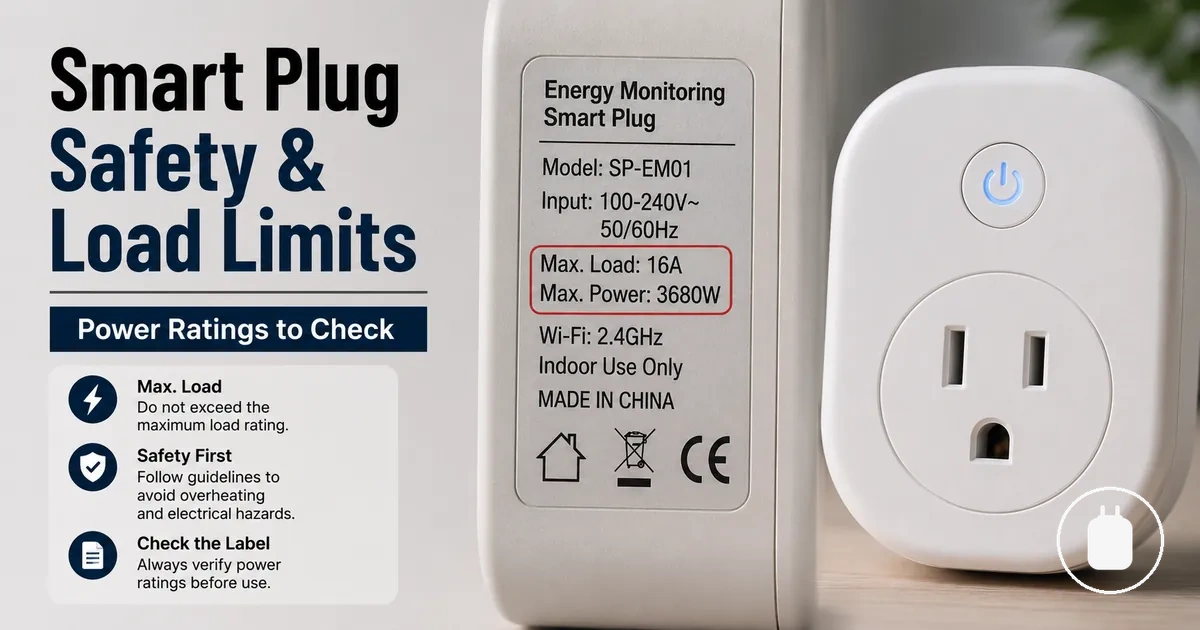
A smart plug load rating defines the limit for the connected appliance demand and helps determine how the smart plug can be used within its rated conditions. The load rating connects the smart plug label, rated current, maximum wattage, and voltage information to the risk of overload or overheating. The rating sets the boundary for the electrical load the smart plug is designed to handle.
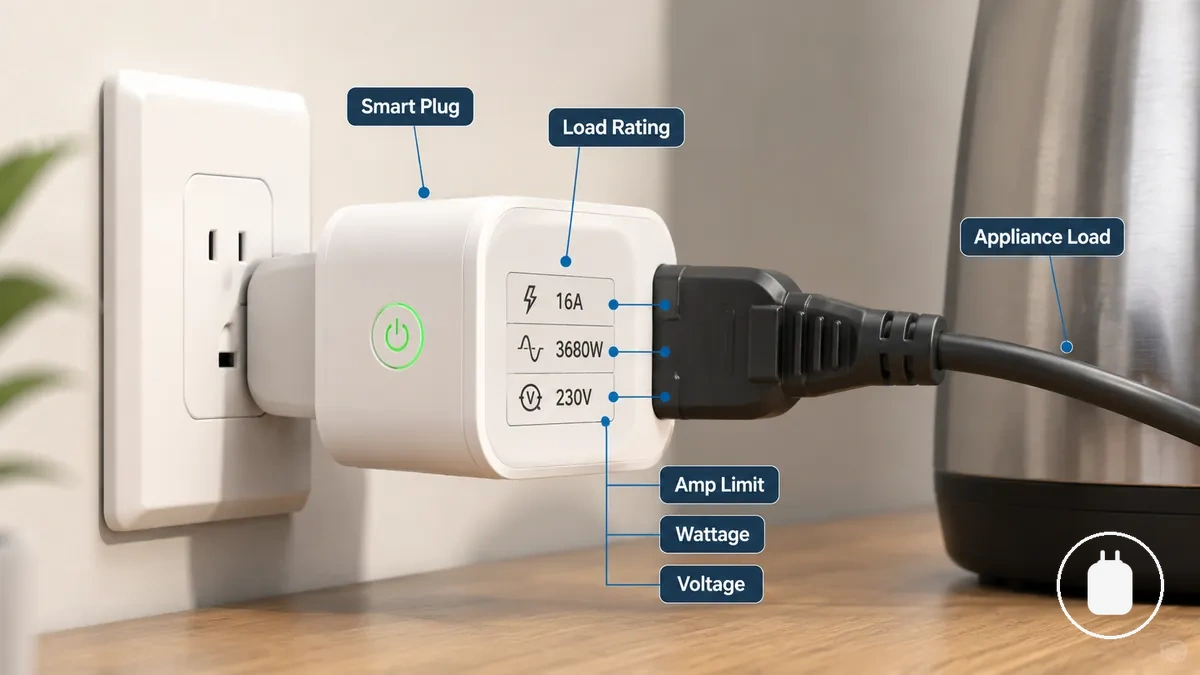
A connected appliance creates an appliance load that needs to be considered against the smart plug power rating. For example, an appliance with higher demand may require closer attention to the rated load shown on the smart plug label before connection. This relationship between appliance demand and the plug rating helps explain why the load conditions matter.
Energy monitoring smart plugs provide measurement information, but measurement does not replace electrical safety limits. If the connected appliance demand does not match the smart plug rating conditions, the setup may increase the risk of overload or overheating, so the load rating should be treated as a safety boundary rather than a universal compatibility guarantee.
Amp, wattage, and power rating labels before buying
An energy monitoring smart plug should be checked through its power rating label before buying or use, because the label fields show the electrical conditions that need to be considered. The amp rating, wattage rating, voltage, and appliance label information help connect the smart plug rating with the expected appliance demand.
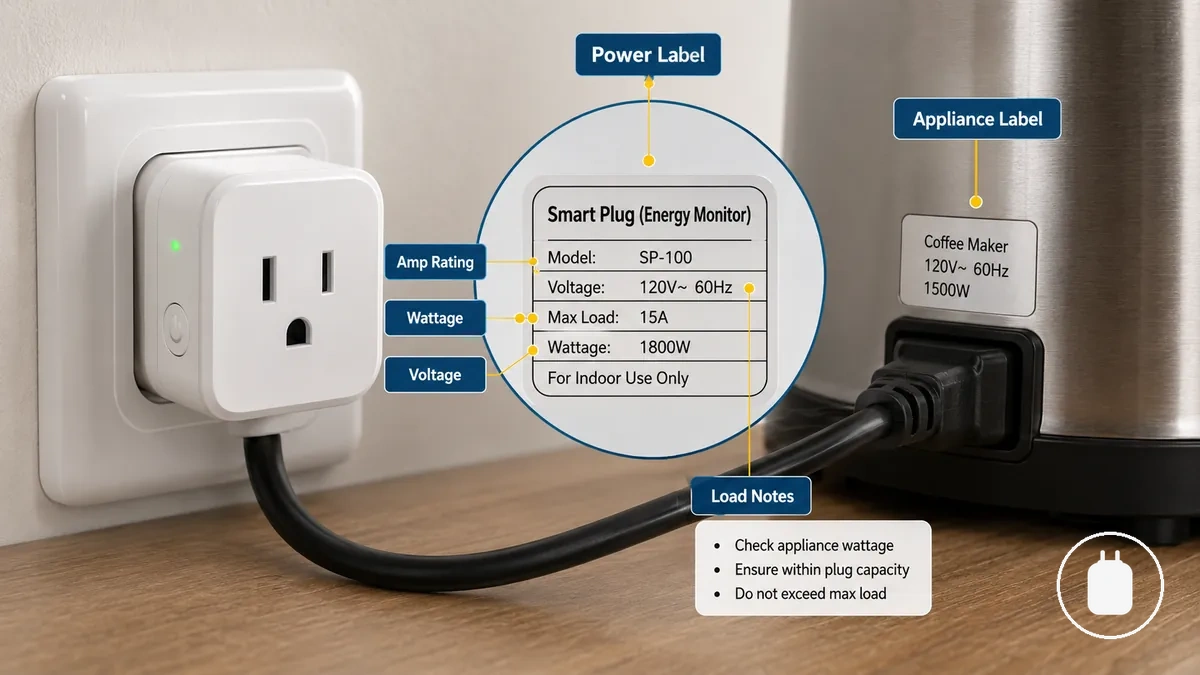
The power rating label provides specific fields that support a safer decision process. The amp rating, rated current, and maximum wattage show the stated limits, while manufacturer load notes and the certification label can provide additional information to review before making a choice.
Label checks become more useful when they are compared with the appliance label and intended conditions of use. The buying checklist can help organize these criteria alongside other selection factors after the relevant rating details have been reviewed.
If a calculation is used to understand the relationship between voltage and wattage, it should remain a qualified example based on the available label information. The result does not replace appliance guidance, local safety requirements, or the need to verify the smart plug rating conditions.
| Label item | What to check | Why it matters | Safe decision cue |
|---|---|---|---|
| Amp rating | Rated current shown on the label | Shows the current rating information for the smart plug | Compare with appliance demand |
| Wattage rating | Maximum wattage information | Shows the stated power limit on the label | Review against appliance requirements |
| Voltage | Voltage information on the label | Provides electrical context for rating decisions | Check the relevant operating conditions |
| Certification label | Visible certification information where provided | Provides additional product information to review | Consider with other safety checks |
| Manufacturer load notes | Usage limitations and guidance | Highlights additional conditions for consideration | Follow stated limitations |
10A, 15A, 16A, and 20A rating differences
Amp rating differences describe how energy monitoring smart plugs can vary in their stated current capacity, but an amp rating alone does not approve a specific appliance connection. Values such as 10A, 15A, 16A, and 20A need to be considered with voltage, approximate wattage, load type, and the conditions shown on the product label.
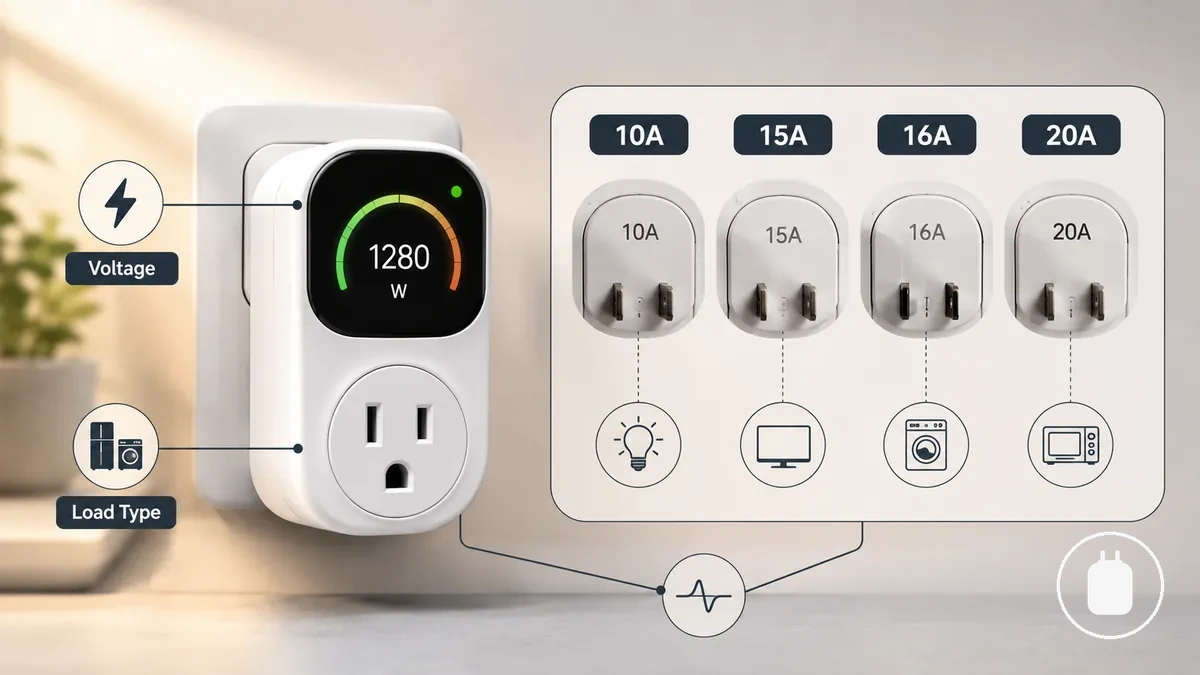
A rating difference can indicate a different stated current level depending on the product label and local plug standard. The final decision depends on the smart plug label, appliance label, and operating conditions that affect the load type and available safety margin.
| Amp rating | Approximate wattage context | What it may indicate | What to verify |
|---|---|---|---|
| 10A | Depends on voltage conditions | A stated amp rating for the smart plug | Check product label and appliance demand |
| 15A | Depends on voltage conditions | A different current rating level | Confirm local plug standard and label details |
| 16A | Depends on voltage conditions | A stated amp rating that may affect load decisions | Review appliance label and operating conditions |
| 20A | Depends on voltage conditions | A higher stated amp rating that still requires verification | Consider load type and safety margin |
Continuous load, peak load, and safety margin
Continuous load and peak load affect energy monitoring smart plug safety because steady running wattage and short startup surge conditions create different demand patterns. A continuous load represents ongoing appliance demand, while a peak load represents a temporary increase that can affect the available rating margin and overload risk.
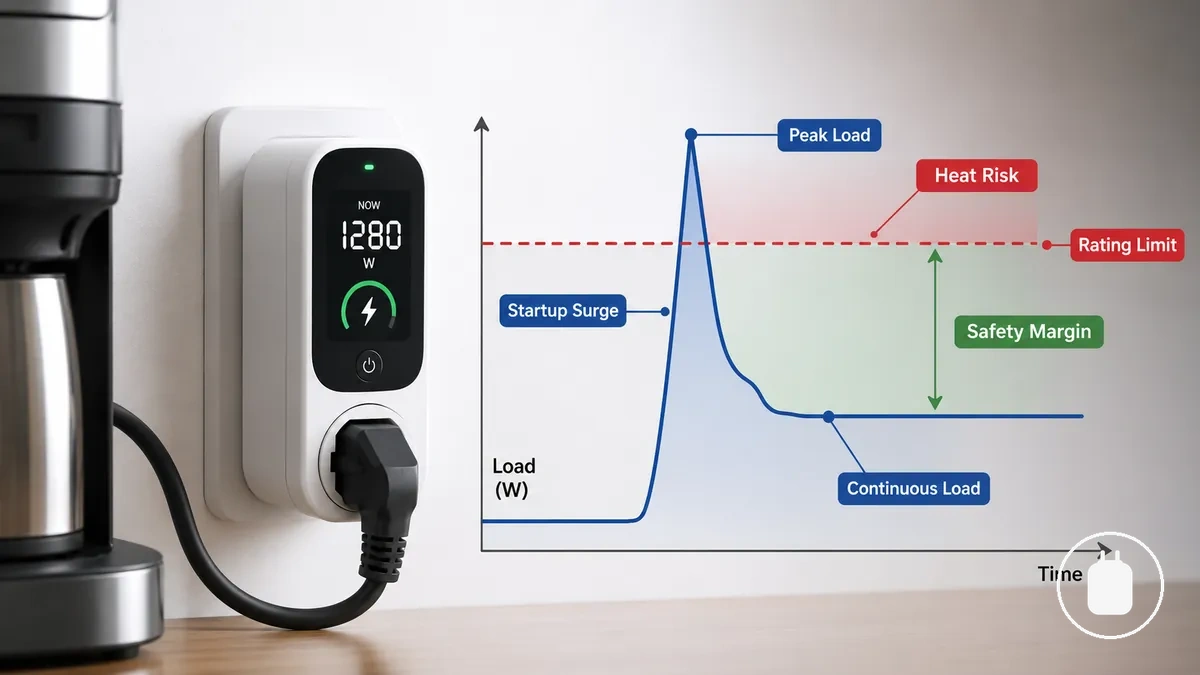
When appliance behaviour changes, the smart plug rating, heat buildup, and operating conditions need to be considered together. A safety margin depends on the manufacturer limit, appliance characteristics, and the specific setup, so it should be treated as a conditional decision rather than a fixed value.
Continuous load, peak load, and safety margin checks can help identify how demand relates to the smart plug rating. Review these conditions before use:
- Running load: Consider the running wattage created during normal operation and how it relates to the available rating conditions.
- Peak load: Consider startup surge and other short bursts that may temporarily increase demand.
- Runtime: Review how long the appliance operates because extended demand can contribute to heat buildup.
- Heat conditions: Consider outlet condition and surrounding factors that may increase overload risk.
- Manufacturer notes: Follow the stated limits and guidance provided for the smart plug.
Resistive and inductive loads in smart plug safety
Load type changes how a smart plug power rating should be interpreted because resistive load and inductive load create different operating conditions. A resistive load, such as a heater, is associated with steady draw, while an inductive load, such as a motor or compressor, may involve startup current and switching stress that affect rating interpretation.
Appliance behaviour can change the meaning of a rating during real use. A motor or compressor may create different demand patterns from a heater, so the smart plug rating, appliance design, and manufacturer guidance need to be considered together when reviewing load compatibility.
Electrical load compatibility and ecosystem compatibility are separate checks. The load type relates to safety conditions around the connected appliance, while app or platform-related features should be reviewed separately through compatibility information.
Resistive and inductive loads can be compared by their main load characteristics:
| Load type | Safety consideration |
|---|---|
| Resistive load | Relates to steady draw conditions, where heat and rating interpretation depend on the connected appliance and setup. |
| Inductive load | Relates to motor or compressor behaviour, where startup current and switching stress may affect rating interpretation. |
Appliances that raise overload or overheating risk
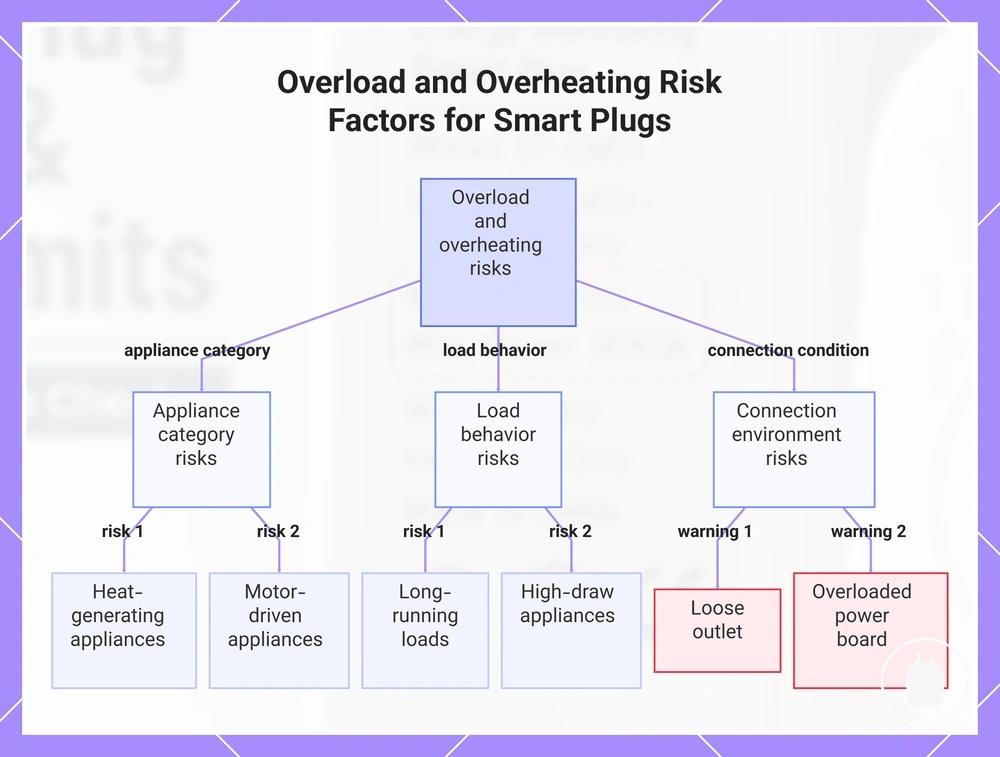
High-draw appliances can create higher overload or overheating risk for a smart plug when their load behaviour, runtime, or surrounding conditions do not align with the plug rating. The risk depends on the appliance category, appliance load, and conditions such as heat production, socket condition, and operating environment.
Heat-generating appliances, motor-driven appliances, and long-running loads can create different demand patterns for an energy monitoring smart plug. A heater may involve sustained heat output, while a motor-driven appliance may involve changing load behaviour, so the smart plug rating and appliance characteristics should be considered together.
Risk conditions can also come from the connection environment rather than the appliance category alone. A loose outlet, enclosed space, or overloaded power board may increase concern around safe use conditions, which is why appliance categories should be reviewed through risk patterns instead of treated as a fixed approval list.
Common risk patterns to review include:
- Heat-generating appliances: Heat output and runtime can affect how the appliance load relates to the smart plug rating conditions.
- Motor-driven appliances: Motor behaviour can create changing demand patterns that require attention to rating and operating conditions.
- Long-running load: Extended operation may contribute to heat buildup depending on the appliance and surrounding conditions.
- High-draw appliances: Higher appliance demand requires closer review of load behaviour and the available rating information.
- Loose outlet: A loose connection is a visible warning condition that should be addressed before continued use.
- Power board: An overloaded power board can create additional load conditions that need separate consideration.
For a more detailed review of appliance-specific conditions, see appliance suitability to understand how different appliance factors relate to smart plug decisions.
This chart shows the main risk patterns that can cause overload or overheating when using a smart plug, including appliance categories, load behaviors, and connection environment conditions.
Heaters and heat-generating appliances
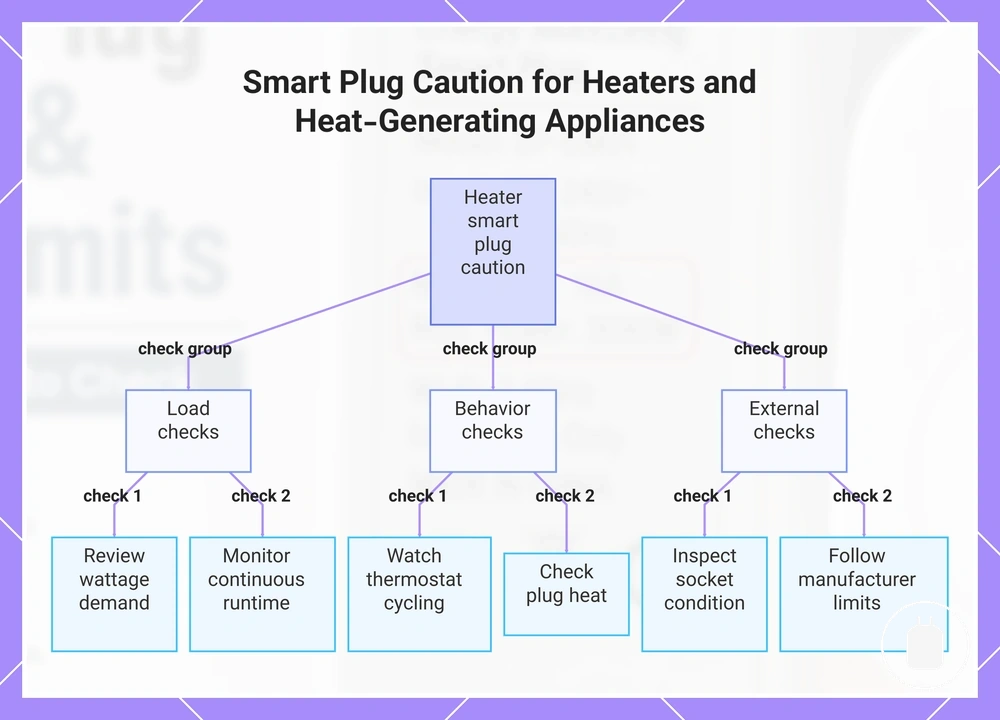
Heaters and heat-generating appliances may require extra caution with smart plugs because high wattage, continuous operation, and heat buildup can create different load conditions. A heater setup depends on the smart plug rating, appliance demand, socket condition, and any manufacturer exclusion or label limit.
Heat-producing loads can create a distinct risk pattern compared with other appliance categories. Thermostat cycling, runtime, and plug heat are conditions that may affect the connection, so the appliance behaviour and surrounding conditions should be considered together.
Use this caution check when reviewing a heater or heat-generating appliance:
- High wattage: Review the appliance demand and smart plug rating conditions rather than assuming a higher rating removes all concerns.
- Continuous operation: Longer runtime can increase attention on heat conditions and the connection environment.
- Thermostat cycling: Changing operation patterns may affect how the heat load behaves during use.
- Plug heat: Unusual heat at the plug connection can be a warning sign that requires attention.
- Socket condition: The outlet condition should be considered alongside the appliance load.
- Manufacturer exclusion: Stated exclusions or label limits should guide the decision.
This chart shows the key caution checks to review when using a smart plug with a heater or heat-generating appliance.
Motors, compressors, and startup surge appliances
Motor and compressor loads can be harder to evaluate with a smart plug because startup surge may create a higher short-term demand than normal running wattage suggests. Startup current, running wattage, and the smart plug rating need to be considered together when reviewing whether the load conditions are suitable.
Appliances such as a fridge, pump, fan, or compressor may change their demand pattern during startup and normal operation. These differences can affect factors such as relay stress and switching load, so manufacturer load-type guidance and appliance characteristics remain important parts of the decision.
Use these checks to identify conditions where startup surge may require closer attention:
- Motor load: Consider whether the appliance has startup behaviour that differs from its normal running wattage.
- Compressor load: Review how compressor operation may affect the relationship between startup current and the smart plug rating.
- Startup surge: Consider short demand increases that may occur before the appliance reaches normal operation.
- Running wattage: Review ongoing power demand rather than relying only on startup behaviour.
- Relay stress: Consider how repeated switching and load changes may affect smart plug conditions.
- Manufacturer guidance: Use stated load-type guidance when evaluating appliance compatibility.
Overload, overcurrent, surge, and overheat protection features
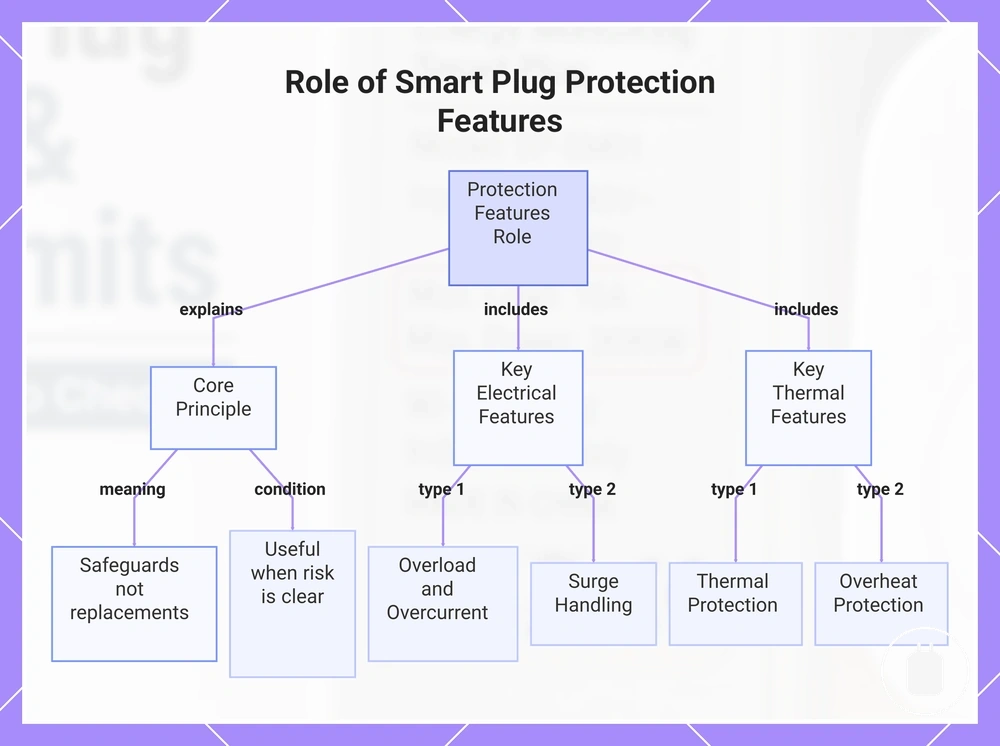
Protection features can reduce certain risks in smart plug use, but they do not replace rated limits or allow a load to exceed the stated conditions. Overload protection, overcurrent cutoff, thermal protection, and surge handling should be treated as safeguards that support risk control rather than proof that every use condition is suitable.
A protection feature is most useful when its relationship to a specific risk is clear. A specification can help show how a feature works, while vague marketing terms alone do not confirm the level of protection available.
Useful protection signals and unclear feature claims can be separated by asking what risk the feature addresses and what condition it does not change:
- Overload protection: Relates to excessive load conditions and should still be considered alongside the rated load limit.
- Overcurrent cutoff: May provide a cutoff response for certain current conditions depending on the stated specification.
- Thermal protection: Relates to heat conditions and may help manage overheat risk when the feature is included and defined.
- Overheat protection: Can be a relevant safeguard when plug casing heat and operating conditions are considered together.
- Surge handling: May address certain surge conditions, but the capability depends on the product specification.
- App alert: Can provide information about detected conditions, but an alert does not replace electrical limits.
- Certification: Can be a useful specification to review, but certification claims should be checked against the relevant information provided.
This chart shows how protection features in smart plugs serve as safeguards and which key features are included, helping readers understand their role and limitations.
Choosing a safe energy monitoring smart plug for appliance load
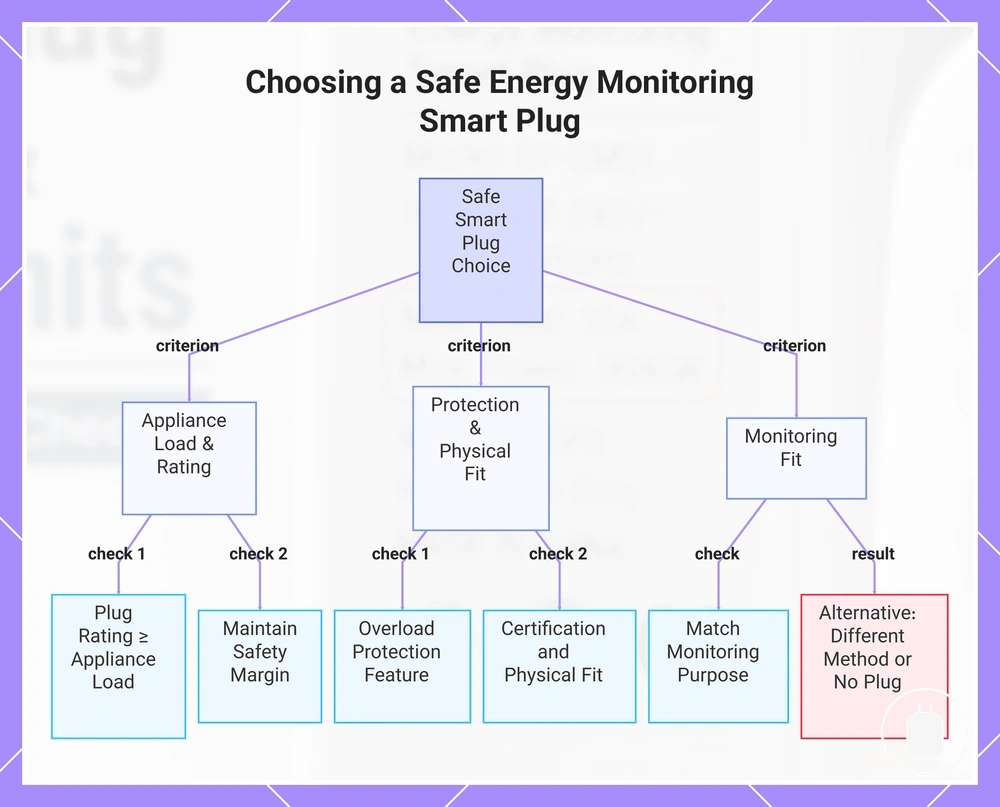
A safe smart plug choice depends on matching the appliance load, rated load, safety margin, and monitoring need with the conditions of use. The selection decision should consider whether the plug rating, protection features, physical fit, and monitoring purpose align with the appliance requirements rather than relying on a single feature.
The main criteria include the relationship between appliance load and plug rating, available safety margin, overload protection, certification information, physical fit, and the monitoring need. A suitable plug choice may also depend on whether plug-level monitoring is appropriate or whether a different monitoring method is needed for the appliance.
Reviewing these factors together helps organise the decision before selecting a smart plug. The buying checklist can help compare these criteria alongside other purchase considerations.
The final selection decision depends on the complete situation, including appliance demand, rated load, protection features, certification, build quality, physical fit, and operating conditions. A higher-rated plug, a different monitoring method, or no smart plug may be more suitable when the appliance conditions or safety requirements make a standard plug-level option unsuitable.
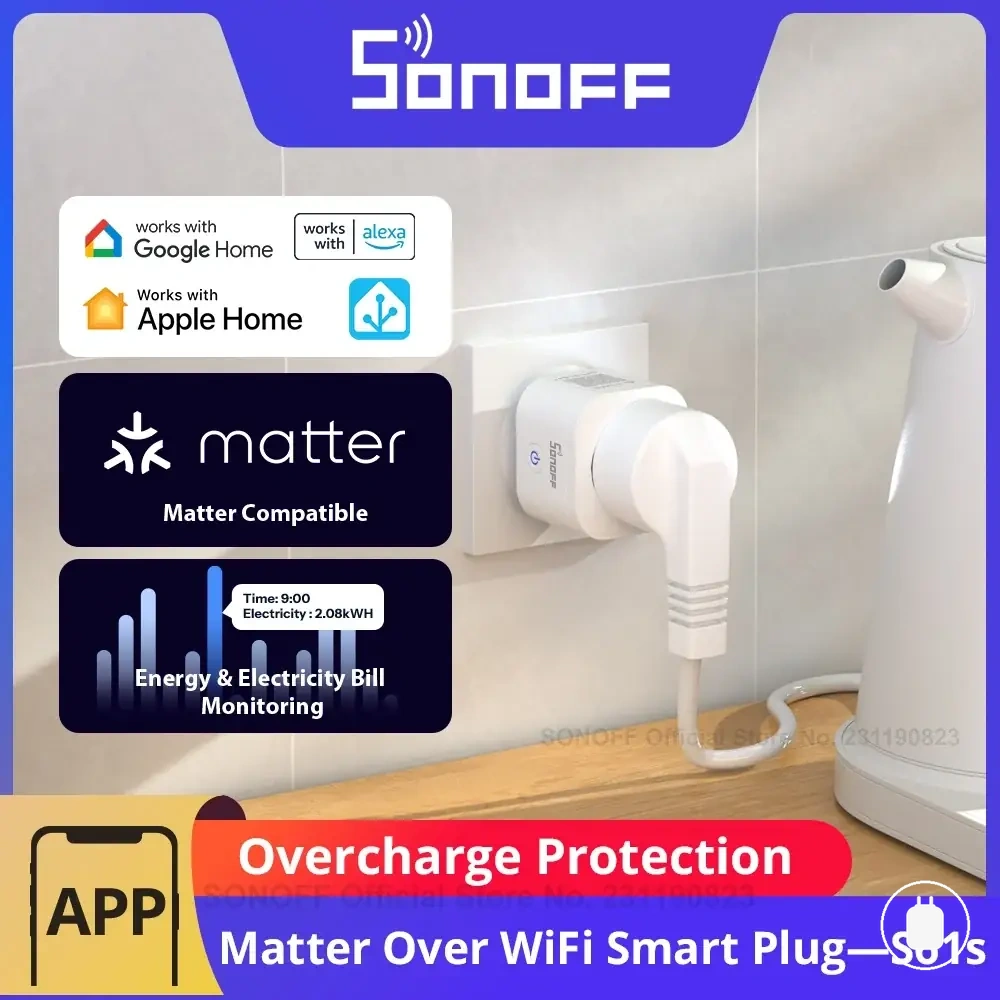
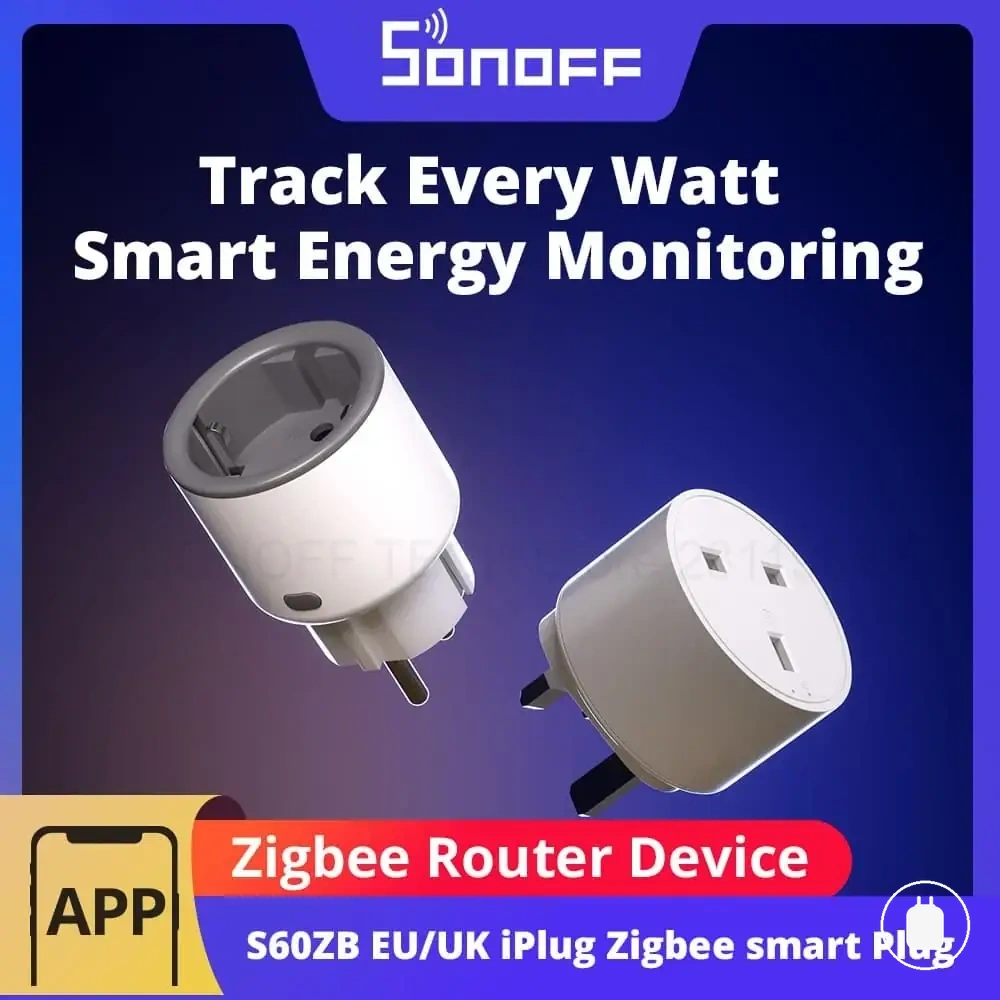
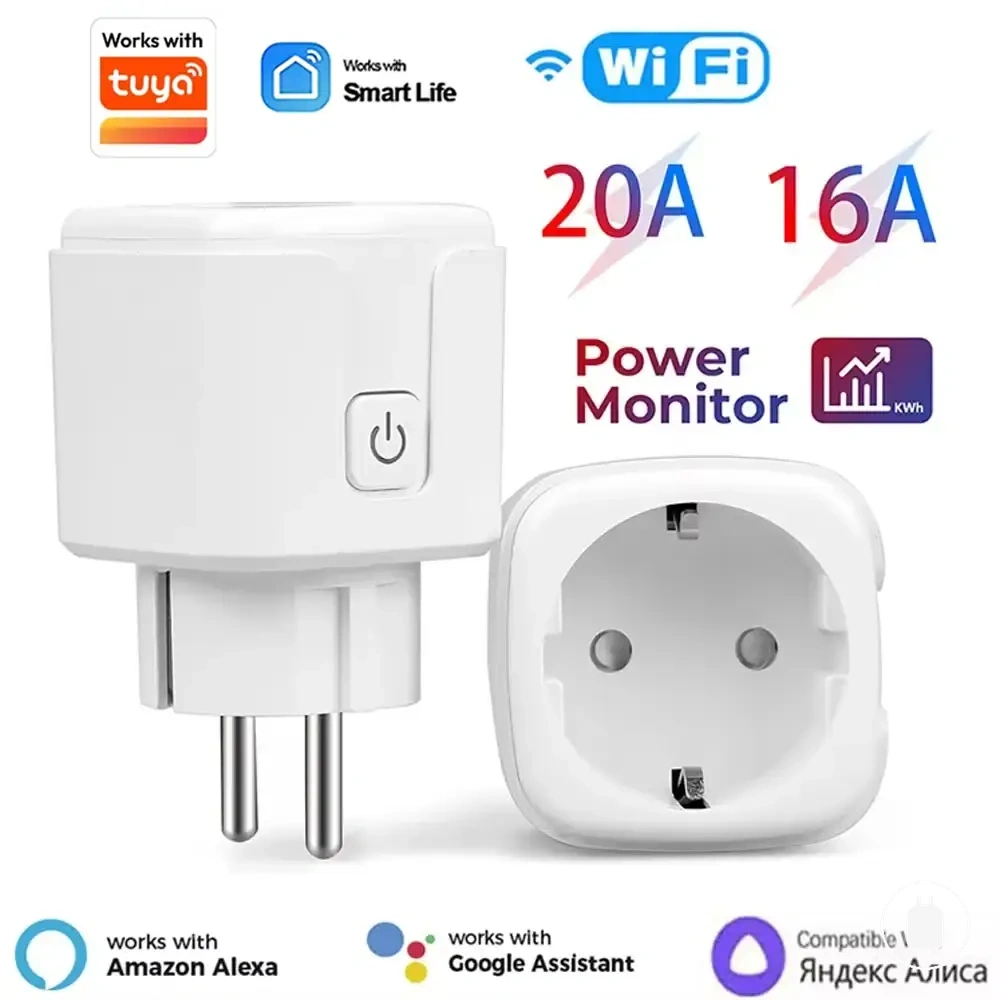
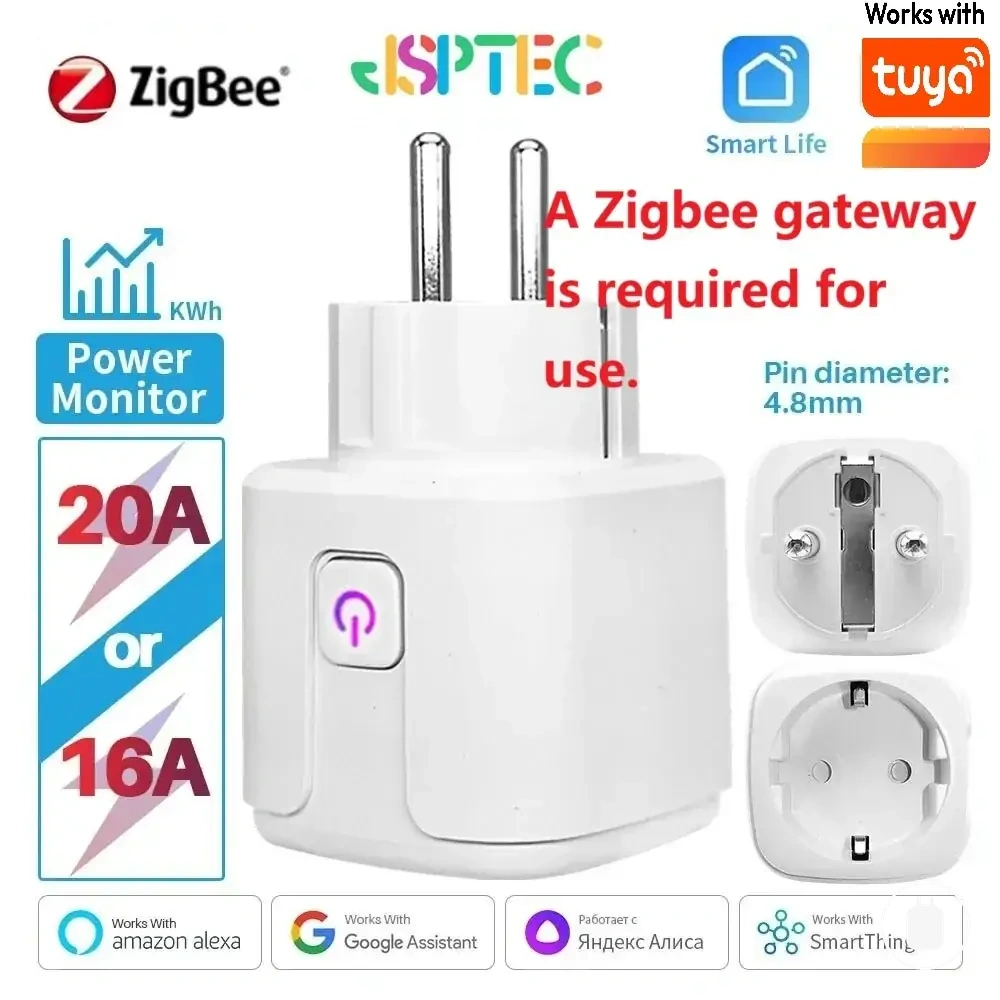
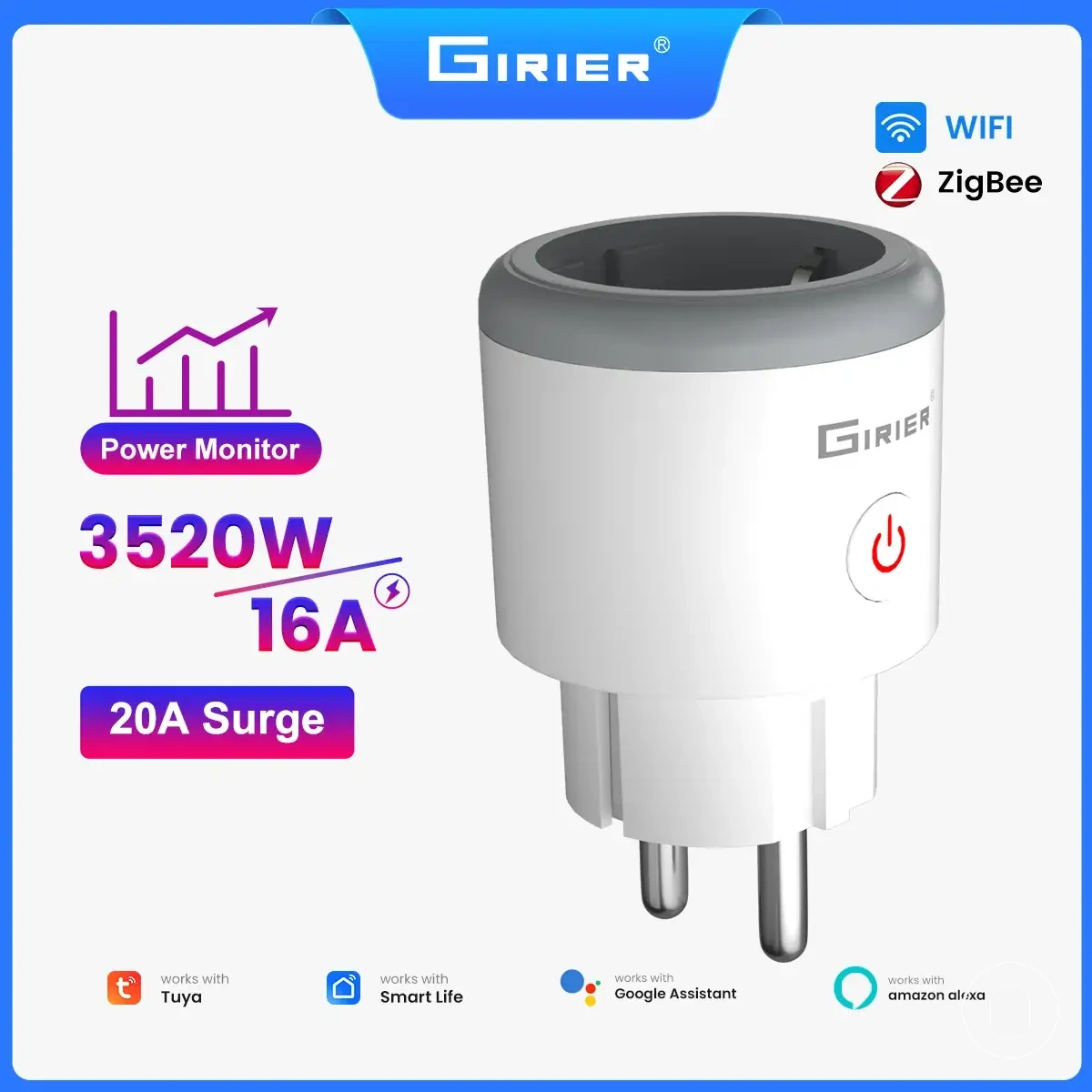
Here are product examples that may make comparison easier. Before buying, always review the compatibility criteria, essential features, and product details.
This chart organizes the main criteria for selecting a safe smart plug, including load matching, protection, and monitoring suitability.
Safety certifications and build quality signals
Certification marks and build quality cues can support a safer selection decision when they are reviewed alongside appliance load, rated load, and physical fit. These signals help verify product information, but they do not make an unsuitable appliance connection safe on their own.
Concrete details such as documentation, enclosure quality, pin fit, heat resistance, and power rating label clarity can provide useful verification points. If a certification mark or rating information is missing, unclear, or inconsistent, the available information may not be enough to make a confident selection decision.
Review these verification signals when assessing a smart plug:
- Certification mark: Check visible marks and related documentation as part of the overall verification process.
- Local compliance: Consider whether available compliance information matches the intended use conditions.
- Enclosure quality: Review build quality cues that may relate to physical durability and operating conditions.
- Pin fit: Consider whether the plug connection appears suitable for the intended socket type and environment.
- Heat resistance: Review available heat-related design information where it is relevant to the use case.
- Power rating label: Verify that visible rating information is clear and consistent before making a decision.
When a plug-level monitor is not the safest option
A plug-level monitor may not be the safest option when the appliance condition, connection environment, or available information creates a clear reason to avoid plug-level monitoring. A hardwired appliance, damaged socket, uncertain rating, or unsuitable operating condition can be a stop signal that changes the decision.
These conditions focus on when not to use a plug-level monitor rather than comparing alternative monitoring methods. Review the stop signals below to identify situations where the connection method, appliance condition, or environment may make plug-level monitoring unsuitable.
| Stop signal | Why it matters | Safer response |
|---|---|---|
| Hardwired appliance | A direct plug connection may not match the appliance setup. | Avoid plug-level monitoring where the connection method is not suitable. |
| High continuous load | Long-running demand may require closer review of appliance conditions and limits. | Consider whether a plug-level monitor is appropriate for the load. |
| Damaged socket | A damaged socket is a visible condition that can affect connection safety. | Do not use the connection until the socket condition is addressed. |
| Uncertain rating | Missing or unclear rating information limits the ability to make a reliable decision. | Avoid use until the relevant rating information is confirmed. |
| Power board | Additional connections can change the load conditions being managed. | Review the connection setup before using plug-level monitoring. |
| Outdoor exposure | Environmental conditions may affect whether the equipment is suitable for the location. | Check the product conditions and environment before use. |
| Manufacturer exclusion | Stated exclusions may indicate conditions where use is not intended. | Follow the stated limitations when deciding whether to use a plug-level monitor. |
Unsafe signs that mean the smart plug should be removed
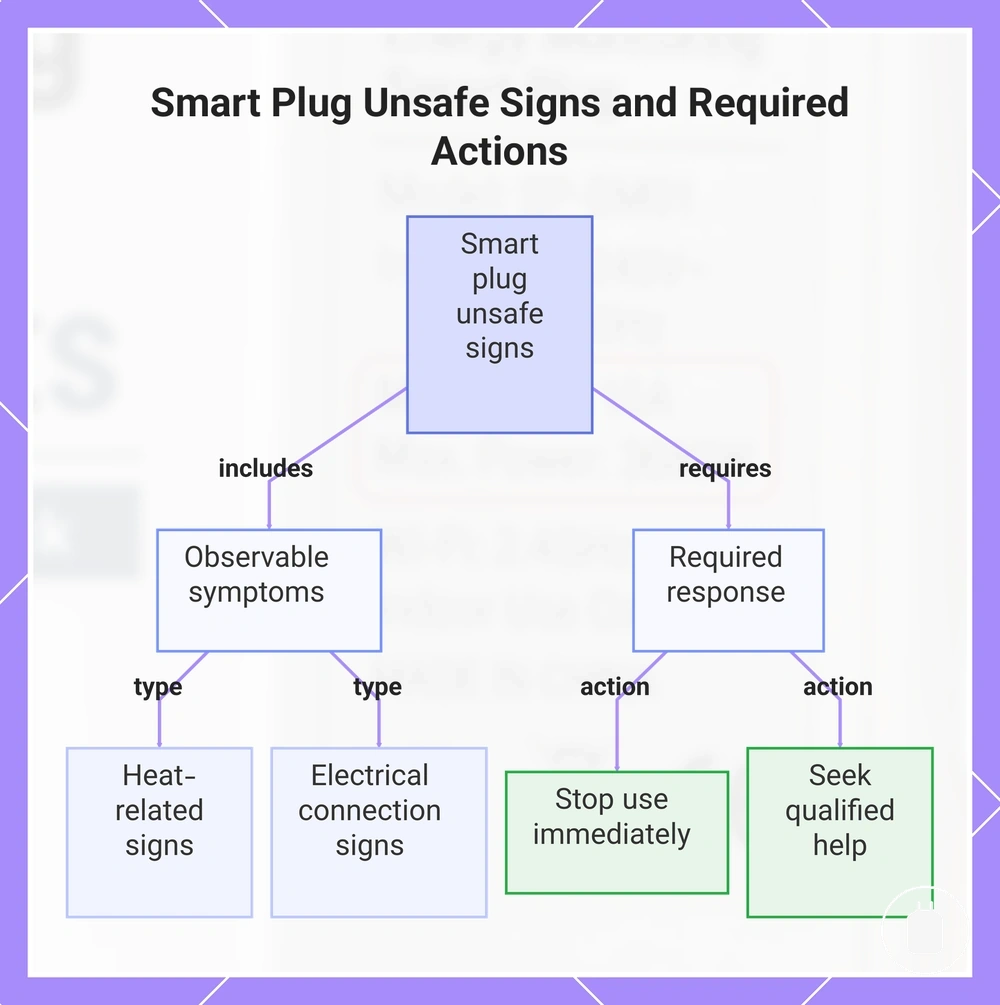
The smart plug should be unplugged and not reused when signs such as hot casing, burning smell, melted plastic, arcing, or other visible damage appear. These warning signs can indicate an unsafe condition, so the safer response is to stop use rather than continue operating the connection.
Observable symptoms can help identify when a smart plug needs to be removed from service. The cause may vary by appliance load, connection condition, or product issue, but severe warning signs require a stop-use decision.
Review these diagnostic signs and the related action:
- Hot casing: Excessive heat from the casing can indicate an overheating condition that requires stopping use.
- Burning smell: A burning smell is a severe warning sign that means the smart plug should be removed from use.
- Buzzing: Unusual buzzing may indicate a condition that requires attention rather than continued operation.
- Discoloration: Visible discoloration can indicate heat exposure or material change around the smart plug.
- Melted plastic: Melted plastic is visible damage that requires the smart plug to be removed from use.
- Arcing: Arcing is a serious warning sign that requires stopping use and considering qualified electrical help.
- Tripped protection: Repeated cutoffs may indicate an underlying condition that needs assessment before further use.
- Loose socket: Loose socket fit can affect the connection and should be addressed before reuse.
For situations involving troubleshooting unsafe behavior, unstable readings during high load, or repeated cutoff conditions, review troubleshooting unsafe behavior and consider replacing the plug, avoiding the appliance pairing, or seeking qualified electrical help where appropriate.
This chart shows the observable symptoms that indicate a smart plug should be removed from use and the appropriate actions to take.