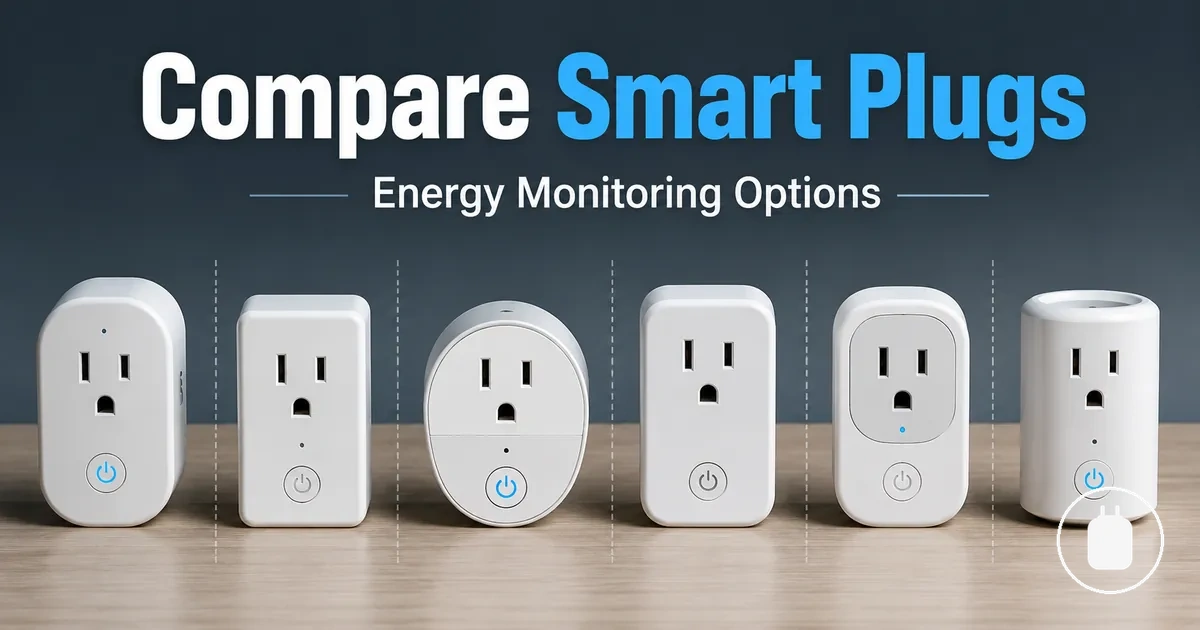
Best Energy Monitoring Smart Plugs for Different Tracking Needs
Energy monitoring smart plugs depend on the appliance being tracked, the outlet fit, the smart home platform, and the type of energy data needed. The right choice varies because a plug used for occasional appliance checks may have different requirements from one used for broader energy tracking. The right choice depends on the tracking context.
A user comparing energy monitoring smart plugs may look for power monitoring, kWh information, and real-time power visibility, while another user may prioritise app tracking, smart home platform support, or a compact design for limited outlet space. A suitable option should be considered through measurement capability, platform compatibility, load rating, outlet fit, and value. These factors create the main comparison variables for choosing a plug-level monitor.
Energy monitoring smart plugs should be compared through selection criteria rather than a universal ranking. The most suitable option may depend on appliance use, compatibility needs, safety considerations, and the type of information required. The next step is evaluating measurement capability and how each factor supports a practical choice.
What a Good Energy Monitoring Smart Plug Must Measure
A good energy monitoring smart plug must provide useful measurement capability for appliance-level tracking, including wattage and kWh data when those features are available. Energy monitoring smart plugs help users compare appliance use through measurable energy data rather than relying only on estimated consumption. The measurement data must be useful for appliance-level comparison.
Measurement capability refers to the types of energy data an energy monitoring smart plug can expose through its app or display. Wattage can show live power demand, while kWh can show accumulated energy use across a selected time period. Voltage and current may also be available depending on the model, and usage history can help identify patterns instead of showing only a single reading. Live readings and accumulated use support different tracking decisions.
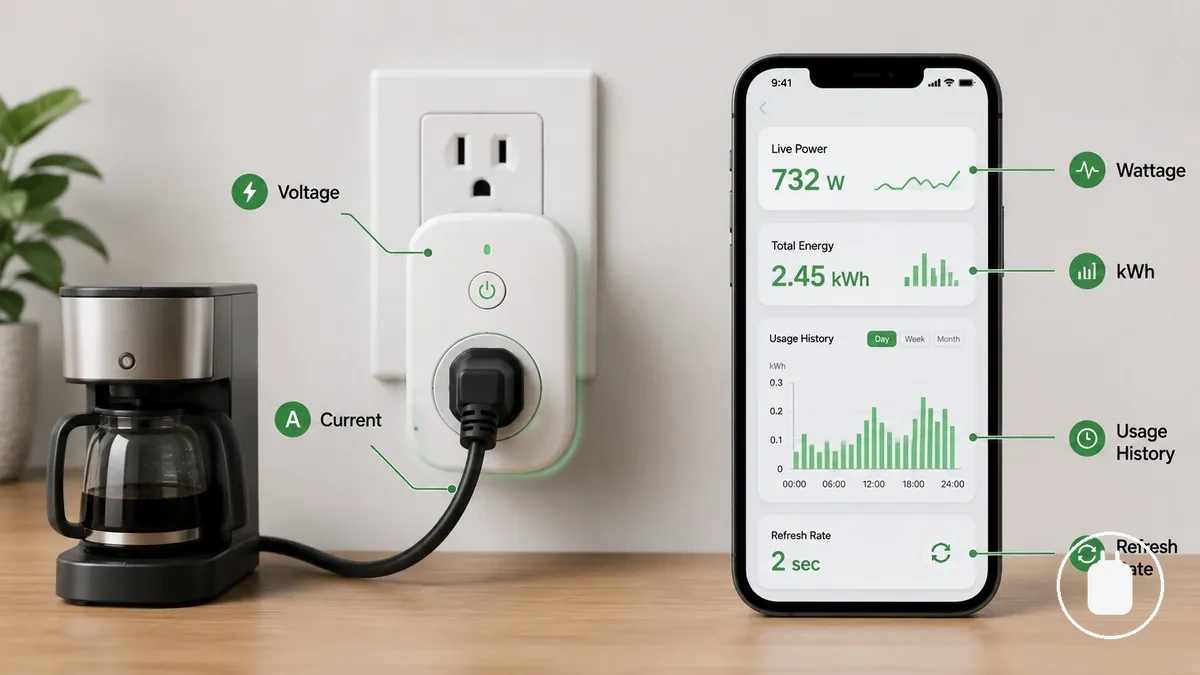
More measurements do not automatically mean perfect tracking results or proof of lower bills. Energy data supports comparison, but accuracy, refresh rate, and available metrics can vary by model, appliance behavior, and app design. These measurements should be treated as decision-support information rather than utility bill-grade data.
The following checks show what a good energy monitoring smart plug must measure before it fits a tracking need:
- Wattage: Shows live power demand from a connected appliance and helps compare immediate usage behavior.
- kWh: Shows accumulated energy use over a time period and helps review longer-term electricity usage patterns.
- Voltage and current: Provide additional electrical readings when supported by the specific smart plug model.
- Usage history: Helps compare energy data across different periods instead of viewing only a single reading.
- Refresh rate: Influences how frequently app readings update and how useful live monitoring may be for a tracking decision.
Real-Time Power, kWh, Voltage, and Usage History
Real-time power and usage history describe different parts of connected-device electricity use. Watts show live draw at a specific moment, while kWh shows accumulated energy use across a selected time window. These measurements help separate immediate appliance behavior from longer-term energy patterns.
Real-Time Power, kWh, Voltage, and Usage History organize energy data by the type of tracking question each reading can support. A smart plug app reading may show current power usage, while usage history may help identify trends across different periods. Not every energy monitoring smart plug app exposes the same metrics, and voltage or current availability can vary by model.
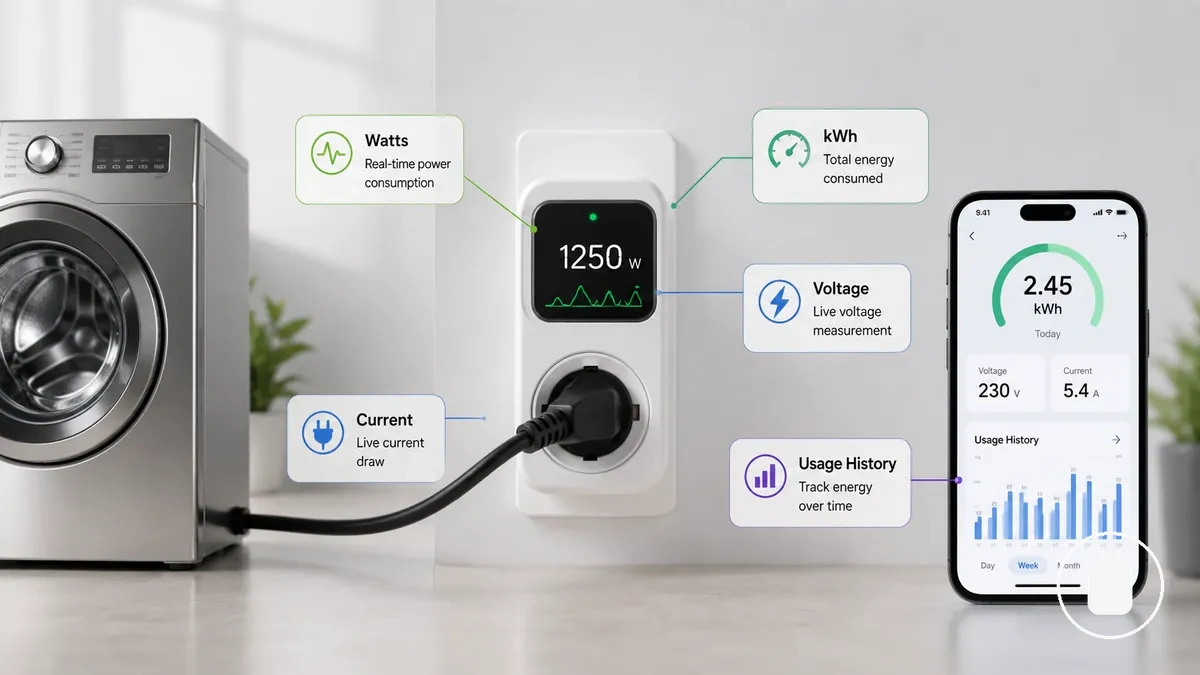
- Watts: Shows live draw from a connected appliance and helps identify immediate power use.
- kWh: Shows accumulated use over a selected time window and supports longer-term comparison.
- Voltage: Provides an additional electrical reading when available on the specific smart plug model.
- Current: Provides another electrical measurement when supported and can add context to appliance usage conditions.
- Usage history: Helps review energy patterns and compare changes across different time periods.
Accuracy Expectations for Appliance-Level Tracking
Energy monitoring smart plug accuracy depends on plug design, load type, sampling method, and app calculation. Appliance-level tracking can provide useful comparison information, but reading confidence may vary between different appliance conditions. Accuracy depends on how the plug measures data and how the connected load behaves.
A stable load may provide more consistent comparison conditions because power demand changes less during measurement. A fluctuating load can produce different readings as appliance behavior changes over time. Standby power and low-draw conditions may require careful interpretation because sampling and app calculation can influence the displayed energy data.
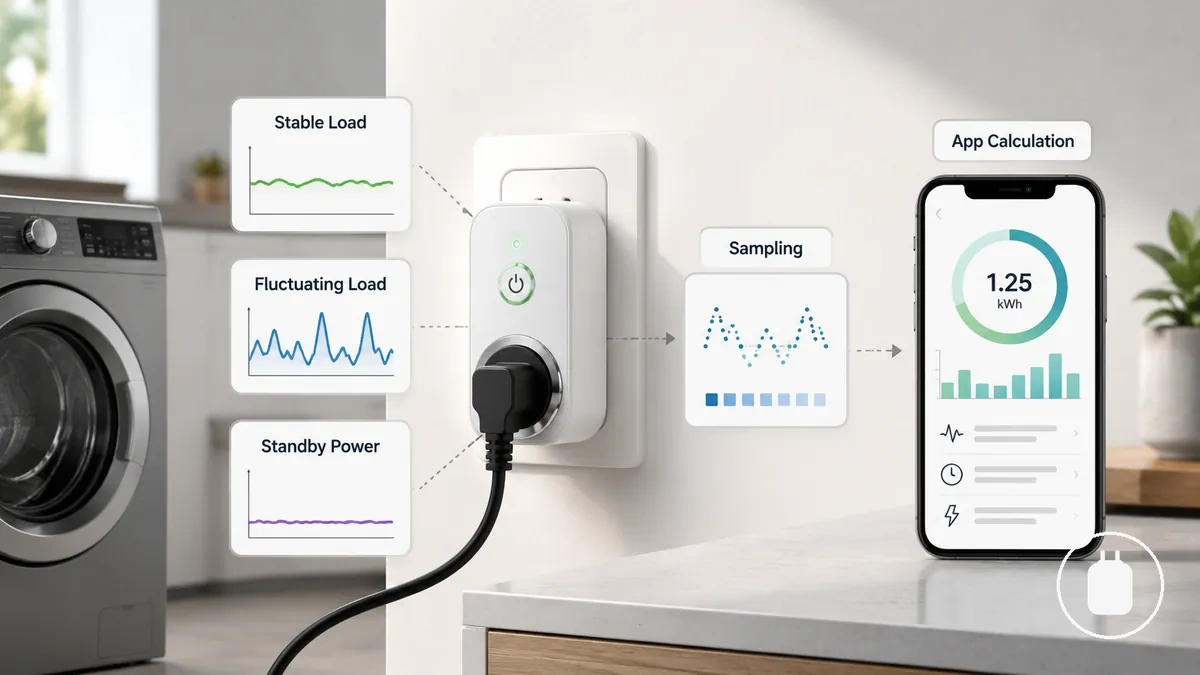
Accuracy expectations should focus on comparison-grade tracking rather than treating plug-level readings as utility bill measurements. Energy monitoring smart plugs can help review usage patterns, but readings should not be treated as exact proof of electricity consumption outcomes. For deeper information about measurement limitations, see accuracy.
Caution: Accuracy varies by model, load behavior, sampling approach, and app calculation. Energy readings support comparison decisions, but they do not replace every type of electricity measurement.
Comparison Criteria Before Choosing an Energy Monitoring Smart Plug
Comparison criteria for energy monitoring smart plugs depend on the buyer’s appliance, smart home platform, and socket conditions. A useful comparison focuses on how each criterion affects tracking quality, compatibility, safety, and value instead of ranking individual products. The main decision criteria include connection type, app reporting, outlet fit, load rating, and pack economics.
Different users may prioritise different factors based on their tracking needs. A person monitoring a single appliance may weigh outlet fit and load rating differently from someone comparing multiple monitored outlets. The buying checklist can support this comparison process by organising criteria that affect a selection decision. Criteria should be weighted according to the specific use case and acceptable trade-offs.
Comparison should focus on decision signals rather than a universal ranking. A criterion may become more important depending on the appliance, platform, socket space, and budget conditions. A practical filter is to match each criterion with an acceptable condition and the buying effect it creates.
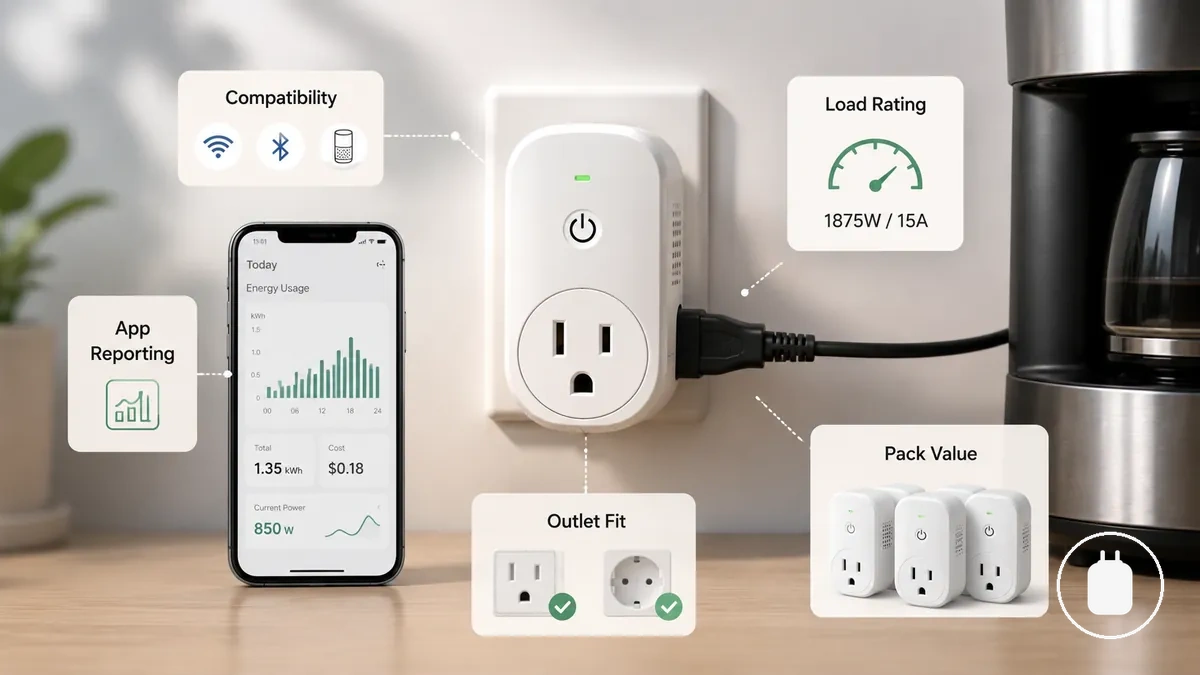
| Criterion | What to check | Why it matters | When it should dominate |
|---|---|---|---|
| Compatibility | Platform support and connection requirements | Helps align the plug with the existing smart home setup | When app access and ecosystem fit are priorities |
| App reporting | Available data views and tracking features | Determines how energy data can be reviewed | When ongoing monitoring is the main goal |
| Outlet fit | Physical size and available socket space | Helps evaluate placement conditions | When outlet clearance is limited |
| Load rating | Appliance suitability and rated capacity information | Supports matching plug capability with appliance requirements | When appliance demands are a key consideration |
| Pack economics | Number of outlets and value factors | Helps compare quantity with actual monitoring needs | When multiple tracking locations are considered |
Smart Home Platform and Connection Type
Smart home platform and connection type affect how an energy monitoring smart plug fits into an existing setup. Platform choice depends on compatibility needs, including app access, controller requirements, and how connected devices are managed. The right connection type can influence setup reliability and data access.
Different connection paths may suit different smart home ecosystems. Wi-Fi may support a no-hub setup, while Matter, Thread, or Zigbee options may depend on available controllers, hubs, and platform support. The suitable choice varies by ecosystem, router conditions, hub ownership, and local control preferences.
| Connection Type | Requirement | Best-fit Condition |
|---|---|---|
| Wi-Fi | Network access and app connection | When a no-hub setup is preferred |
| Matter | Compatible controller and ecosystem support | When the smart home platform supports this connection path |
| Thread | Compatible controller or ecosystem support | When the existing setup uses compatible connected-device infrastructure |
| Zigbee | Hub or compatible controller | When a hub-based ecosystem is already in use |
For broader platform matching considerations, see compatibility after reviewing the local connection requirements and setup conditions.
App Quality, Local Control, and Data Access
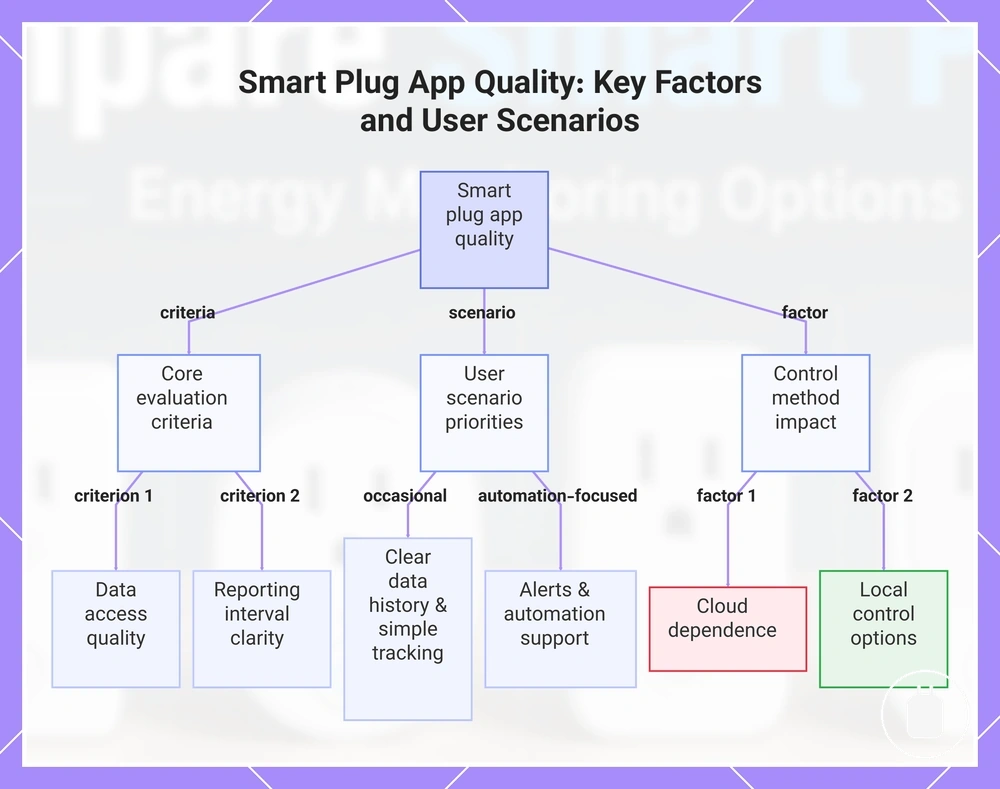
App quality determines whether energy tracking data becomes useful for everyday decisions. A smart plug app should be evaluated through data access, reporting interval, and how clearly energy information supports comparisons. App quality can affect how easily measurements become usable decisions.
Different monitoring scenarios create different app priorities. A user checking appliance usage occasionally may focus on clear data history and simple app tracking, while an automation-focused setup may place more importance on alerts, automation support, and local control options. Cloud dependence and control methods can influence convenience and potential friction depending on the setup.
- Reporting interval: Helps show how frequently app readings update and whether the available data supports the intended tracking need.
- Export: Provides data access options when energy information needs further review, analysis, or comparison.
- History length: Affects how much past usage information is available for reviewing energy patterns.
- Alerts: Can support monitoring decisions when alert features are available and relevant to appliance behavior.
- Automation: Connects energy tracking with smart home actions when the platform supports the required controls.
This chart maps the key criteria for evaluating smart plug app quality, how different user scenarios shift priorities, and the role of control methods.
Plug Size, Socket Fit, and Adjacent Outlet Clearance
Physical fit becomes important when an energy monitoring smart plug is used in crowded outlet spaces, power boards, or areas with limited clearance. A compact plug may help where space is restricted, but the plug body still needs to match the socket conditions. Fit can decide whether a plug is usable.
Plug size should be checked through dimensions and placement rather than compactness alone. Body width, depth, orientation, and button placement can affect outlet clearance, wall outlet fit, and access to nearby sockets. Compact size remains one selection factor alongside load rating and available features.
- Body width: Check whether the plug width leaves enough clearance for an adjacent outlet or nearby connection.
- Plug depth: Consider wall plate space and whether the plug extends into a power board area where obstruction may occur.
- Orientation: Verify how plug direction affects socket access, cable position, and usability.
- Button placement: Check whether controls remain accessible after installation in the intended outlet position.
Recommended Energy Monitoring Smart Plug Options by Use Case
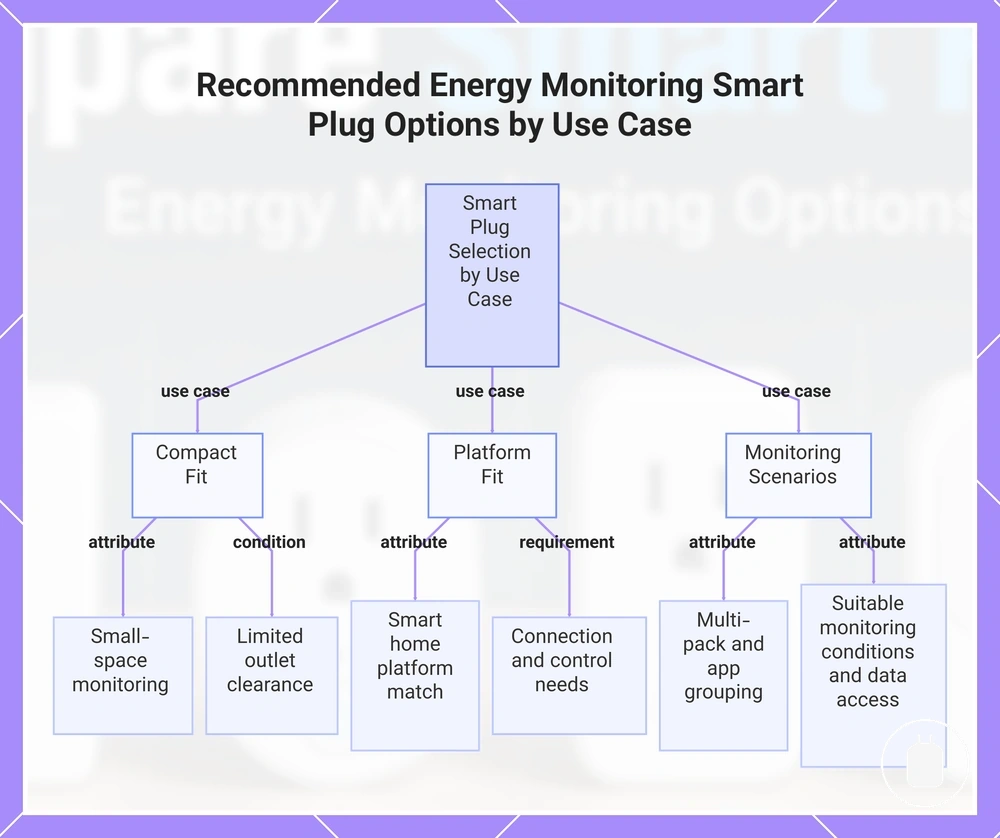
Recommended options for energy monitoring smart plugs should be grouped by the user’s tracking need rather than ranked as universal choices. The suitable option type depends on the appliance, platform, outlet conditions, and desired monitoring setup. Recommendations should follow need-based grouping.
Different tracking needs require different attributes and acceptable trade-offs. A user with limited outlet space may prioritise compact fit and outlet clearance, while a connected home setup may place more value on platform fit and ecosystem support. Room-by-room monitoring may benefit from multi-pack options and app grouping, while appliance tracking may focus on suitable monitoring conditions and practical data access.
A common mistake is treating one option type as suitable for every situation. The better approach is to match the tracking need with required attributes, acceptable trade-offs, and the intended use case. Product examples should remain illustrative and support selection logic rather than act as standalone recommendations.
- Compact fit: Small-space monitoring may suit a compact plug type when outlet clearance is limited, with the trade-off that physical size is only one part of the selection decision.
- Platform fit: Connected home users may prefer an option type that matches their smart home platform, connection requirements, and preferred control approach.
- Room-by-room monitoring: Monitoring multiple areas may suit options that support multiple outlets, app grouping, and a balance between quantity and tracking needs.
- Appliance tracking: Focused appliance monitoring may suit an option type that matches the appliance requirements, monitoring goal, and acceptable trade-offs.
This chart shows how to select a smart plug based on your tracking need, highlighting key attributes and trade-offs for the main use cases.
Compact Plugs for Tight Wall Outlets
Compact plugs are preferable when tight wall outlets require a smaller physical footprint and better outlet clearance. A compact plug design can help where body size and orientation affect access to nearby sockets.
Small spaces such as crowded power areas or limited wall outlet positions may make compact plugs a suitable option type. However, compact design involves trade-offs, as load rating and feature depth may matter more for some tracking needs.
- Width: Check whether the compact plug body leaves enough space for an adjacent outlet or double outlet.
- Depth: Consider whether the plug depth works with wall plates and avoids unnecessary obstruction in tight sockets.
- Orientation: Verify whether the plug direction supports usability without blocking nearby connections.
- Clearance: Review the available space around crowded power boards and outlet areas before selecting a compact option.
Matter, Wi-Fi, Zigbee, and Thread-Friendly Options
Protocol fit depends on the smart home ecosystem already in use because connection type can affect setup friction and automation reliability. Matter, Wi-Fi, Zigbee, and Thread options may suit different platform conditions depending on controller and hub requirements. Ecosystem fit determines the practical friction of adding an energy monitoring smart plug to a connected setup.
A no-hub option may suit users who prefer direct app access through Wi-Fi, while hub-based options may suit users with existing Zigbee or Thread ecosystems. Matter options can depend on controller support and the connected platform environment. The choice differs between users who already own a hub and those who prefer a simpler no-hub approach.
| Option Path | Best Fit Condition |
|---|---|
| Wi-Fi no-hub option | When direct app access and a simple setup approach are preferred |
| Matter with controller | When the ecosystem includes compatible controller support |
| Zigbee with hub | When a hub-based smart home system is already in use |
| Thread with controller | When the platform supports a suitable Thread controller setup |
Multi-Pack Plugs for Room-by-Room Monitoring
Multi-pack options fit room-by-room monitoring when repeated tracking is needed across multiple appliances or locations. A multi-pack can increase the number of outlets available for household tracking, but the value depends on the actual monitoring requirement rather than quantity alone. Multi-packs make sense only when repeated tracking is needed.
A household tracking setup may benefit from multiple plugs when users want room comparison, appliance comparison, or consistent data across several locations. App grouping and consistent data can improve usability, while the number of outlets and pack size should match the intended monitoring need.
Use this mini-check to evaluate the cost-value balance:
- Number of outlets: Check whether the pack provides enough monitoring points for the rooms or appliances that require tracking.
- App grouping: Confirm whether multiple plugs can be organised clearly for room comparison and household tracking.
- Cost per plug: Compare the pack cost against the number of outlets actually needed for the monitoring goal.
- Tracking need: Verify that repeated appliance comparison or multi-room tracking justifies choosing a multi-pack over a single plug.
Safety and Load Limits That Affect the Buying Decision
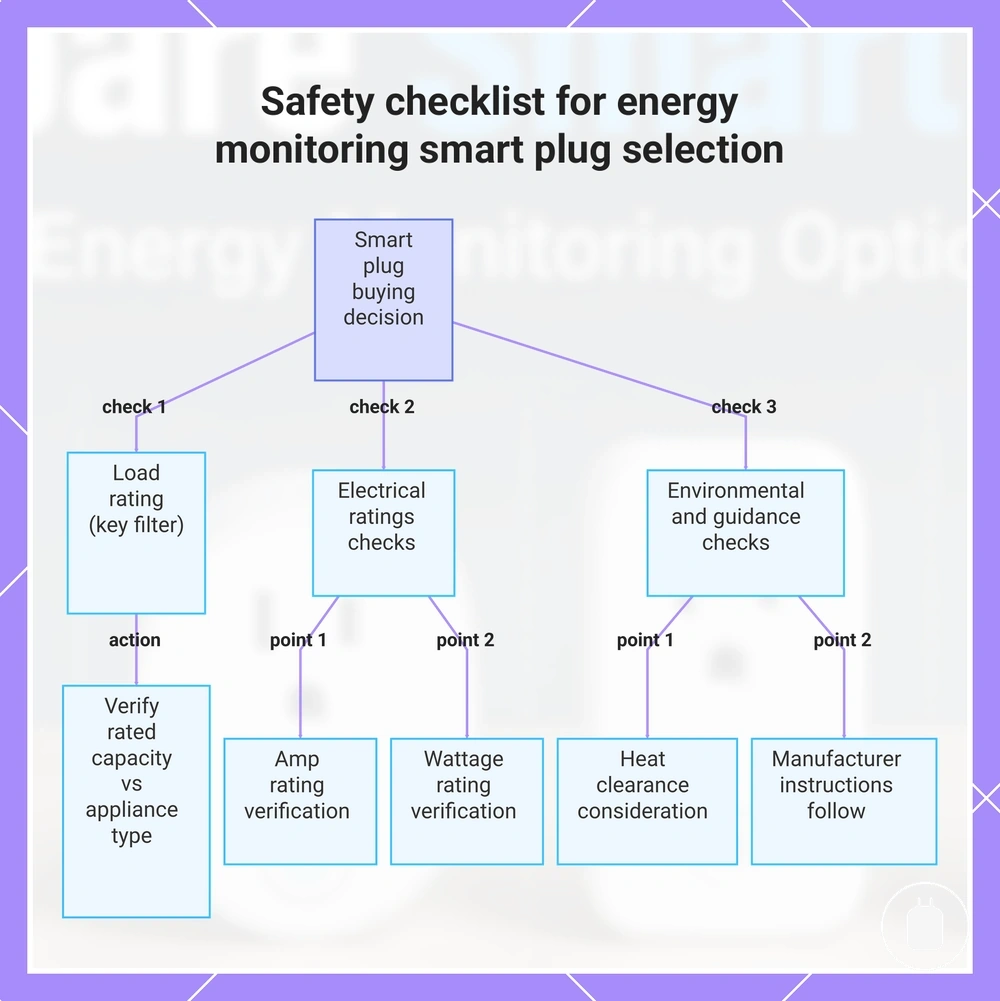
Load rating should be checked before convenience features when choosing an energy monitoring smart plug. The suitable option depends on the appliance type, product label information, and whether the stated capacity matches the intended use. Load rating is a key buying filter for selecting an appropriate plug.
When comparing options, amp rating and wattage rating provide product-label information that can help assess appliance suitability. The safe load limits guidance provides deeper context, but the local selection process starts with checking labels, certification information, overload protection features, and manufacturer instructions.
Safety decisions should be based on verified product information rather than assumptions about convenience features. A plug’s suitability may vary depending on heat clearance, rated capacity, and the appliance type being considered. Following product labels and manufacturer instructions defines the correct boundary for selection.
Safety checklist:
- Load rating: Verify the rated capacity information against the intended appliance type before selecting a plug.
- Amp rating: Check the product label details to confirm the stated electrical capacity aligns with the planned use.
- Wattage rating: Review the listed power rating when comparing the plug with appliance requirements.
- Heat clearance: Consider surrounding space and placement conditions where the plug will be used.
- Manufacturer instructions: Follow the supplied guidance and certification information provided with the product.
This chart shows the key safety checks and load limit factors to consider when selecting an energy monitoring smart plug.
Appliances That Need Extra Load and Suitability Checks
Appliance suitability depends on load behavior and manufacturer guidance before a smart plug is used for monitoring. Certain appliances may require extra checks because startup draw, continuous load, heat generation, motor cycling, or resistive heating can affect suitability. These appliance behaviors help determine when additional verification is needed.
Some appliance tracking situations require closer review before monitoring begins. A device with changing power demands or higher load behavior may need verification through product information and manufacturer guidance before use. Checking these conditions helps confirm suitability before monitoring demanding appliances.
For broader examples and monitoring considerations, see appliance tracking after reviewing the local suitability factors.
- Startup draw: Check whether the initial power demand requires additional review against the plug’s load information.
- Continuous load: Verify that ongoing appliance demand matches the available product rating and intended use conditions.
- Heat generation: Consider heat-related conditions and whether placement guidance requires additional checks.
- Motor cycling: Review changing load behavior where motors start, stop, or vary during operation.
- Resistive heating: Confirm suitability through product information and manufacturer guidance before monitoring heating-related loads.
Price, Value, and Pack Size Trade-Offs
Value depends on how an energy monitoring smart plug matches the tracking need rather than the lowest price alone. Price, pack size, monitoring depth, and ecosystem fit influence the value outcome for a buyer. A suitable option balances required features, budget fit, and the intended use case.
A single plug may suit a user who needs focused appliance tracking, while a multi-pack may suit repeated monitoring across multiple locations. Pack size can affect cost per plug and outlet coverage, but additional outlets may not create value if they are not needed. The trade-off depends on reporting features, ecosystem fit, and the level of monitoring required.
Price should be evaluated with other selection criteria rather than viewed as the only value signal. Cost per plug, monitoring depth, reporting features, load rating, and platform fit can change the usefulness of an option. Price information should be treated as indicative because values may vary.
| Option | Value signal | Trade-off | Best fit condition |
|---|---|---|---|
| Single plug | Focused monitoring for a specific tracking need | Limited outlet coverage | When one appliance or location requires monitoring |
| Multi-pack | Multiple outlets and broader monitoring coverage | Unused plugs may reduce value if monitoring needs are limited | When repeated tracking across locations is required |
| Feature-focused option | Deeper monitoring and reporting features | May involve different budget priorities | When app usefulness and monitoring depth are important |
Lowest price does not automatically represent the best value when the option does not match the tracking requirement. A single better-fit plug may be preferable to a cheaper multi-pack when the monitoring need is limited or specific. The worth-it decision provides additional context for evaluating value before choosing an option.
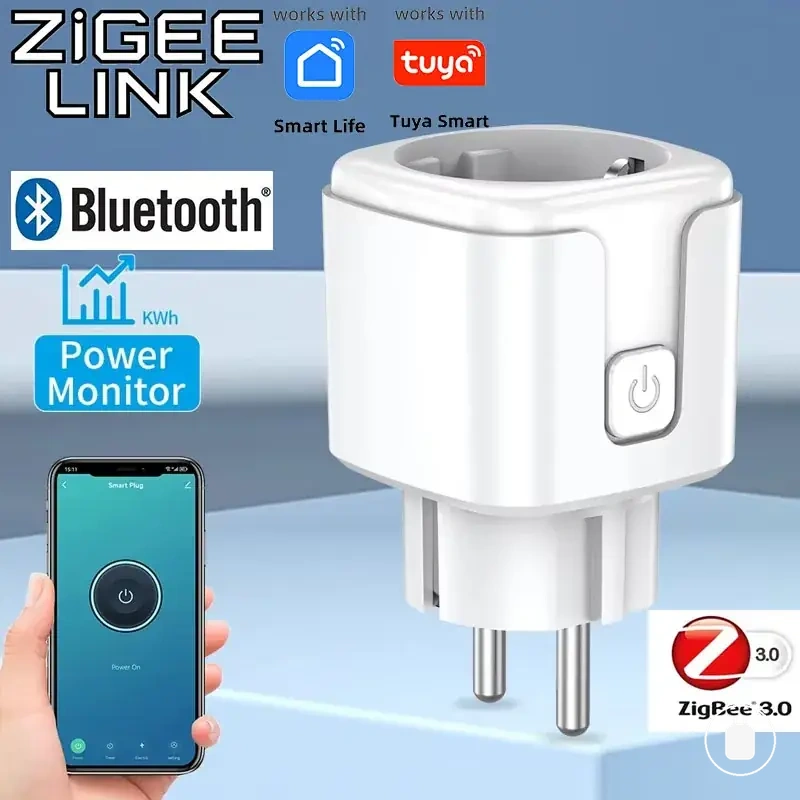
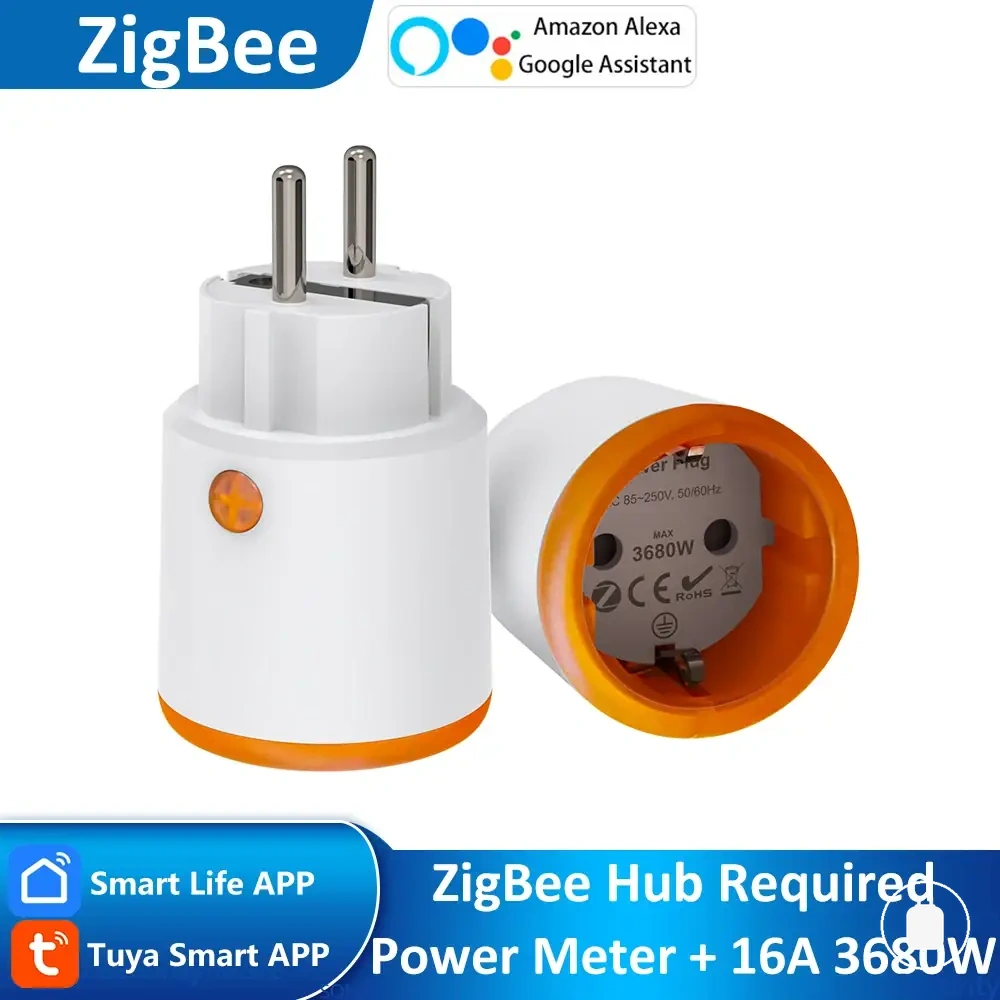
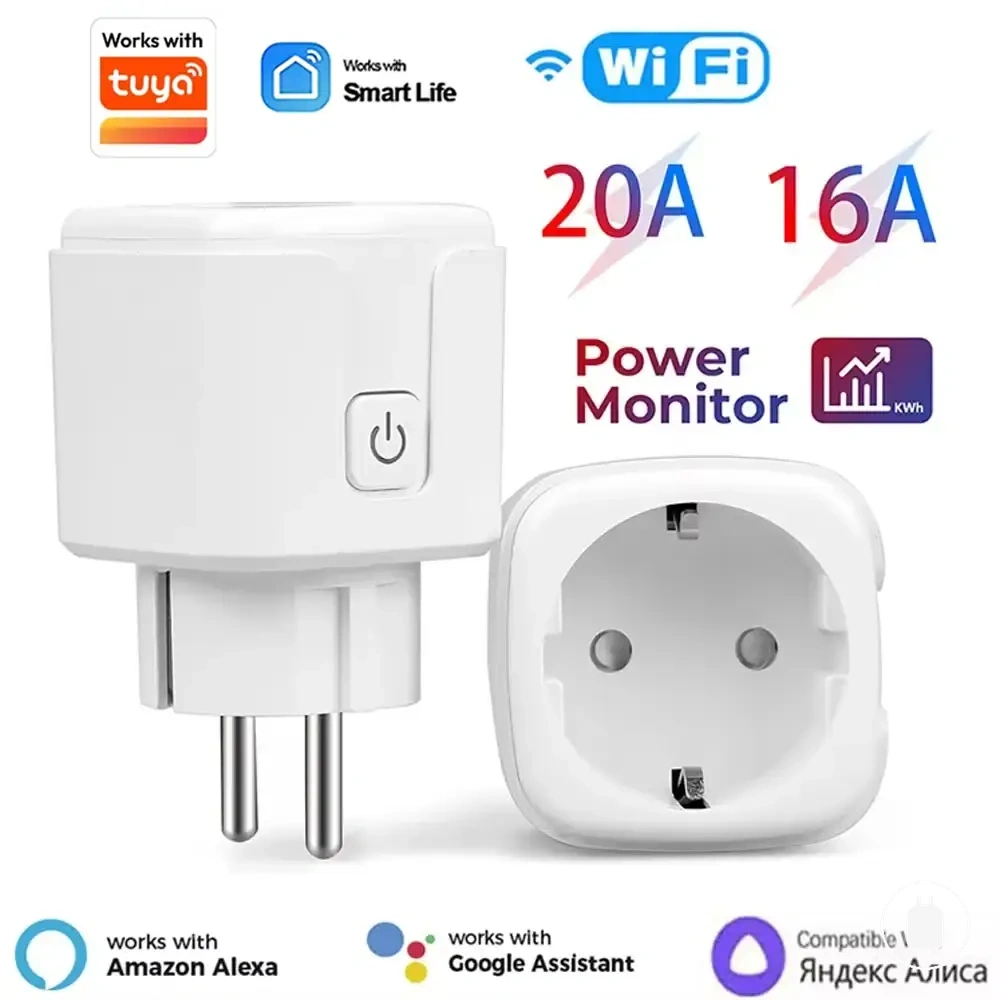
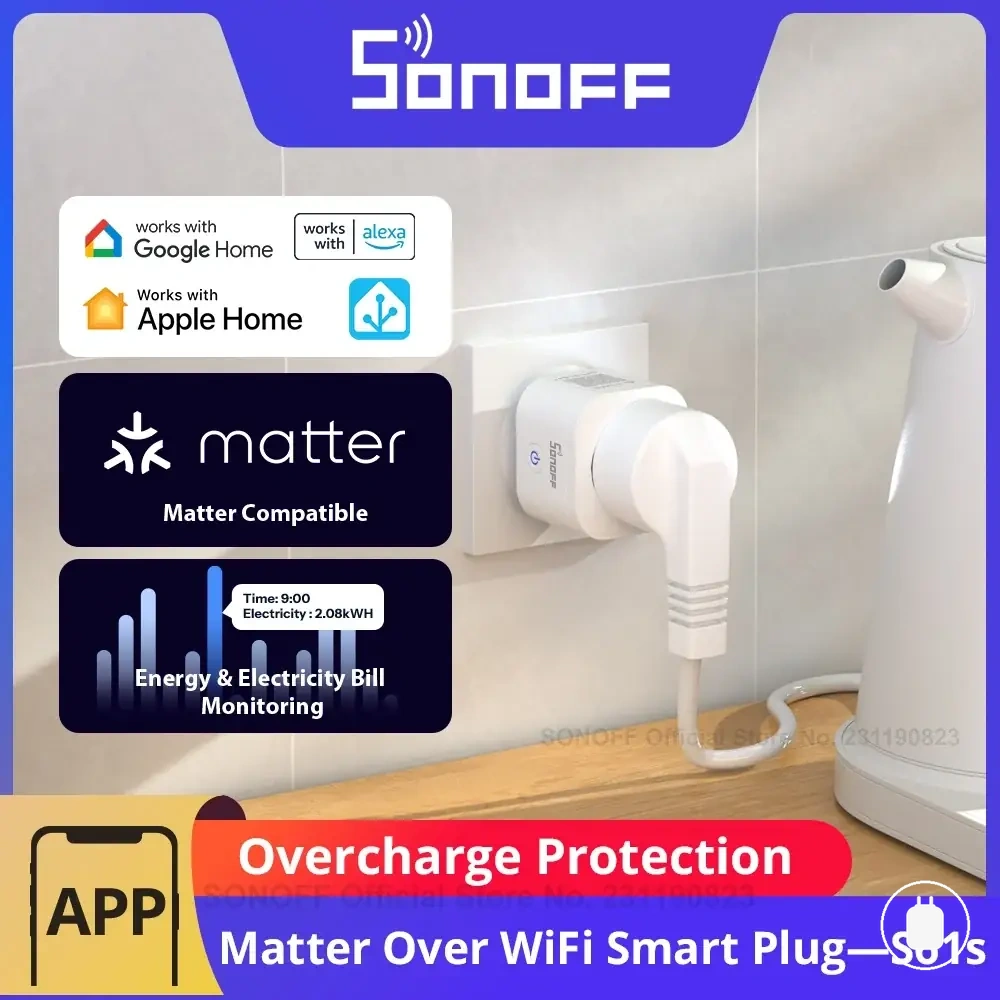
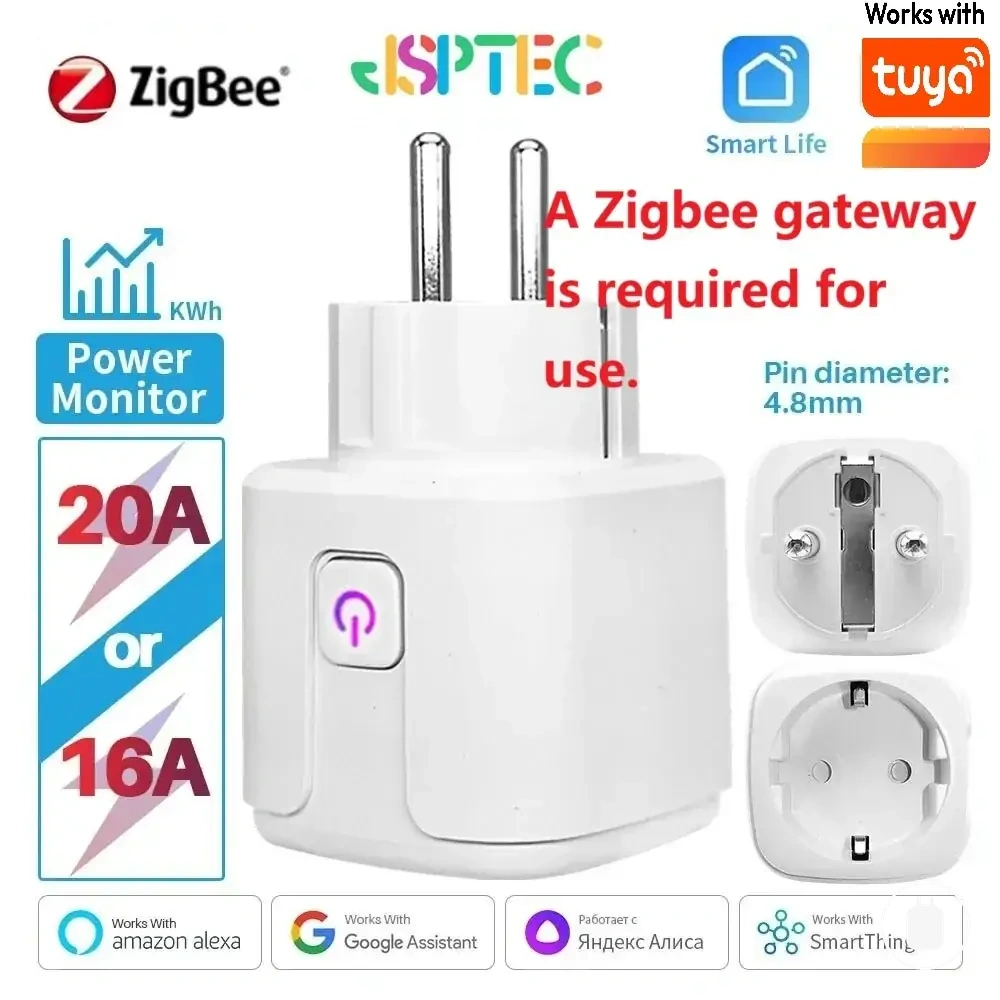
Here are product examples that may make comparison easier. Before buying, always review the compatibility criteria, essential features, and product details.
When an Energy Monitoring Smart Plug Is the Right Choice
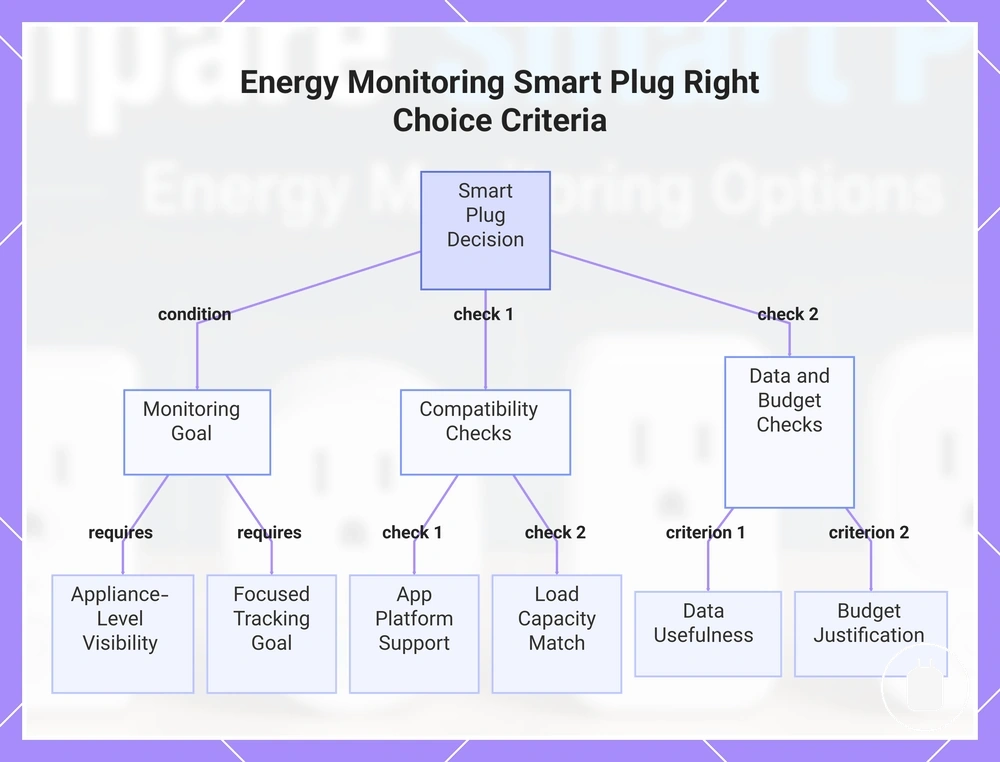
An energy monitoring smart plug is the right choice when plug-level monitoring matches the user’s tracking goal. This category can fit users who need appliance-level visibility, app compatibility, and useful data for specific devices or situations. Plug-level monitoring fits when focused tracking provides enough information for the decision.
For standby tracking, appliance comparison, or smart-home automation, the suitable option depends on the monitoring goal. A user focused on individual appliance behaviour may choose plug-level monitoring, while broader electricity monitoring goals may require a different path. The key difference is targeted appliance visibility versus wider monitoring needs.
A suitable option depends on app compatibility, load suitability, data usefulness, and budget conditions. Plug-level monitoring may fit when the appliance, platform, and tracking purpose align, while another decision path may be more suitable when those conditions are different.
Plug-level monitoring is not a replacement for broader electricity measurement, but it can support specific tracking goals when focused data is useful. The practical next step is to decide whether the goal is appliance visibility, automation support, or another monitoring approach before comparing options.
Here are product examples that may make comparison easier. Before buying, always review the compatibility criteria, essential features, and product details.
- Appliance-level visibility: Choose plug-level monitoring when tracking a specific appliance provides the information needed.
- App compatibility: Check whether the app and platform support the way energy data needs to be accessed and used.
- Load suitability: Verify that the intended appliance and plug capacity are a suitable match.
- Data usefulness: Consider whether the available information supports the intended tracking decision.
- Budget: Compare options when the required features and monitoring goal justify the chosen path.
This chart shows the key conditions and checks for deciding when plug-level energy monitoring is the right choice.
Buyer Questions About Energy Monitoring Smart Plugs
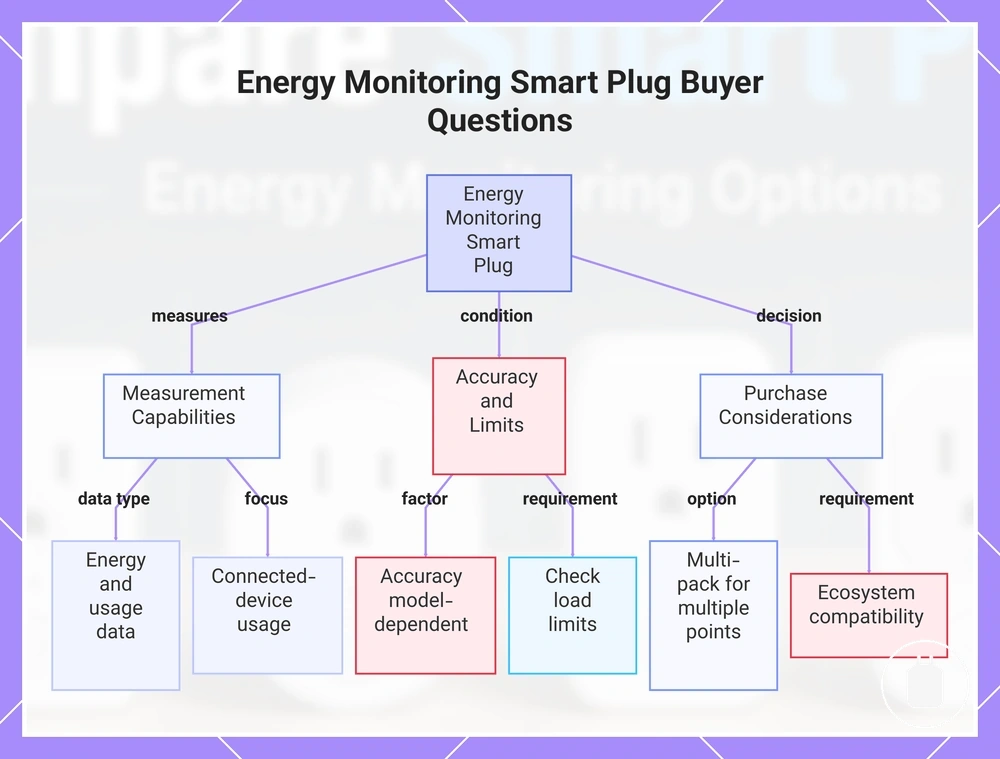
What does an energy monitoring smart plug measure?
An energy monitoring smart plug can measure energy information such as kWh readings and usage data when those features are supported. The available measurements depend on the model and its reporting features. Check the measurement options when matching the plug to a tracking goal.
Does an energy monitoring smart plug show electricity usage?
An energy monitoring smart plug can show electricity usage for a connected device when the model supports usage tracking. This can help with appliance tracking, but it focuses on connected-device information rather than broader electricity measurement. Choose the monitoring approach that matches the intended goal.
Can an energy monitoring smart plug provide exact accuracy?
An energy monitoring smart plug can provide useful tracking information, but accuracy depends on the model, load type, and measurement conditions. Different appliances may produce different readings based on their behaviour. Treat accuracy expectations as model-dependent when comparing options.
Should I check load limits before using an energy monitoring smart plug?
An energy monitoring smart plug should be checked against load limit information before monitoring an appliance. Suitability depends on the appliance type, available ratings, and manufacturer guidance. Verify the conditions before selecting a plug for a specific use.
When is a multi-pack energy monitoring smart plug a better fit?
A multi-pack can be a better fit when room monitoring or repeated appliance tracking requires multiple monitoring points. The value depends on the number of outlets needed, app grouping, and the monitoring goal. A single plug may be a better fit when fewer locations require tracking.
Does compatibility affect which energy monitoring smart plug I choose?
Compatibility can affect the choice because platform support varies by setup. The suitable option depends on the ecosystem, app requirements, and preferred control method. Check compatibility conditions before making a selection.
This chart shows the main buyer considerations for energy monitoring smart plugs, including measurement features, accuracy and limits, and purchase decisions.