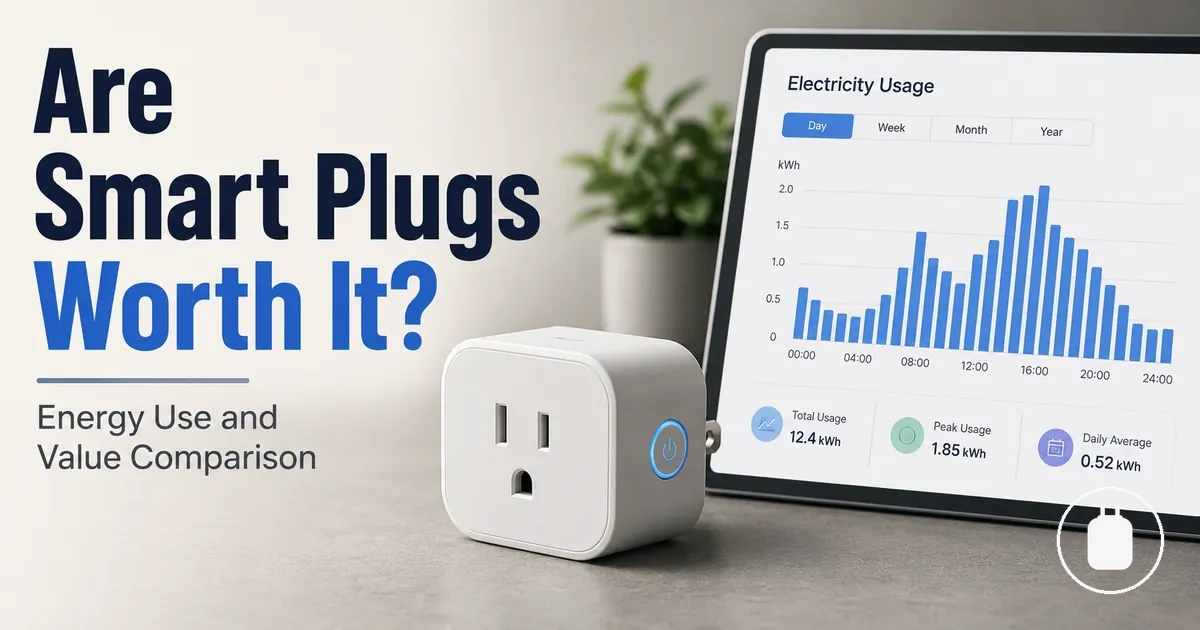
Are Energy Monitoring Smart Plugs Worth It?
Energy monitoring smart plugs can be worth it when the electricity usage data helps you make better decisions about appliance use, reduce power waste, or improve buying confidence. Their value depends on whether the monitoring information leads to useful action.
Energy monitoring smart plugs add visibility into appliance electricity usage by showing information such as kWh data and usage reports when supported by the device and app. This helps users understand how connected appliances consume power and decide whether monitoring provides enough value for their needs.
The value of monitoring comes from connecting data with practical changes. Standby power, repeated appliance use, power waste, and usage patterns may become easier to evaluate, but electricity bill savings depend on factors such as appliance behaviour, electricity tariffs, user actions, and accuracy limits.
People comparing energy monitoring smart plugs are often deciding whether extra monitoring features provide more value than a regular smart plug with on-off control and scheduling. The right choice depends on whether electricity usage visibility, usage reports, and decision confidence are important for the specific use case.
What Energy Monitoring Adds to a Smart Plug
Energy monitoring adds plug-level electricity usage data to normal smart plug control, helping users see how connected appliances use power. An energy monitoring smart plug can provide information such as wattage, kWh tracking, and usage data when supported by the device and app. This added visibility helps users evaluate whether monitoring information is useful for their decisions.
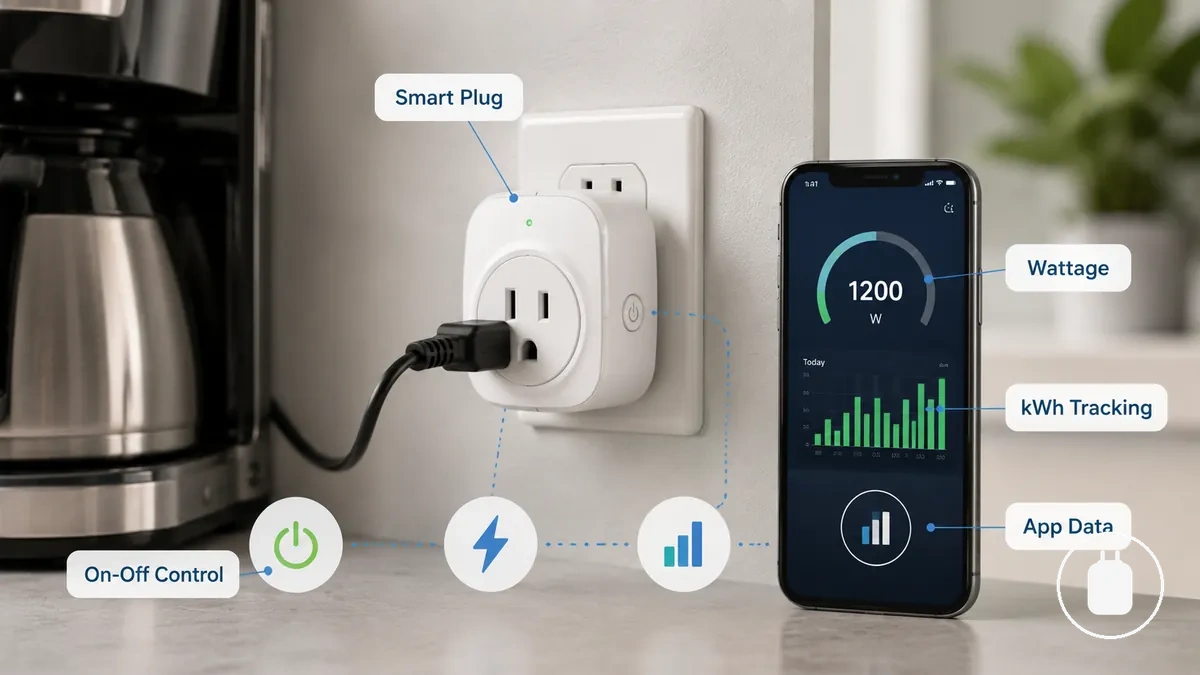
A regular smart plug can provide on-off control, scheduling, and remote control, but those functions alone do not show electricity use details such as wattage or kWh data. energy monitoring smart plugs add a measurement layer by connecting appliance use with app data and usage reports. This can make plug-level measurement more useful when users need clearer information about electricity use and appliance patterns.
The added monitoring layer matters when electricity use visibility can support a better decision. Features such as wattage readings, kWh tracking, app data, and usage reports can improve understanding of connected appliances, but monitoring features alone do not guarantee savings because results depend on usage conditions and user actions.
- Wattage visibility: Shows power-use information that can help users understand appliance electricity use patterns.
- kWh tracking: Helps organise energy usage over time when the device provides this measurement.
- App data and usage reports: Provide a way to review recorded electricity use and usage patterns.
- Plug-level measurement: Connects monitoring information to a specific appliance rather than only basic on-off control.
How Energy Monitoring Can Reduce Power Waste
Energy monitoring can reduce power waste when measured electricity use leads to a practical user action. The monitoring data itself does not change appliance behaviour, but it can reveal patterns that help users decide when to adjust schedules, reduce unnecessary runtime, or review usage habits.
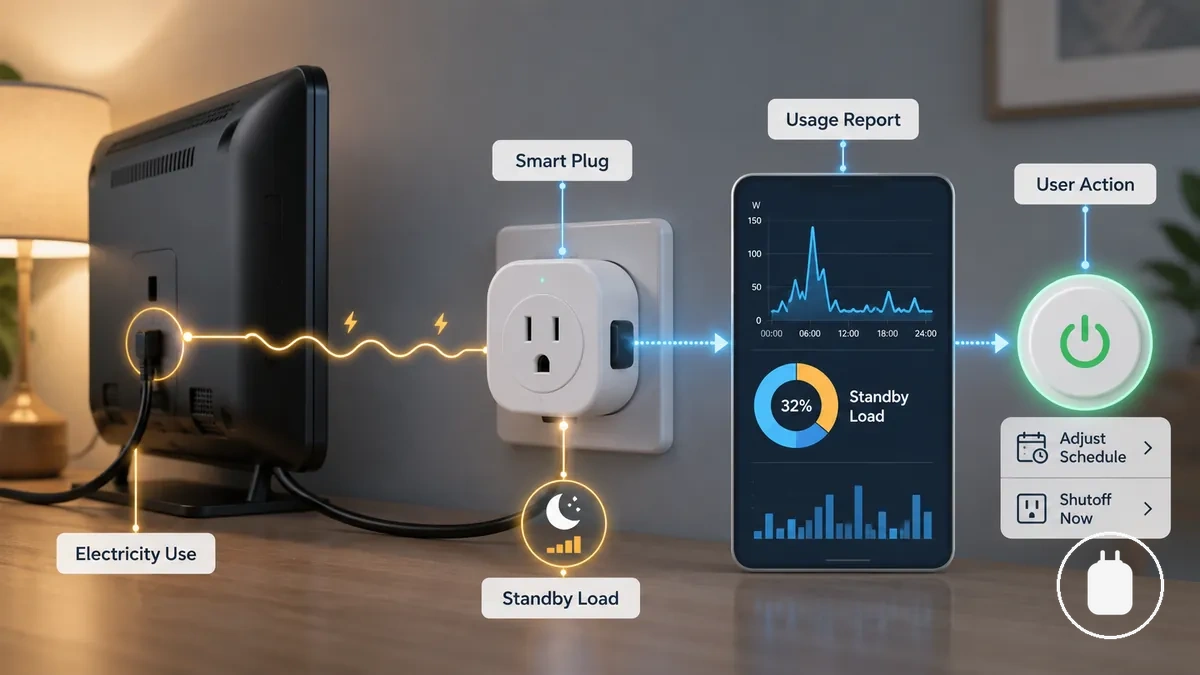
Appliance-level electricity use becomes more useful when users can connect measured signals with possible actions. For example, a smart plug may show watts, kWh usage, or a usage report that highlights repeated use patterns, standby load, or periods of higher consumption. This information can help users identify where a schedule change, shutoff action, or different routine may reduce unnecessary runtime.
Energy monitoring can support power waste reduction by making electricity use more visible, but outcomes depend on the appliance, usage conditions, and user action. The relationship between reducing waste and electricity bill savings is connected, but monitoring alone does not guarantee lower costs.
Common waste patterns can be understood by connecting the measured signal with the possible response:
- Standby load: An always-on appliance may show idle electricity use that helps users decide whether a shutoff or schedule change is suitable.
- Repeated use: Usage patterns may reveal recurring runtime that could be reviewed through scheduling or routine changes.
- Higher usage periods: Watt or kWh information may help users identify when appliance electricity use is higher than expected.
- Usage reports: Recorded patterns can support decisions about where monitoring information is most useful.
Standby Power and Phantom Load Visibility
Standby power is the electricity an appliance may use while it remains connected but is not actively performing its main function. Plug-level monitoring can reveal this idle draw through watts or usage data when the device provides that information. This visibility helps users understand whether a standby load may be relevant to their power waste concerns.
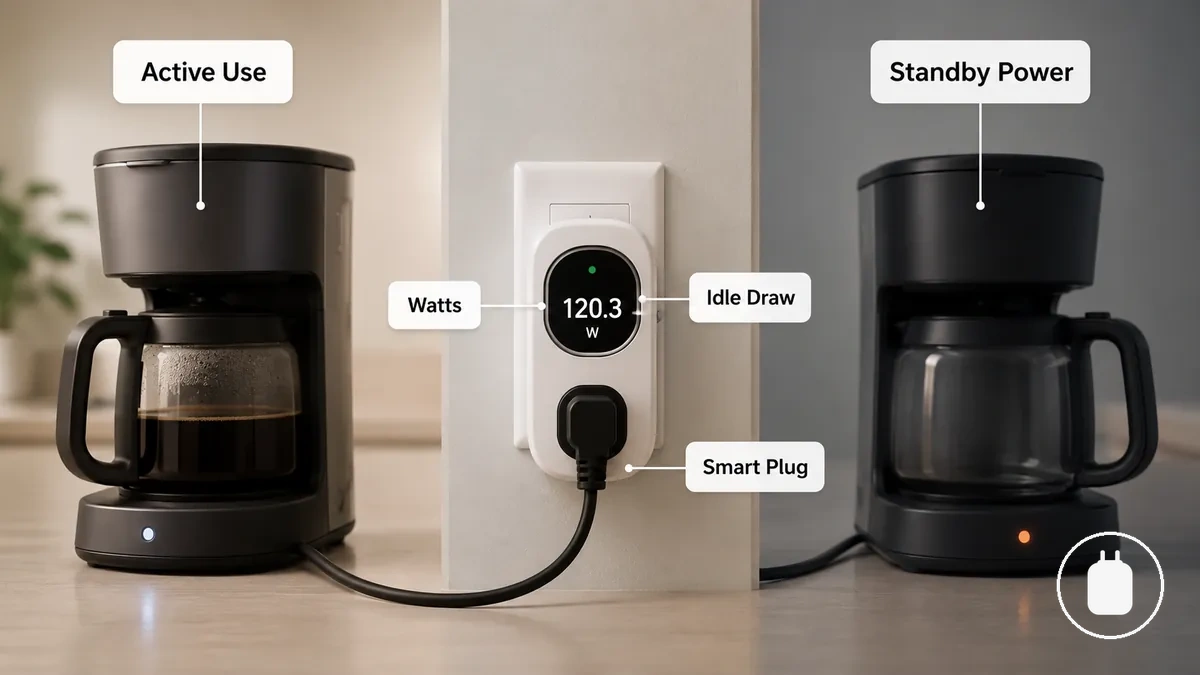
Standby Power and Phantom Load Visibility becomes clearer when active use and standby use are viewed separately. A connected appliance with a low idle draw may have limited importance, while an appliance with continuous use or repeated idle periods may deserve closer attention depending on the situation.
A small standby load does not always represent a meaningful waste reduction opportunity. The importance of an idle draw depends on the appliance, how long the condition continues, whether similar devices are involved, and whether the information leads to a suitable user action.
Schedules, Shutoff Control, and Behaviour Change
Control features become more useful when they act on measured waste patterns from monitoring data. A schedule, timer, or shutoff control can help users respond to repeated waste by reducing unnecessary runtime when the usage pattern supports that action.
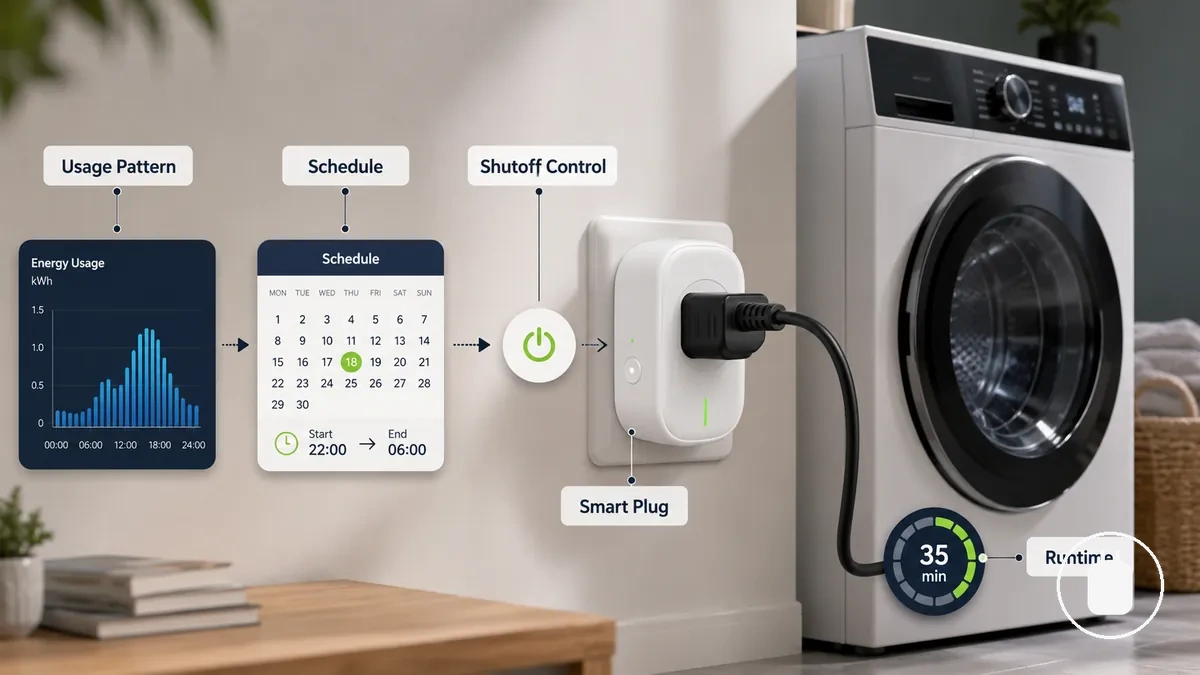
A repeated-use appliance pattern may show that certain periods have unnecessary runtime or a need for a different routine. In that situation, a user may apply a schedule, timer, or remote shutoff based on the measured pattern rather than changing settings without usage information. The result depends on whether the control action matches the appliance behaviour and whether the new routine is maintained.
Schedules, Shutoff Control, and Behaviour Change connect measurement with action. A measured pattern may support a decision to adjust runtime, but monitoring does not automatically create behaviour change or reduce waste without suitable user action.
The following checks help identify whether a measured pattern can lead to a useful control action:
- Measured pattern: The monitoring data shows a repeated use pattern or unnecessary runtime condition.
- Control option: A schedule, timer, or shutoff control matches the identified usage pattern.
- User action: The routine change is suitable for the appliance and the user's needs.
kWh Tracking and Appliance Cost Awareness
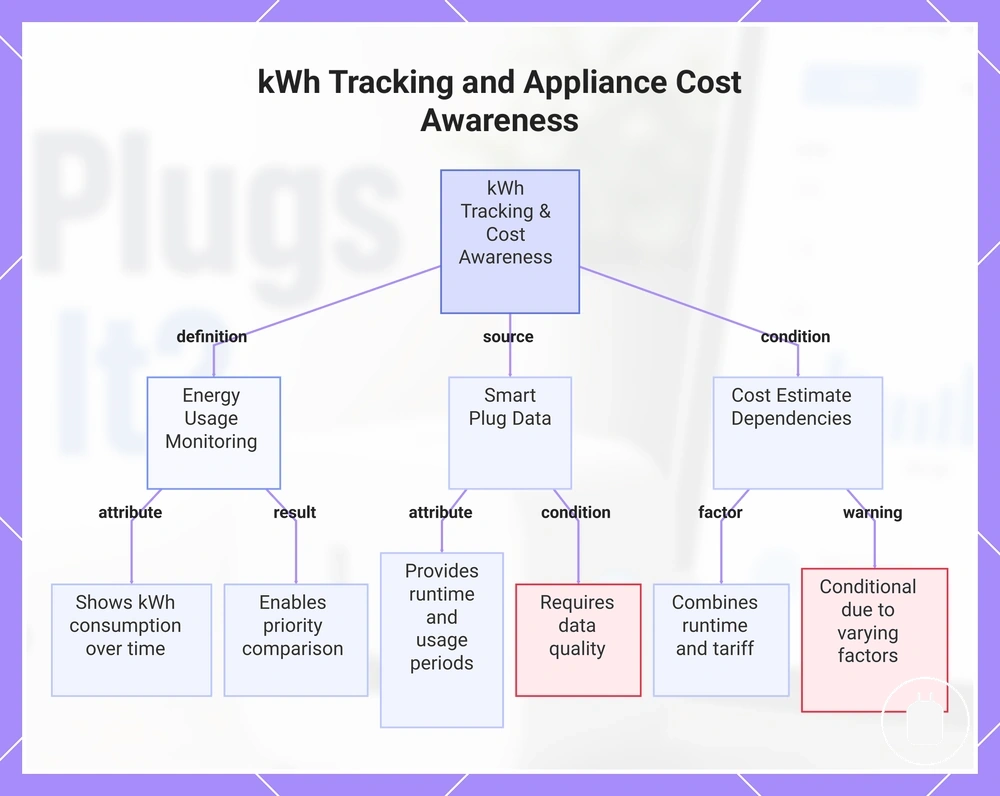
kWh tracking shows appliance energy use over a period of time, helping users understand how electricity consumption relates to running cost awareness. Smart plug data can connect energy usage with runtime and usage periods, giving users a clearer view of appliance cost conditions.
A kWh value can support a rough cost estimate when combined with factors such as runtime and the electricity tariff that applies to the user. For example, smart plug data showing energy use during a usage period may help a user compare whether monitoring that appliance should become a higher priority, but the estimate depends on available data, reporting quality, and tariff details.
kWh Tracking and Appliance Cost Awareness becomes more useful when viewed alongside usage reports over time. These reports can add context for reviewing energy usage history, but cost estimates remain conditional because usage periods, electricity tariffs, and data accuracy can vary.
This chart shows how kWh tracking monitors energy use, the role of smart plug data, and the key factors that make cost estimates conditional.
Why Savings Are Often Conditional
Energy monitoring smart plugs can support savings when measured information leads to useful changes, but they do not guarantee savings in every situation. The value depends on conditions such as appliance behaviour, user action, and whether the monitoring data reveals a practical opportunity to reduce unnecessary use.
Savings potential depends on the relationship between appliance load, standby duration, and user action rather than monitoring alone. A device with higher energy use or longer runtime may provide a different value opportunity compared with a device with limited usage patterns. These conditions influence whether monitoring data can lead to a meaningful change in behaviour.
The value condition also depends on factors such as plug cost, electricity price, and monitoring accuracy. A user may consider whether the additional cost can be recovered over time, but any payback assessment depends on the available data, usage behaviour, and electricity rate.
Energy monitoring provides visibility into electricity use, while behaviour change connects that visibility to possible outcomes. Bill reduction depends on more than measurement alone, so monitoring value and actual bill reduction should be considered as related but separate outcomes.
The following comparison separates different savings conditions:
| Scenario | Condition | Likely value signal |
|---|---|---|
| Stronger value potential | Energy use patterns are visible and user action can address unnecessary runtime. | Monitoring data may support a clearer decision. |
| Conditional value | Energy use is visible, but outcomes depend on appliance behaviour and usage habits. | Information may improve awareness without a predictable result. |
| Lower value potential | Limited usage patterns reduce the opportunity for meaningful changes. | Monitoring may provide visibility with less practical impact. |
Low Standby Loads and Small Annual Savings
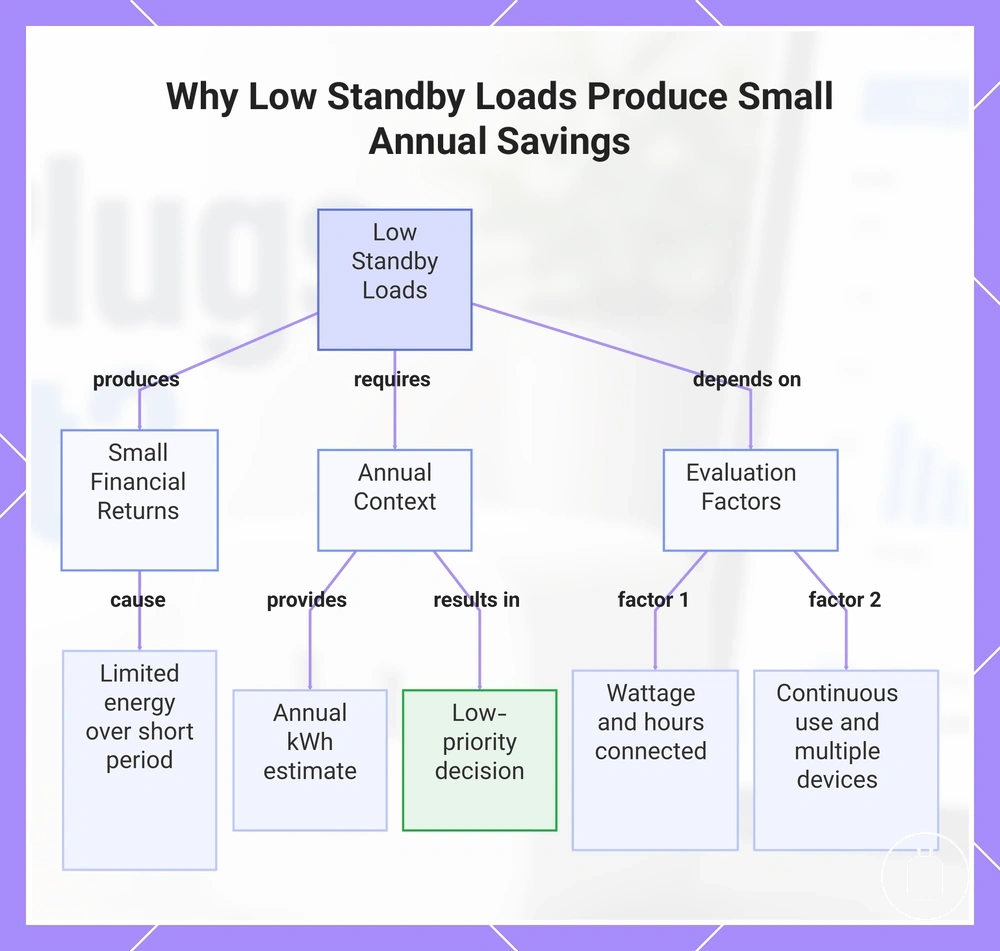
Low standby loads often produce small financial returns because the energy involved may be limited over a short period. A standby device with a small idle draw can still provide useful monitoring information, but the value usually depends on annual context rather than a single measurement. Reviewing wattage over time helps determine whether the load deserves attention.
Low Standby Loads and Small Annual Savings can be understood by placing small wattage values into an annual context. For example, an illustrative standby device with a small idle draw connected for many hours may contribute to an annual kWh estimate that helps compare potential value. This estimate depends on the wattage, hours connected, continuous use conditions, and whether multiple similar devices are involved, so the result may lead to a low-priority decision rather than a direct savings expectation.
This chart explains why low standby loads result in small financial returns, how annual context determines their value, and what factors influence the evaluation leading to a low-priority decision.
The Smart Plug’s Own Power Use
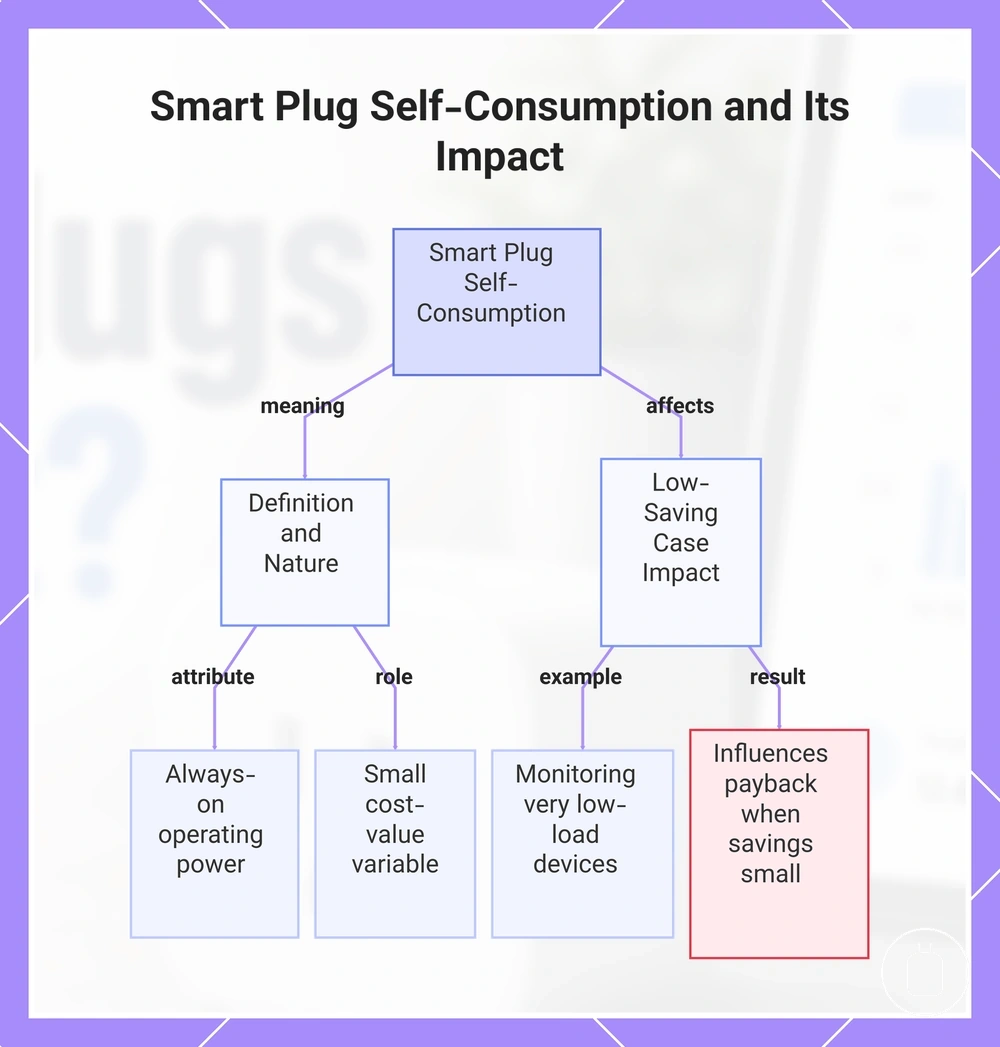
Self-consumption is the smart plug’s own always-on power use while it operates and monitors connected appliances. Smart plug power use is a small cost-value variable that may affect net value in some situations. Considering this internal consumption helps provide a clearer view of the overall value of monitoring.
The impact of self-consumption is more relevant in a low-saving case, such as when monitoring very low-load devices with limited opportunities for change. A smart plug’s own power draw may influence payback considerations when potential savings are already small, while the effect depends on the balance between plug power use, possible net savings, and the suitability of monitoring for that device.
This chart explains what a smart plug's own power draw (self-consumption) is and when it matters for overall value.
Accuracy, App Data, and Usage Report Limits
Data quality affects whether a plug’s insights are useful enough for a worth-it decision. Accuracy, app data, and usage report limits help determine whether monitoring information provides enough confidence for evaluating electricity use and cost decisions.
Measurement accuracy and refresh rate can influence how useful monitoring data is for understanding appliance usage patterns. A plug with limited data quality may still provide awareness, but confidence in the information can vary depending on how readings are recorded, updated, and presented.
App clarity, kWh history, and report granularity can affect how easily users interpret usage information over time. When considering accuracy limits, users can decide whether approximate tracking is sufficient or whether higher accuracy is more important for their cost decisions.
Accuracy, App Data, and Usage Report Limits can be evaluated through criteria that show how data quality affects decision usefulness:
| Criterion | What to check | Why it affects value | When it matters most |
|---|---|---|---|
| Measurement accuracy | How consistently the plug records electricity use information. | Data quality can affect confidence when reviewing usage patterns. | When cost decisions depend on clearer tracking. |
| Refresh rate | How often usage information updates. | Update frequency can affect how clearly changes in usage are viewed. | When reviewing appliance behaviour over time. |
| kWh history | Whether energy usage can be reviewed across a period. | Historical context can make usage comparisons more useful. | When evaluating monitoring priority. |
| Exportability | Whether app data can be accessed or reviewed outside the main view. | Data access may affect comparison and analysis options. | When users need more detailed tracking. |
| App clarity | How clearly the app presents energy information. | Clear presentation can make usage data easier to interpret. | When deciding whether tracking information is actionable. |
| Report granularity | The level of detail available in usage reports. | Report detail can affect how confidently patterns are evaluated. | When approximate tracking may not be enough. |
Who Gets the Most Value From Energy Monitoring Smart Plugs
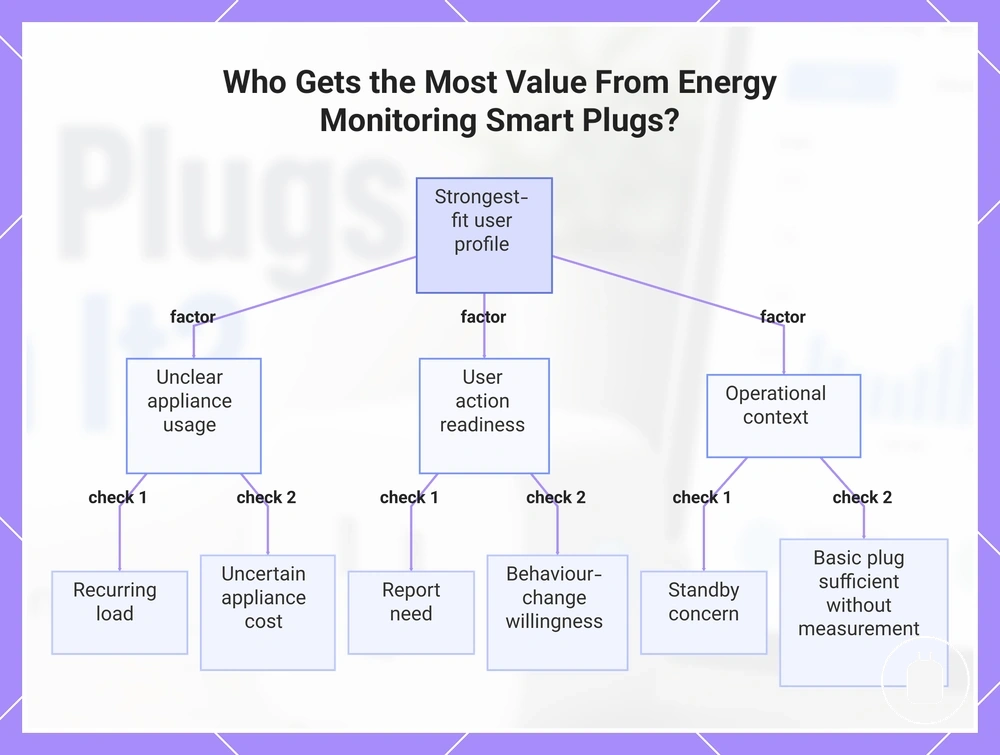
Users most likely to get the most value from energy monitoring smart plugs are those who need clearer information about appliance use, recurring loads, or uncertain appliance costs. These users may benefit when monitoring data supports a practical decision or behaviour change. The value depends on the use case rather than the plug feature alone.
Appliance trackers and users with uncertain running costs may find monitoring more useful when an appliance situation includes a recurring load or unclear energy pattern. A user reviewing an appliance with unknown usage behaviour may use monitoring data to understand whether an upgrade provides enough value. A strong use case usually exists when the information can support a clearer decision.
A standby concern, report need, or willingness to act on data can influence whether energy monitoring provides useful value. Users who want visibility into appliance patterns may benefit when they can connect monitoring information with a change in routine or usage behaviour. The strongest-fit profile is a user type with a clear reason to review data and act on the result.
Renters and users comparing an upgrade from a regular smart plug may consider energy monitoring when they want additional insight into appliance use. The final decision depends on whether the monitoring layer supports a meaningful appliance situation or reporting need.
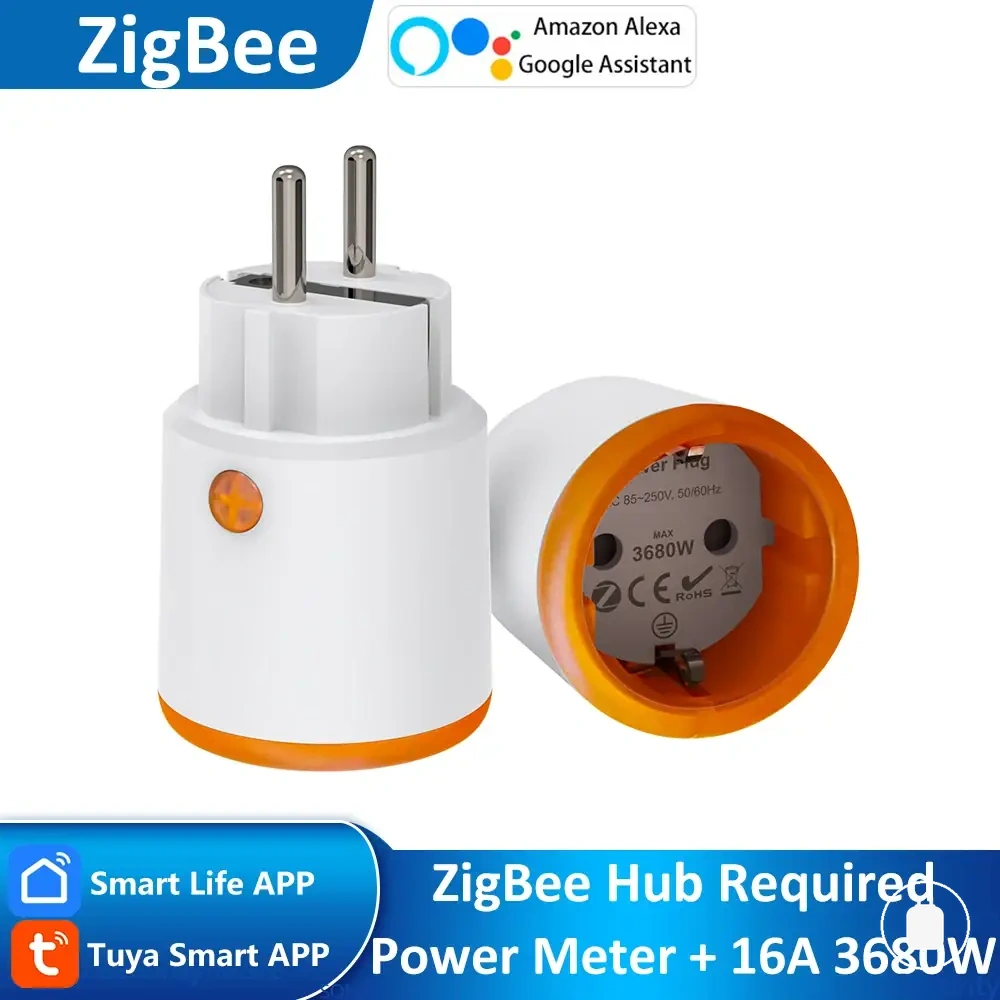
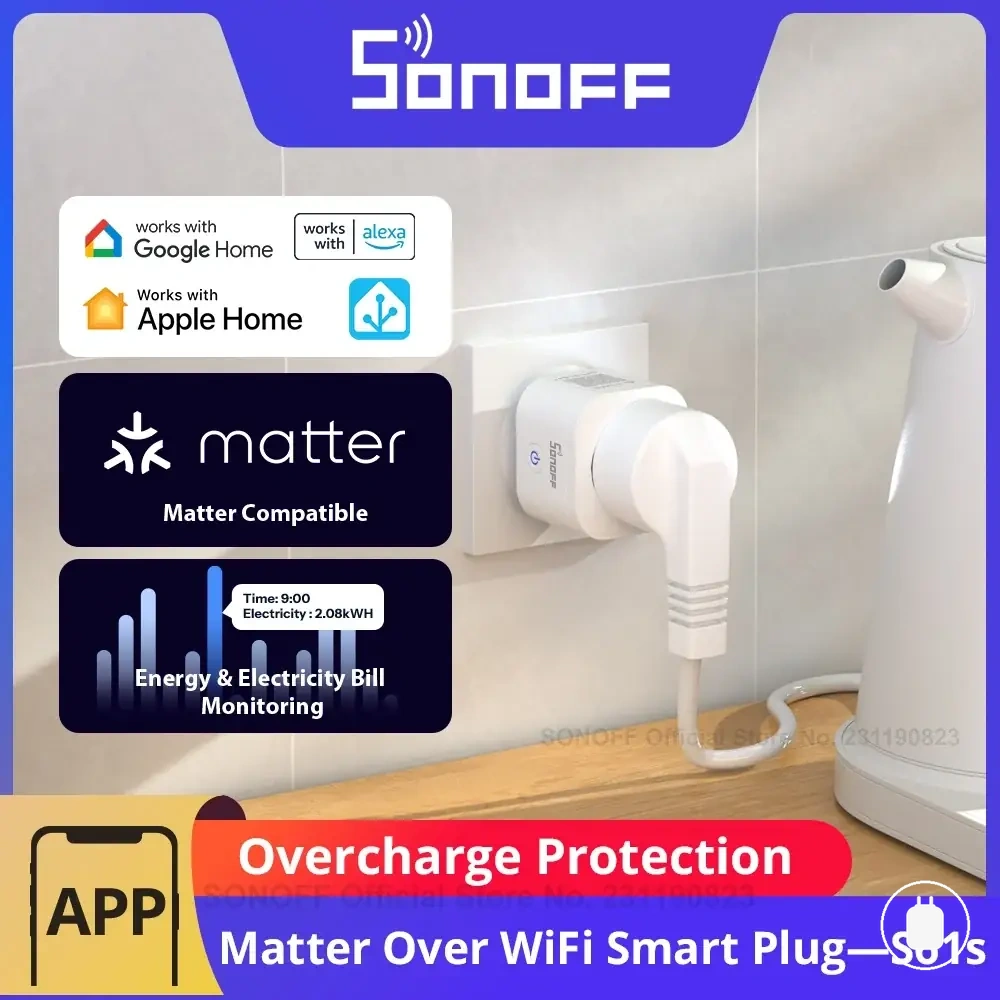
Here are product examples that may make comparison easier. Before buying, always review the compatibility criteria, essential features, and product details.
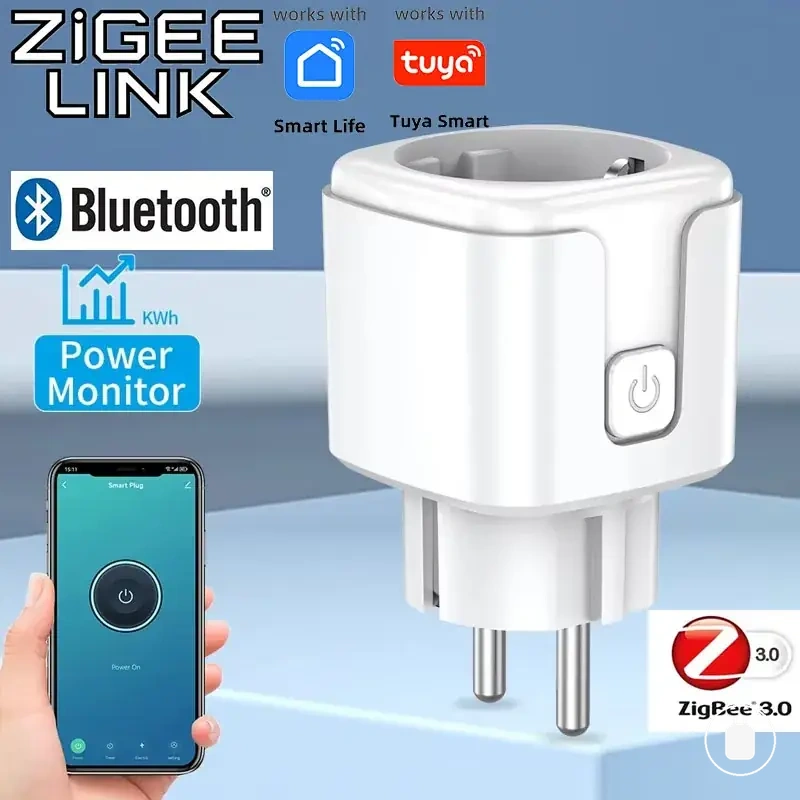
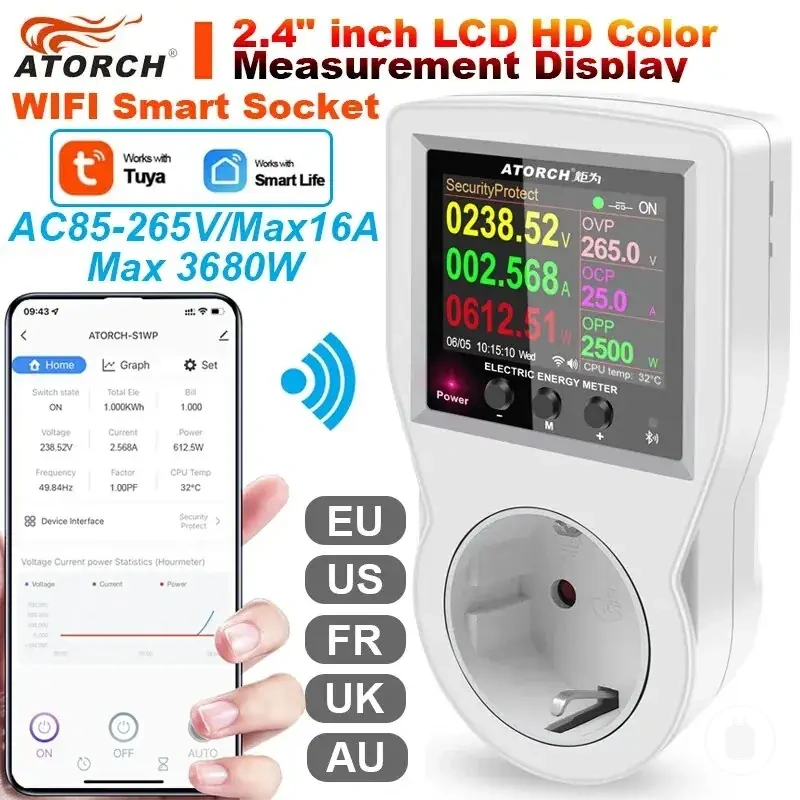
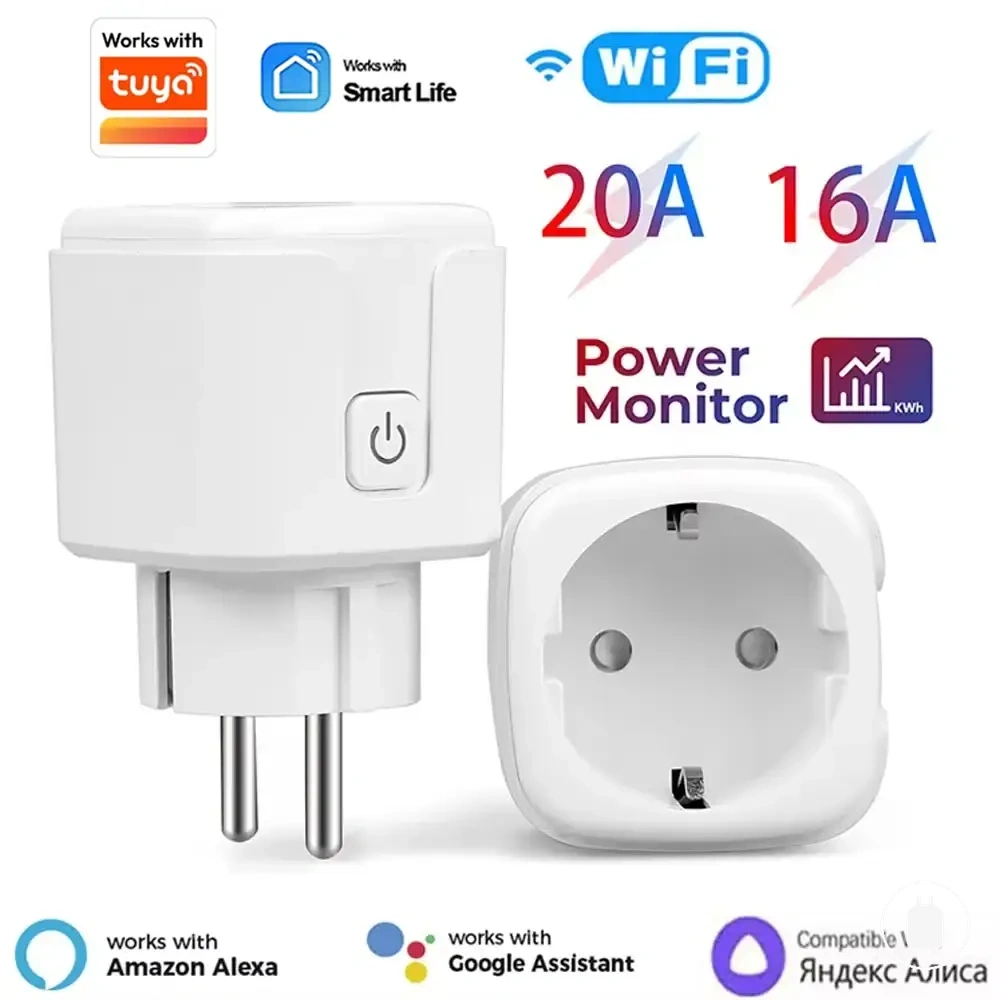
Who Gets the Most Value From Energy Monitoring Smart Plugs can be evaluated through a simple use-case checklist:
- Recurring load: The appliance has repeated usage patterns where monitoring data may provide useful visibility.
- Uncertain appliance cost: The user wants more context about how an appliance contributes to electricity use.
- Standby concern: The user wants to review always-on or idle usage conditions.
- Report need: The user values usage history or reports when making decisions.
- Behaviour-change willingness: The user is prepared to act on information from monitoring data.
- Regular smart plug alternative: Basic on-off control may be sufficient when measurement data is not needed.
This chart shows the key use-case factors that define the user profile most likely to benefit from energy monitoring smart plugs, based on appliance usage patterns, user motivation, and operational context.
When a Regular Smart Plug Is Enough
A regular smart plug is enough when the main need is remote control, scheduling, or automation without requiring energy monitoring data. On-off control and routine-based features can provide value for known appliance usage patterns. This separates control value from measurement value because a regular smart plug manages operation but does not verify plug-level electricity use in the same way.
A regular smart plug may suit users who already understand their appliance usage and have no need for reports or additional measurement information. For a predictable appliance routine, remote control or scheduling may provide enough functionality at a lower cost. A regular smart plug comparison can help clarify whether control-only features match the user's needs.
When a Regular Smart Plug Is Enough can be understood by comparing control needs with measurement needs:
| Need | Regular smart plug fit | Energy monitoring value |
|---|---|---|
| Remote control | Suitable when the goal is turning an appliance on or off remotely. | Useful when electricity use information is also needed. |
| Scheduling | Suitable when appliance routines are already known. | Adds measurement data that may support further decisions. |
| No need for reports | Suitable when control is the main requirement. | Less relevant when usage reports are not needed. |
| Measurement value | Provides control functions without plug-level electricity use tracking. | Provides usage information when measurement is important. |
Worth-It Criteria Before Buying
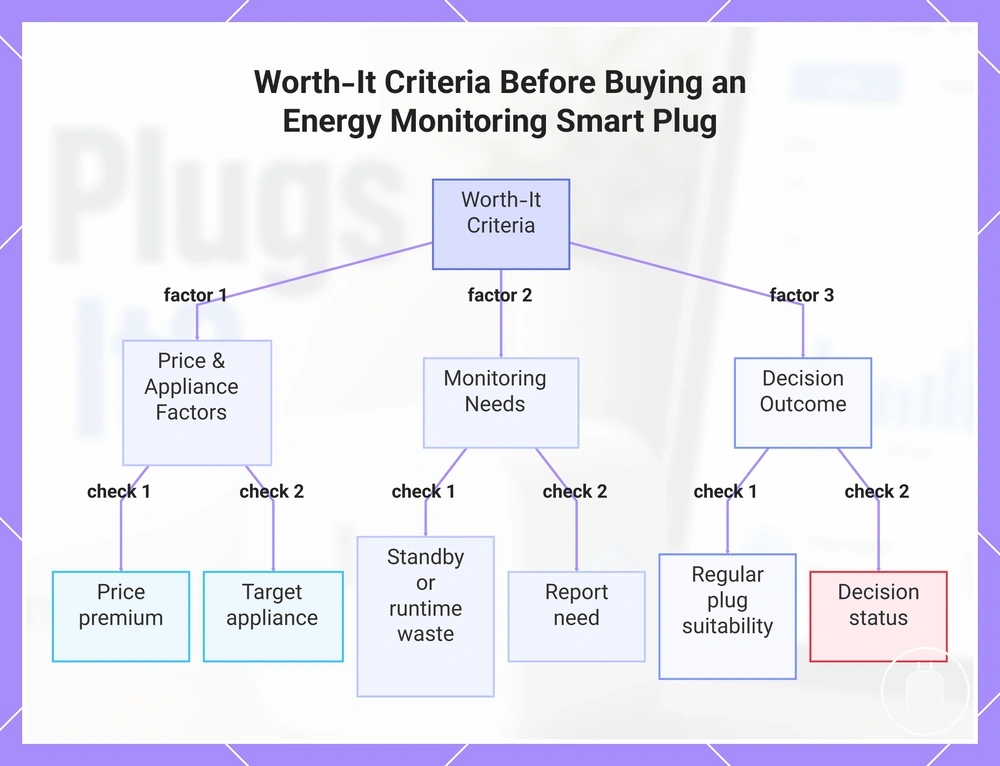
The worth-it decision depends on whether the criteria align with the energy monitoring smart plug’s value, expected use, and cost conditions. A monitoring feature is more useful when it supports a clear purchase decision. The following checklist organizes the worth-it criteria before buying by decision factors rather than product names.
The price premium should be considered alongside the target appliance and the reason for monitoring. A user may find more value when standby waste, runtime waste, or uncertain appliance costs create a need for better visibility. A strong fit is more likely when there is a clear reason to review data and act on the result, while a weak fit may exist when measurement is not needed.
The accuracy requirement and app usability can influence whether monitoring data provides enough confidence for the purchase decision. A user who needs more detailed tracking may place more importance on data clarity, while someone who only needs basic control may find regular plug suitability more relevant. This can help determine whether to compare or skip the upgrade.
Strong fit, conditional fit, and weak fit depend on the appliance situation, reporting need, and willingness to use monitoring data. Users with a clear value condition can review best options to compare after the criteria are complete. Users without a measurement need may decide that a simpler option is more suitable.
Here are product examples that may make comparison easier. Before buying, always review the compatibility criteria, essential features, and product details.
Worth-It Criteria Before Buying can be organized through this final decision checklist:
- Price premium: The added cost is weighed against the expected value of monitoring information.
- Target appliance: The appliance situation provides a reason to understand energy use patterns.
- Standby or runtime waste: The user wants to review a recurring waste pattern or usage condition.
- Report need: Usage reports would help support a more informed decision.
- Accuracy requirement: The level of tracking detail matches the confidence needed for the decision.
- App usability: The information is presented clearly enough for the user’s intended use.
- Regular plug suitability: A control-only option may be enough when measurement value is not required.
- Decision status: The criteria support a decision to proceed, compare, or skip.
This chart categorizes the worth-it criteria for an energy monitoring smart plug into three decision factors, helping you determine if the upgrade is worth the cost.