
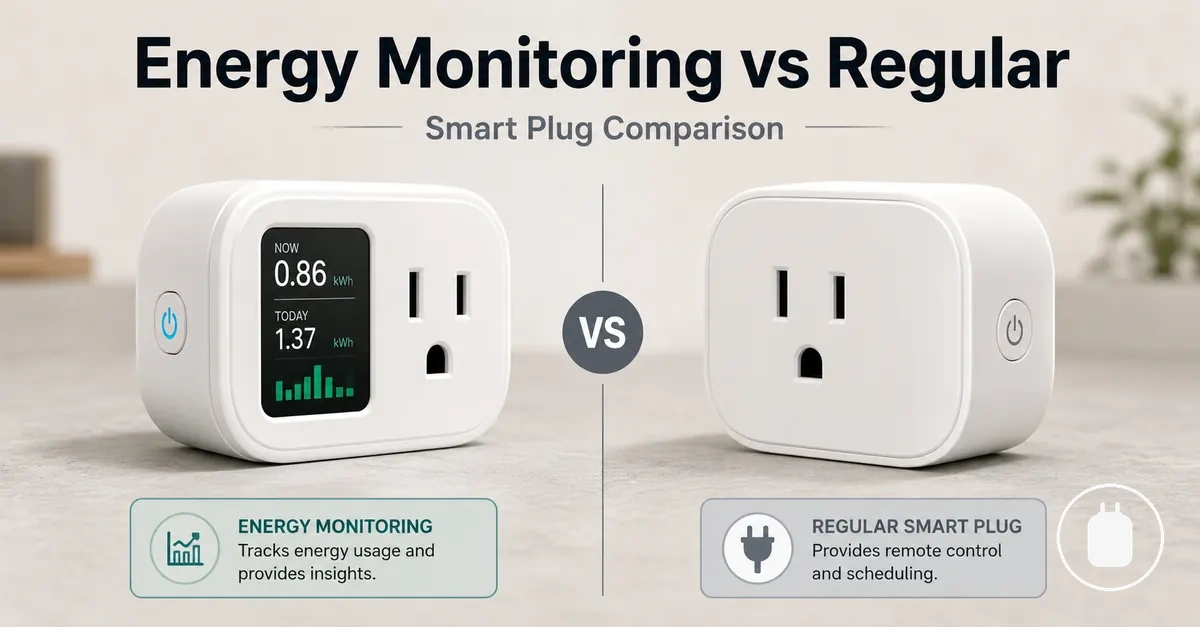
Energy Monitoring Smart Plugs vs Regular Smart Plugs
Energy monitoring smart plugs differ from regular smart plugs by adding usage visibility to standard plug control functions. A regular smart plug focuses on functions such as remote control, scheduling, and automation, while a smart plug with energy monitor can add power usage tracking through watts, kWh, and app reports. The choice between these plug types depends on whether the priority is simple control or understanding appliance energy use.
Users who only need remote switching or scheduled automation may find that a regular smart plug meets their control needs. Users who want to review usage patterns, monitor power consumption, or use app data for decisions may need the additional measurement layer of an energy monitoring smart plug. This comparison focuses on plug type differences, control features, and usage visibility rather than individual products.
Energy monitoring does not automatically create savings for every user. The value of usage data depends on factors such as the appliance, load conditions, app support, and how the information is used when making decisions.
What Separates Energy Monitoring Smart Plugs from Regular Smart Plugs
An energy monitoring smart plug is a smart plug that adds plug-level usage measurement to normal remote control functions. It combines switching control and scheduling with visibility into electricity use through data such as real-time power, watts, kWh tracking, and usage history. This measurement capability is the main difference between a smart plug with energy monitor and a standard control-focused plug.
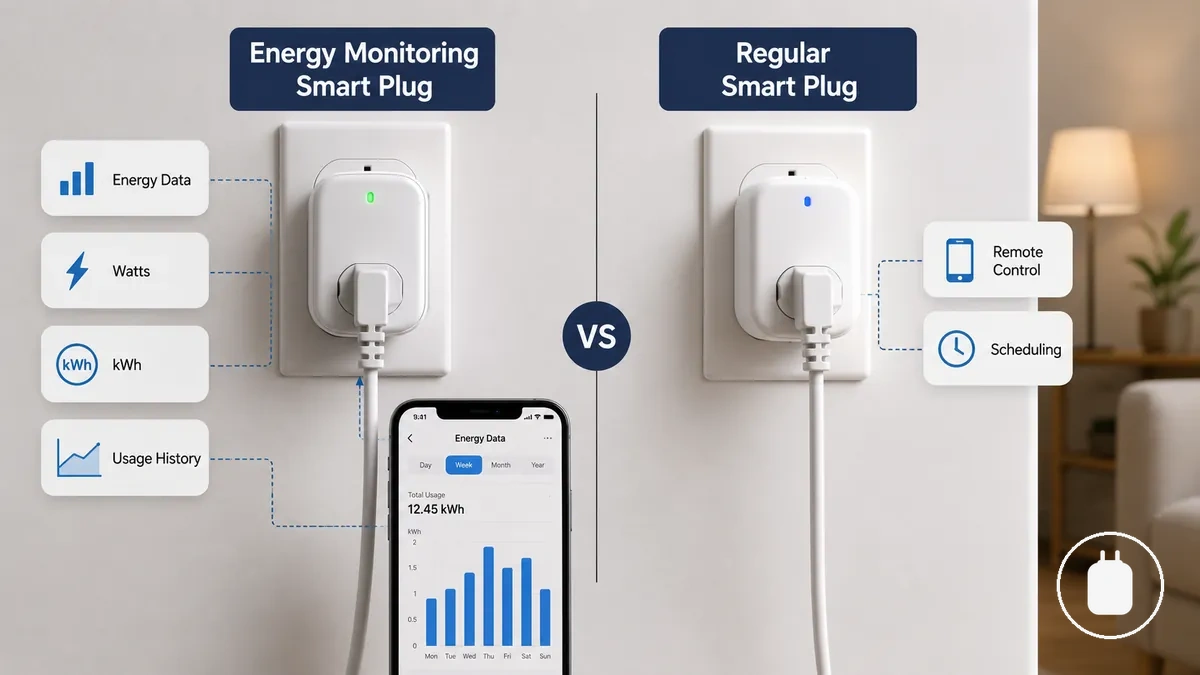
A regular smart plug usually provides control features such as remote switching, scheduling, and automation. It may allow users to manage connected appliances through an app, but it does not provide the same measurement layer unless a monitoring feature is included. The key difference is what energy monitoring adds by showing appliance usage information alongside normal control functions.
This comparison explains the capability boundary between plug types rather than ranking individual products. Energy monitoring smart plugs and regular smart plugs can vary by model, so available features depend on the specific device and supported functions.
Capability boundary: The comparison below clarifies what each plug type usually provides and what the available features do not prove.
| Plug type | What it usually does | What it does not prove |
|---|---|---|
| Regular smart plug | Provides functions such as remote control, scheduling, remote switching, and basic automation. | It does not confirm appliance energy measurement unless a monitoring feature is included. |
| Energy monitoring smart plug | Adds usage measurement features such as watts, kWh tracking, and usage history when supported. | It does not prove savings, exact billing results, or suitability for every appliance. |
Automation Control vs Energy Usage Tracking
Automation control and energy usage tracking serve different purposes in smart plug decisions. Automation control focuses on managing power through functions such as remote switching, schedules, and timers, while energy usage tracking focuses on understanding power consumption through visibility into usage data. The main difference is whether the user needs control functions only or additional measurement information to support decisions.
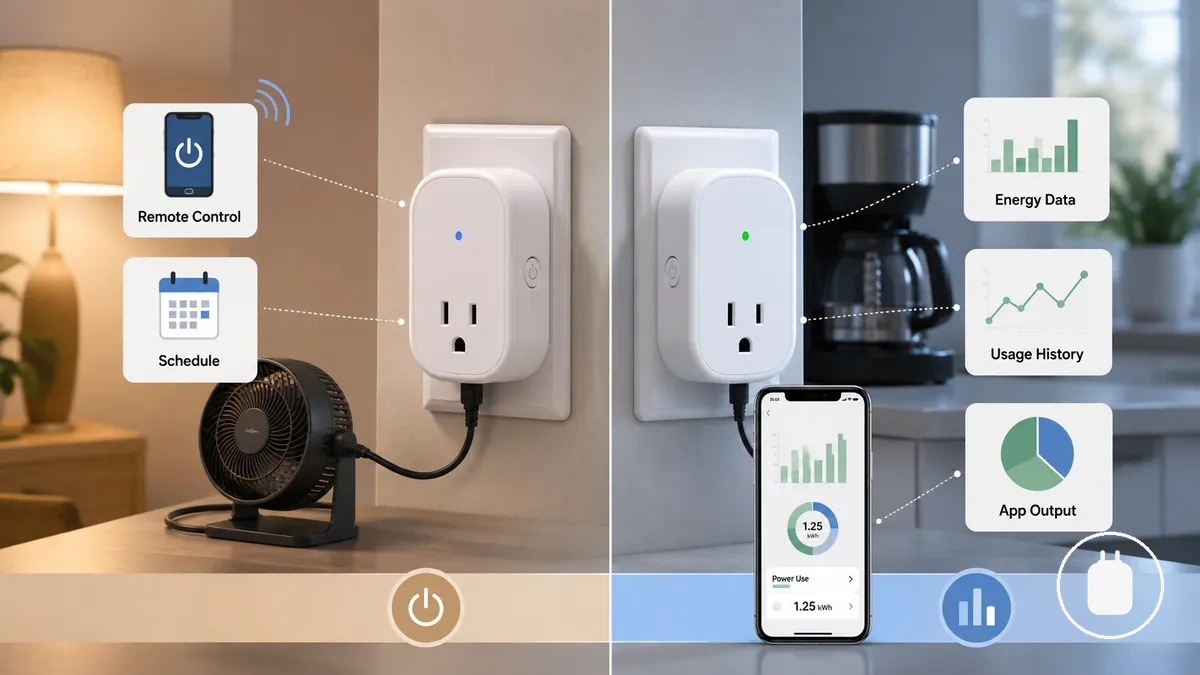
Users who need simple convenience may focus on remote switching, timer functions, and scheduled routines. Users who want to understand appliance consumption may need data visibility, usage history, and app output from an energy monitoring smart plug. These different needs explain why control and measurement should be evaluated separately.
The comparison below shows how smart plug types differ by function, data output, and decision value. For more detail on monitoring features, the key distinction is how added energy data changes the information available beyond normal automation control.
| Dimension | Regular smart plug | Energy monitoring smart plug | Decision value |
|---|---|---|---|
| Control | Provides functions such as remote switching and app-based control. | Combines control functions with energy data visibility when supported. | Helps identify whether control alone or additional usage information is needed. |
| Scheduling | Supports schedules and timers for automation routines when available. | Can combine schedules with energy usage information when supported. | Shows whether the priority is automation convenience or consumption awareness. |
| Live usage data | Focuses on operating connected appliances through control features. | Can provide power consumption information such as watts when supported. | Helps users understand appliance activity beyond switching control. |
| History | May provide control-related information depending on app functions. | Can provide usage history and energy data views when supported. | Supports decisions that require visibility into past usage patterns. |
| App visibility | Primarily displays control settings and automation functions. | May display energy tracking information and usage data through the app. | Clarifies whether additional data visibility provides useful decision support. |
Remote switching and scheduling
Remote switching and scheduling are shared control functions that allow both regular smart plugs and energy monitoring smart plugs to manage connected appliances. Remote switching provides app control for on-off actions, while scheduling and timer functions support basic automation routines when available. These control features are not unique to an energy monitoring smart plug because they focus on managing appliance operation rather than measuring usage.
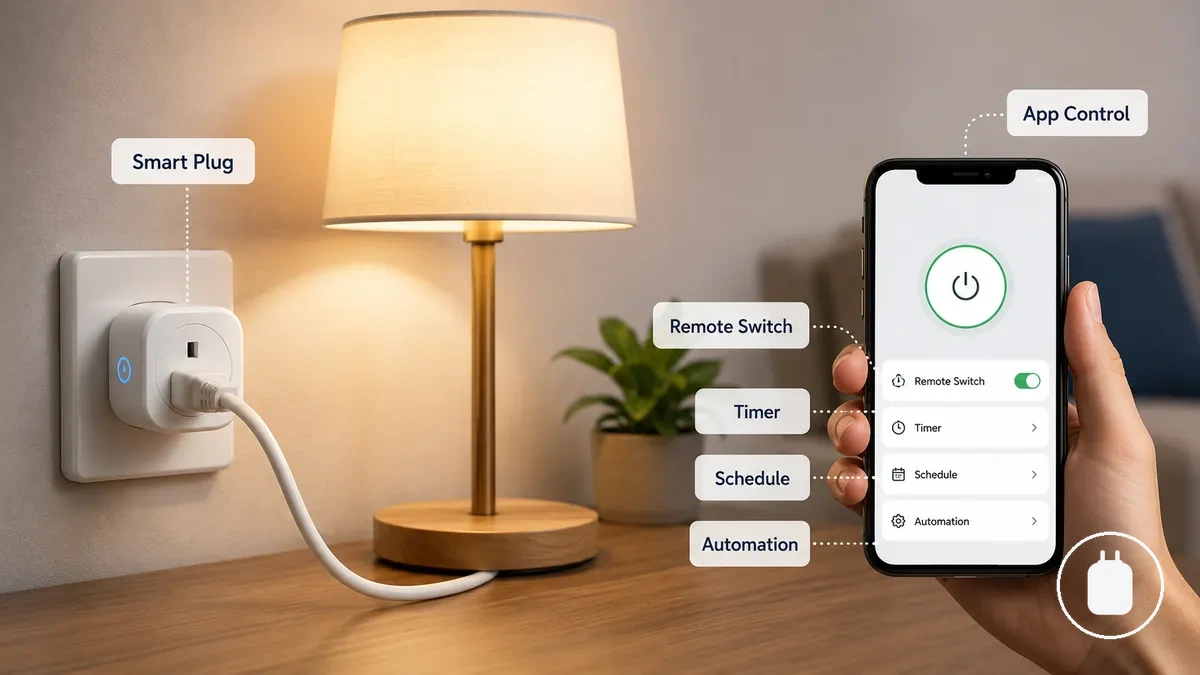
A lamp scheduled to turn on or off at a chosen time is a simple example of how these shared functions can be used. The available controls can vary by plug model, app, and supported protocol, so users should check the specific capabilities when comparing smart plug options.
Real-time watts, kWh, and usage history
Real-time watts, kWh, and usage history provide different views of appliance power use through an energy monitoring smart plug. Watts show current draw at a specific moment, while kWh tracking shows accumulated consumption over a usage period and history shows changes in usage patterns over time. These data views help distinguish live power information from longer-term consumption information.
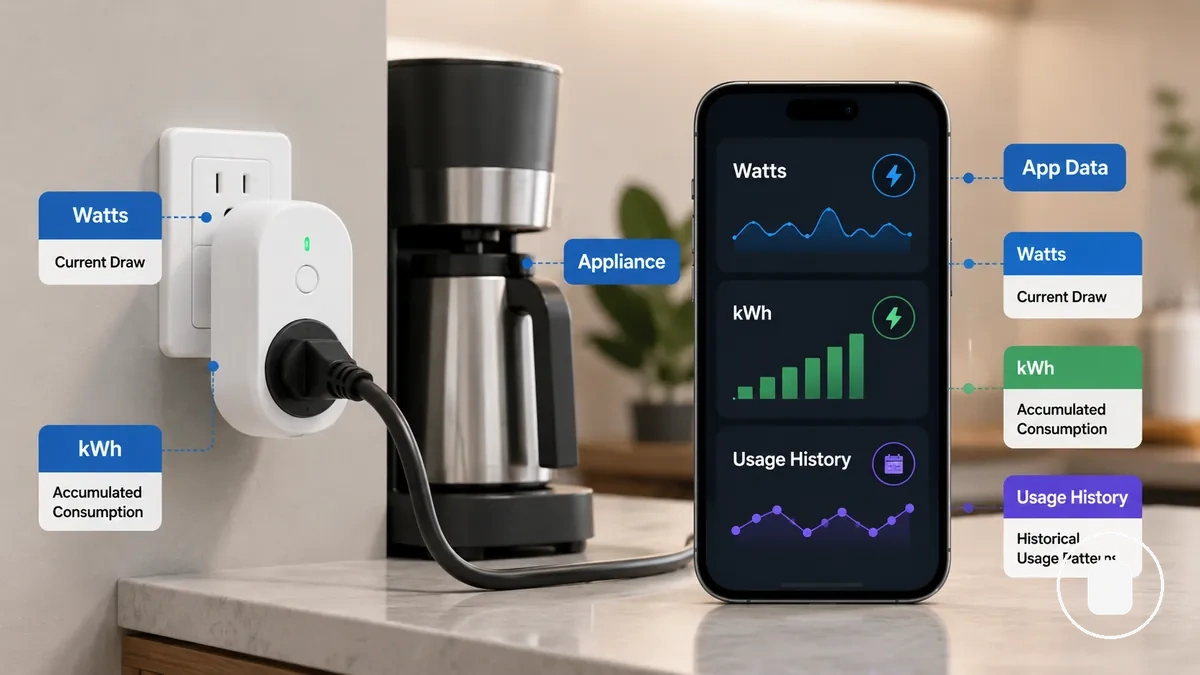
A user checking an appliance may look at current draw to understand active power use, then review usage history to compare appliance cycles or identify periods of higher consumption. App readings can support these observations, but interpretation depends on the device, app display, and appliance usage conditions.
- Watts: Shows current draw and live power use from a connected appliance.
- kWh: Shows total consumption accumulated over a selected usage period.
- Usage history: Shows past consumption patterns that can help compare appliance cycles or standby draw periods.
App reports and usage visibility
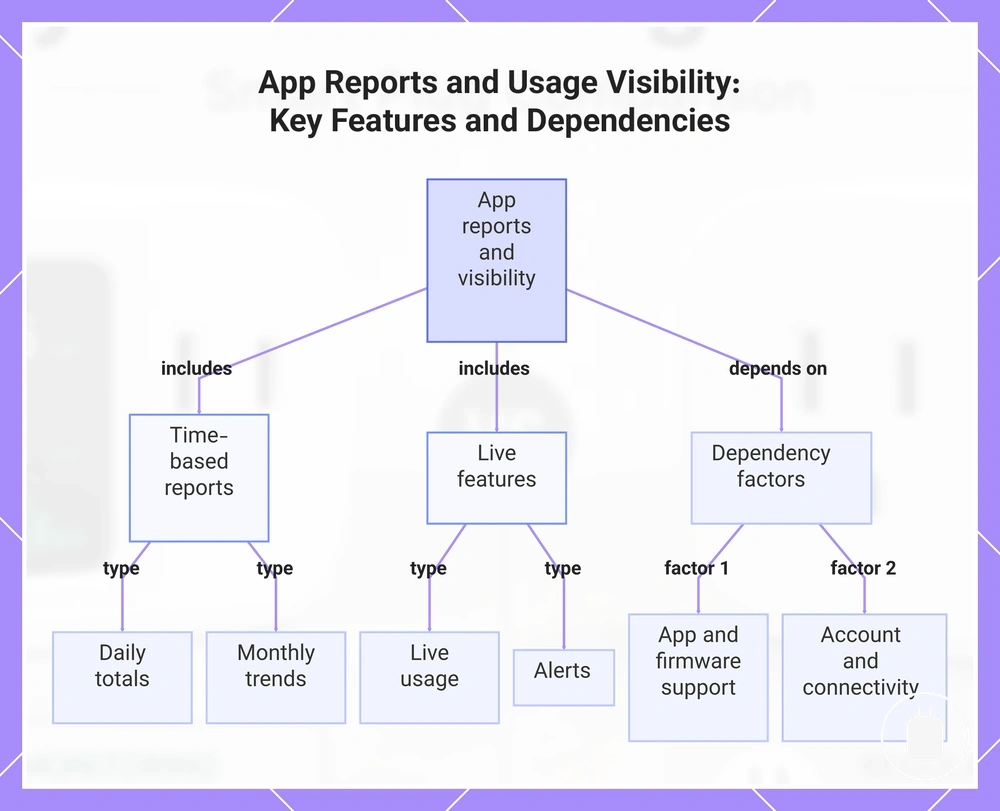
App reports and usage visibility make energy data easier to interpret by turning readings into visible information such as daily totals, monthly trends, and usage history. These reports separate raw readings from the way an app presents information for decision-making. Reporting depth can depend on the app, firmware, account features, and connectivity available for the smart plug.
A user reviewing an appliance trend may use app reports to compare changes in usage over time rather than only viewing a single reading. Features such as live usage, alerts, and export limits can vary by device and app support, so the available visibility depends on the specific setup.
- Daily totals: Show energy use over a day and can help identify general usage patterns.
- Monthly trends: Provide longer-term consumption views that may help compare usage periods.
- Live usage: Displays current information when supported, helping users view active appliance use.
- Alerts: May provide notifications when supported by the app and device features.
- Export limits: Can affect how usage data is accessed or shared depending on account features and app support.
This chart shows the main features provided by smart plug app reports and the factors that affect visibility.
What Regular Smart Plugs Can and Cannot Track
Regular smart plugs usually control power through functions such as switching and scheduling, but they do not measure appliance energy use unless a monitoring feature is included. A regular smart plug can show an appliance on or off state, while a smart plug with power monitoring may add energy data such as watts or kWh. The capability boundary depends on whether measurement hardware is available.
Smart plug labels can make the distinction less clear because product names may vary by model and feature set. A monitoring feature changes what a plug can measure, while a basic smart plug may focus on control power functions without usage tracking. This comparison separates what can be controlled, inferred, and measured.
Capability boundary: The table below clarifies the difference between control functions and measurement functions.
| Capability | Regular smart plug | Smart plug with monitoring |
|---|---|---|
| Switching | Controls power states such as on and off through supported functions. | Provides switching control while adding measurement capability when included. |
| Scheduling | Supports schedules and timers for automation when available. | Can combine schedules with usage information when supported. |
| Live power | Shows control status but does not provide energy measurement without a monitoring feature. | May provide live power information such as watts when measurement capability is available. |
| kWh history | Does not provide energy history without measurement hardware. | May provide accumulated usage information and history when supported. |
| Report visibility | Focuses on control functions rather than energy reporting. | May provide app-based usage views depending on device and app support. |
Decision Criteria Before Choosing Either Plug Type
Choosing between smart plug types depends on decision criteria such as the intended use case, monitoring need, compatibility, safety, and appliance type. A regular smart plug may suit users focused on automation, while an energy monitoring smart plug may suit users who need consumption evidence. The main decision variables are control, measurement, price, value, and the conditions where each plug type fits the user's needs.
A user focused on simple automation may prioritise remote control, scheduling, and basic operation without needing energy data. A user tracking appliance behaviour may place more value on usage visibility and consumption evidence. The right choice can vary depending on compatibility requirements, appliance type, safe load conditions, and whether monitoring information changes the decision. For users evaluating whether monitoring is worth it, the value depends on the intended use and the need for additional information.
Decision criteria: The table below compares use cases, required attributes, acceptable conditions, and the plug type that may better fit each situation.
| Use case | Required attribute | Acceptable condition | Better-fit plug type |
|---|---|---|---|
| Automation-only | Control functions such as scheduling and remote switching. | The user needs appliance control without consumption evidence. | Regular smart plug |
| Appliance tracking | Usage data and measurement capability. | The appliance and plug support monitoring features needed for tracking. | Energy monitoring smart plug |
| App reporting | App visibility and energy information. | The app, firmware, and account features support available reports. | Energy monitoring smart plug |
| Budget-sensitive use | Relevant features without unnecessary functions. | The chosen plug type matches the required use case and value expectations. | Depends on required features |
| Safety and load checks | Suitable appliance type and safe load conditions. | The appliance requirements match the plug capabilities. | Depends on compatibility and safe use conditions |
Price difference and expected value
The price difference between regular smart plugs and energy monitoring smart plugs should be judged by the expected value of the added usage data. An energy monitoring smart plug can cost more because it adds measurement capabilities, but the value of the price premium depends on the monitoring need and how the information supports decisions. The extra cost is conditional on whether the data provides useful value for the intended use case.
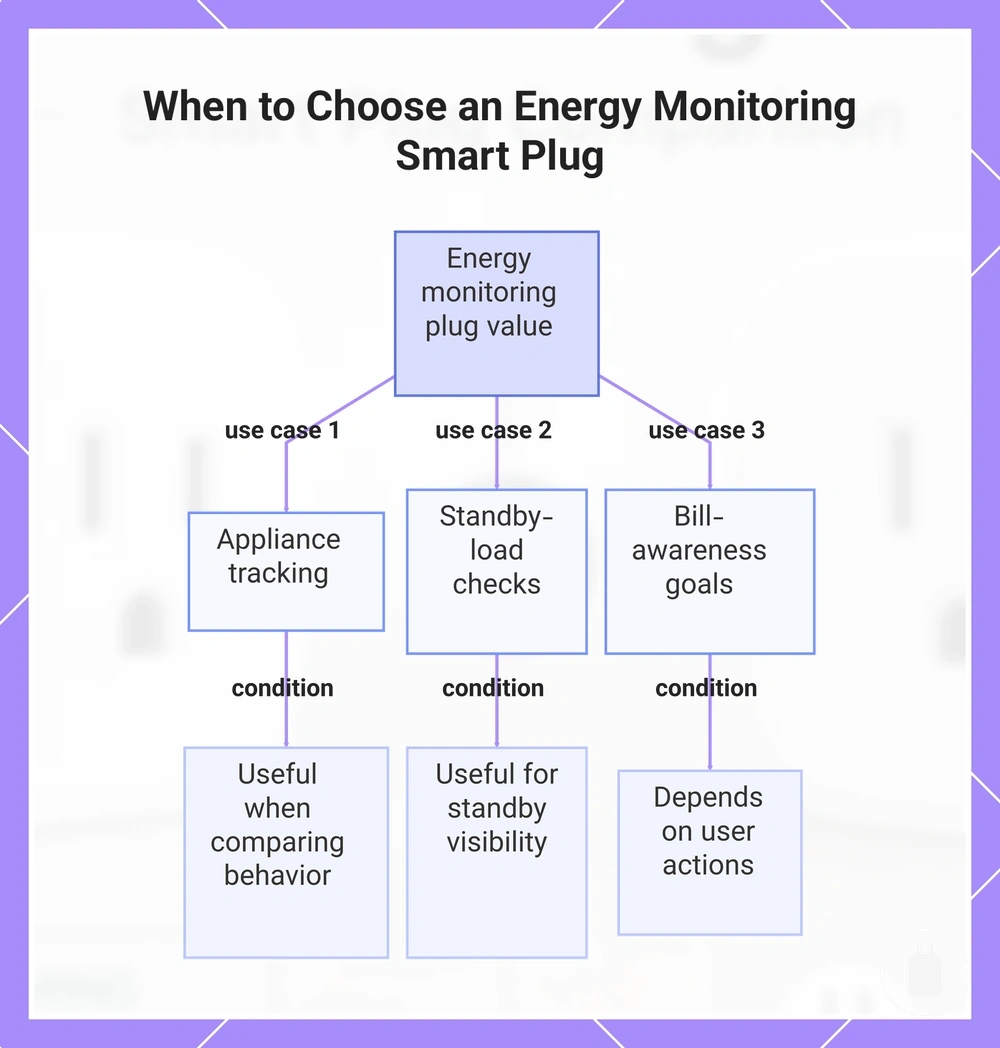
A user who only needs automation may see limited value from additional measurement features. A user focused on appliance tracking, standby-load checks, or bill-awareness goals may find usage data more useful because it adds consumption evidence. The potential payback depends on how the information is used and does not represent a fixed outcome.
- Appliance tracking: Usage data may provide more value when comparing appliance behaviour is an important decision factor.
- Standby-load checks: Monitoring can be useful when visibility into standby power use supports a specific goal.
- Bill-awareness goals: Consumption information may improve awareness, but the value depends on user actions and conditions.
This chart shows the main use cases where the extra cost of an energy monitoring smart plug provides value based on usage data.
Accuracy limits for appliance readings
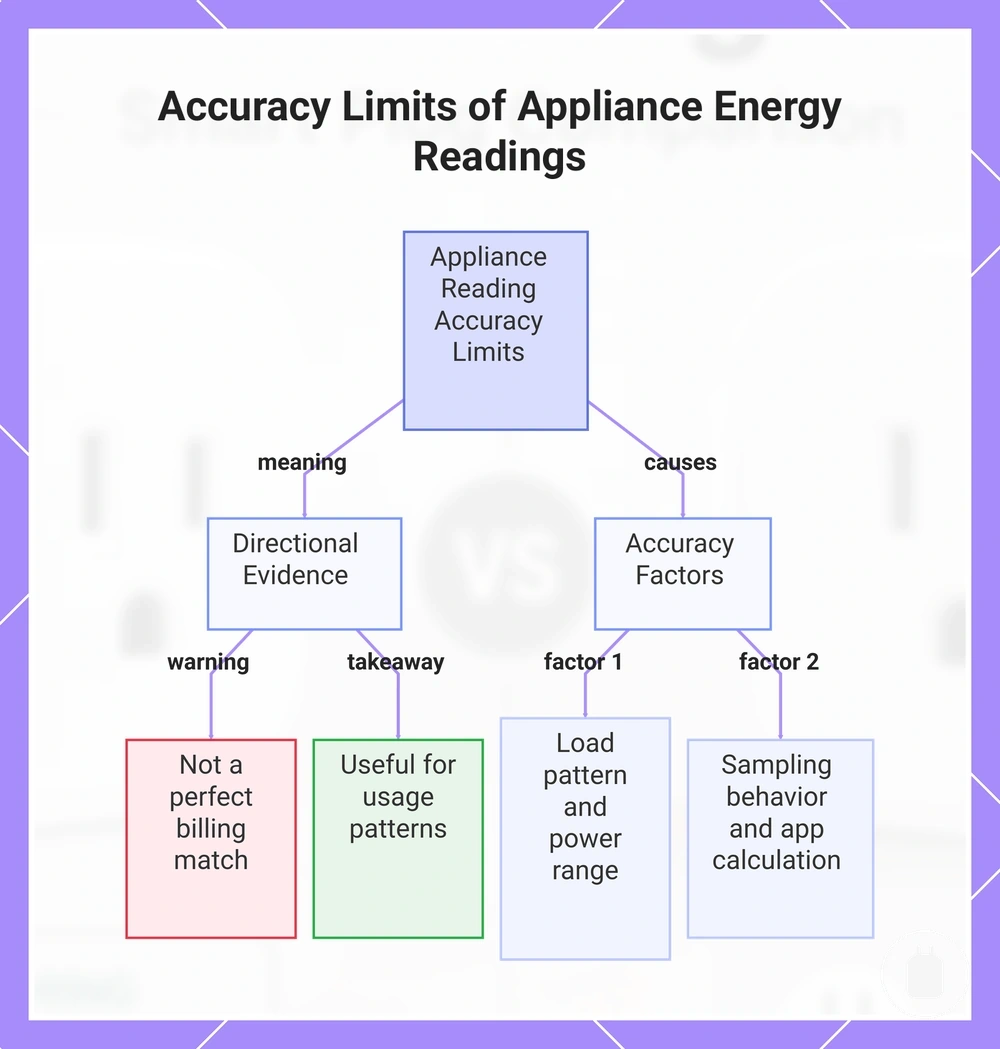
Energy monitoring readings can support appliance decisions, but accuracy limits mean they should be treated as directional evidence rather than a perfect match for utility billing. Appliance readings can vary based on factors such as appliance load pattern, wattage range, sampling behavior, and app calculation methods. These limitations affect confidence in readings without removing their usefulness for understanding usage patterns.
A user reviewing power readings can use them to compare appliance behaviour, check standby draw, or observe changes across appliance cycles. The information can guide decisions, but the reliability of the usage estimate depends on the device, measurement conditions, and how the data is interpreted.
- Appliance load pattern: Different operating patterns can change readings and influence confidence in comparisons.
- Wattage range: The level of power being measured can affect how clearly appliance activity is represented.
- Sampling behavior: The way measurements are collected can affect how usage changes appear over time.
- App calculation: Data processing can influence how readings are displayed and understood.
This chart shows the meaning of accuracy limits in appliance energy monitoring and the key factors that affect reading reliability.
App compatibility and ecosystem support
App compatibility and ecosystem support can affect whether a regular smart plug or an energy monitoring smart plug fits a user's existing setup. Compatibility depends on conditions such as connection method, app support, firmware, and the ecosystem required for control, reporting, or automation features. These factors can influence the buying decision between plug types.
- Wi-Fi: The connection method can affect app communication, control availability, and how the plug integrates with a supported setup.
- Matter: Support may affect ecosystem integration when the plug and connected devices use compatible standards.
- Zigbee: A hub or compatible ecosystem may be required for certain control or automation functions.
- Voice assistant: Voice control availability can depend on ecosystem support, account connections, and compatible features.
- Hub: Some plug setups may use a hub to support automation functions or device communication.
- Reporting: Energy monitoring reporting can depend on app compatibility, firmware, account features, and connectivity conditions.
Appliance suitability and safe load limits
Appliance suitability and safe load limits should be checked before considering automation or monitoring value. Plug choice depends on factors such as appliance type, wattage, current rating, heat, and continuous load requirements. Manufacturer ratings and local electrical requirements provide the safety-first rule before convenience features are considered.
Checking load suitability first helps determine whether a plug type is appropriate for the intended appliance. Monitoring and automation features can add value only after the appliance load conditions and safety requirements are understood.
- Appliance type: Consider whether the connected appliance matches the intended use conditions and appliance load requirements.
- Wattage and current rating: Check the appliance load against the stated plug ratings before use.
- Heat and continuous load: Consider whether heat or ongoing operation may affect safe use conditions.
- Manufacturer ratings: Follow the stated ratings and guidance for the plug and connected appliance.
- Local electrical requirements: Consider applicable local requirements when evaluating safe use conditions.
When a Regular Smart Plug Is the Better Fit
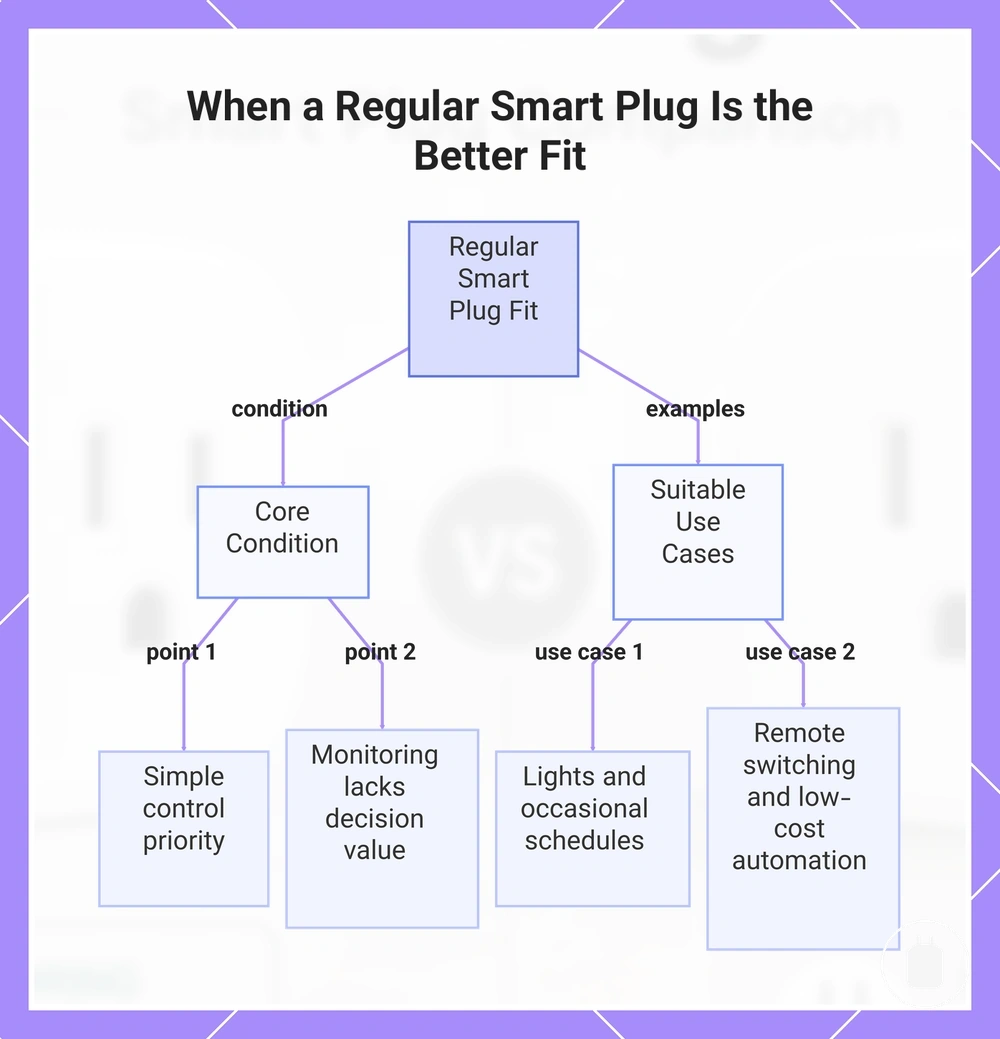
A regular smart plug is usually a better fit when the main need is simple control rather than usage data. It can provide control value through functions such as remote switching and schedules when a user does not need consumption information to make decisions. This control-only fit depends on the user's needs, app support, and whether usage data would change the outcome.
A user focused on basic automation may find enough functionality in simple control features without adding monitoring capabilities. For example, managing lights or occasional schedules may not require additional energy information if the goal is only convenient operation. Choosing a regular smart plug can make sense when monitoring would not provide enough decision value for the intended use.
- Lights: A regular smart plug may be a suitable fit when the goal is simple on and off control without usage data.
- Occasional schedules: A regular smart plug may provide enough functionality when automation routines are limited and energy tracking would not change the decision.
- Remote switching: Simple control needs may be met when the main requirement is managing appliance power remotely.
- Low-cost automation: A regular smart plug may fit when basic automation is the priority and additional monitoring value is not needed.
- No data-driven decision: A regular smart plug may be appropriate when usage data would not influence how the appliance is managed.
This chart shows the key condition and typical use cases where a regular smart plug is a better fit than an energy monitoring plug.
When Energy Monitoring Justifies the Upgrade
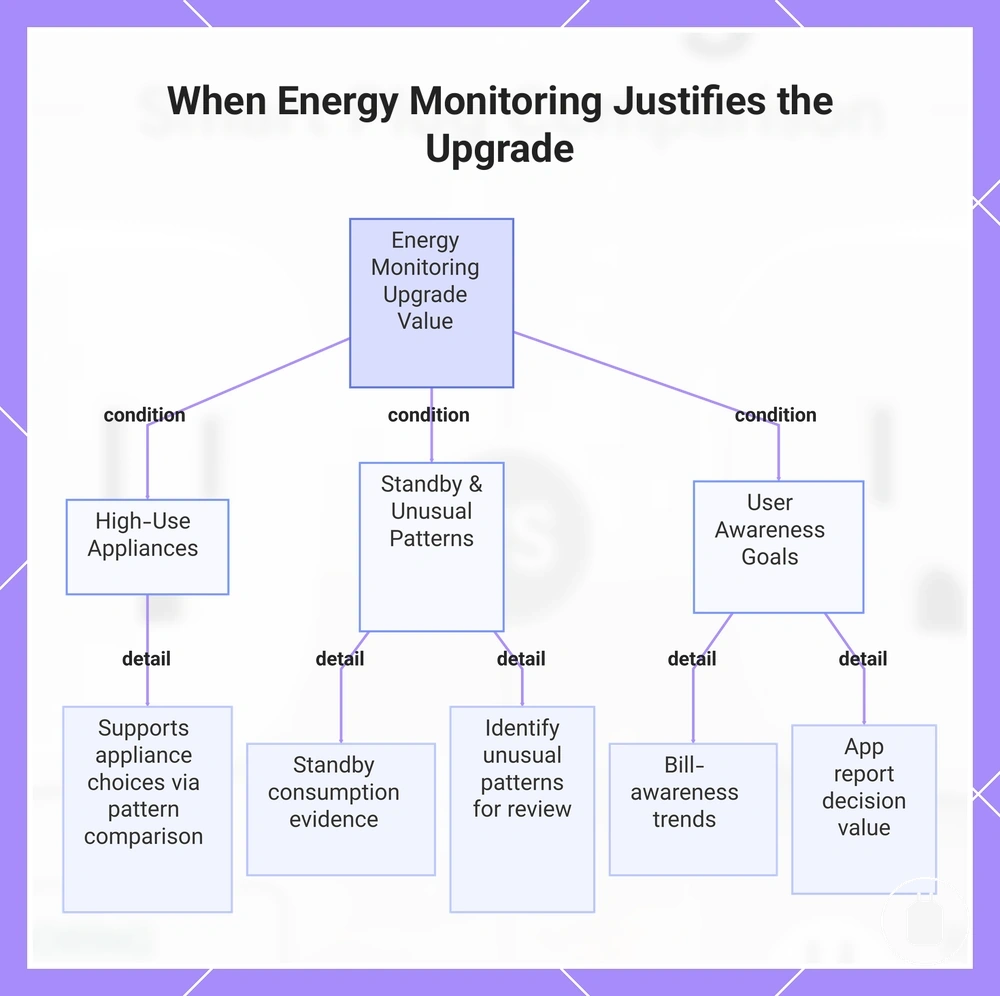
Energy monitoring is worth considering when usage data can change appliance choices, schedules, or buying confidence. A monitoring upgrade can provide more value when consumption evidence helps guide decisions beyond simple automation. The value of the upgrade depends on whether repeated usage tracking provides useful information for future appliance decisions.
A user who regularly reviews appliance behaviour may find monitoring more useful than someone who only needs basic control. High-use appliances, standby consumption checks, and unusual usage patterns can create situations where additional data influences decisions. App report usefulness and bill-awareness goals may also affect the value case, but savings outcomes and confidence depend on the specific conditions.
- High-use appliances: Usage data may support appliance choices when repeated tracking helps compare consumption patterns.
- Standby consumption: Monitoring may provide useful evidence when understanding ongoing power use affects a decision.
- Unusual usage patterns: Energy monitoring can help identify patterns that may require closer review before changing appliance use.
- Bill-awareness goals: Consumption evidence may improve awareness of usage trends, but any savings impact depends on user actions and conditions.
- App report usefulness: Reports may add decision value when available information helps evaluate schedules, appliance use, or future choices.
This chart shows the key conditions under which energy monitoring provides enough value to justify an upgrade.
Which Plug Type Fits Your Use Case
The right plug type depends on the use case and the required capability. A regular smart plug may fit users who need simple automation, while an energy monitoring smart plug may fit users who need energy tracking, appliance comparison, or app reporting. The final use-case match depends on whether control features or consumption evidence are required.
Users focused on simple automation may find that a regular smart plug provides enough functionality for lights, schedules, and remote switching. Users who need energy tracking may place more value on monitoring capabilities that support appliance comparison and usage visibility. Budget sensitivity, compatibility, and safety constraints can also affect the decision because the suitable option depends on the required capability.
The final recommendation depends on matching the plug type to the situation where it provides the most relevant value. Users comparing monitoring options can compare energy monitoring smart plugs based on their use case and required features before deciding on a suitable option.
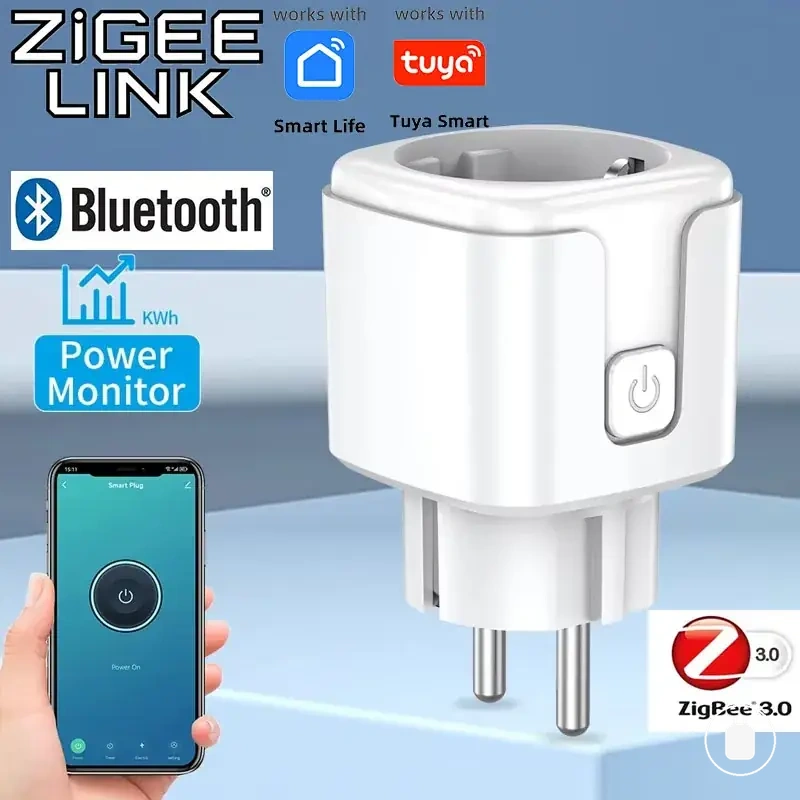
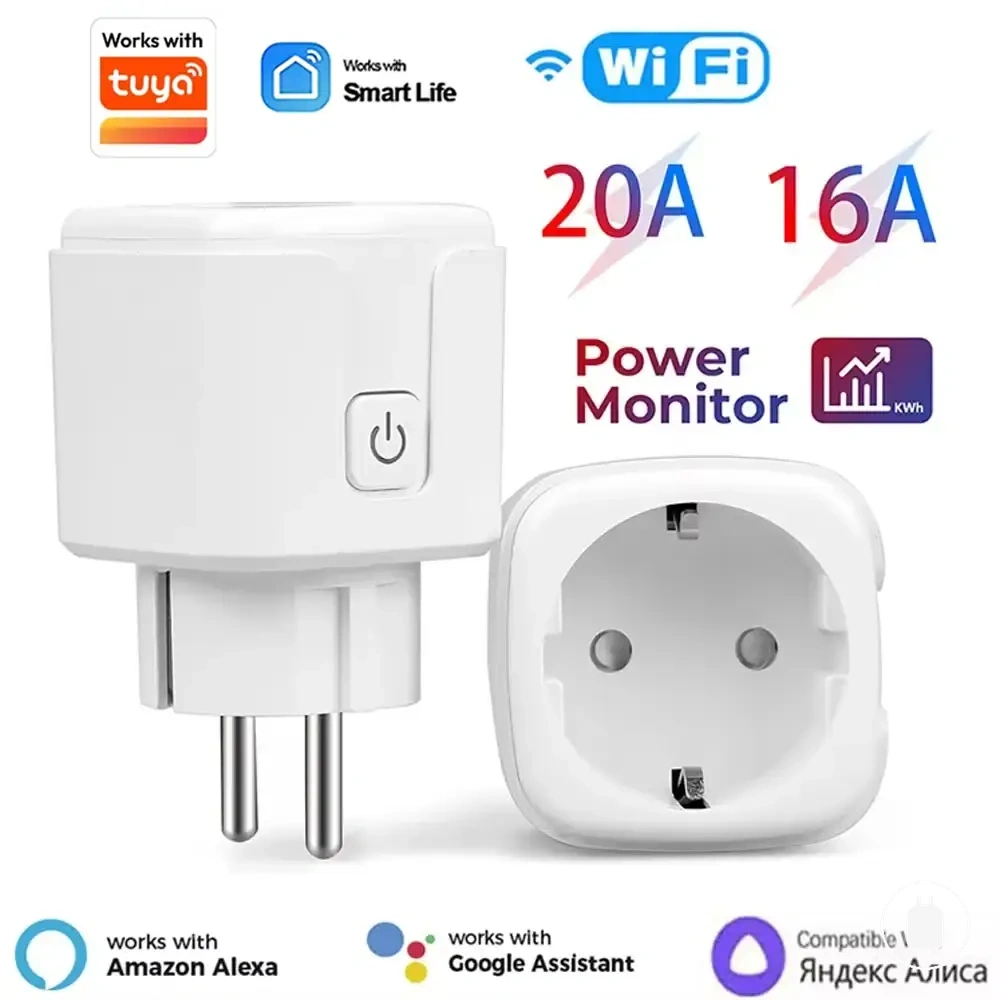
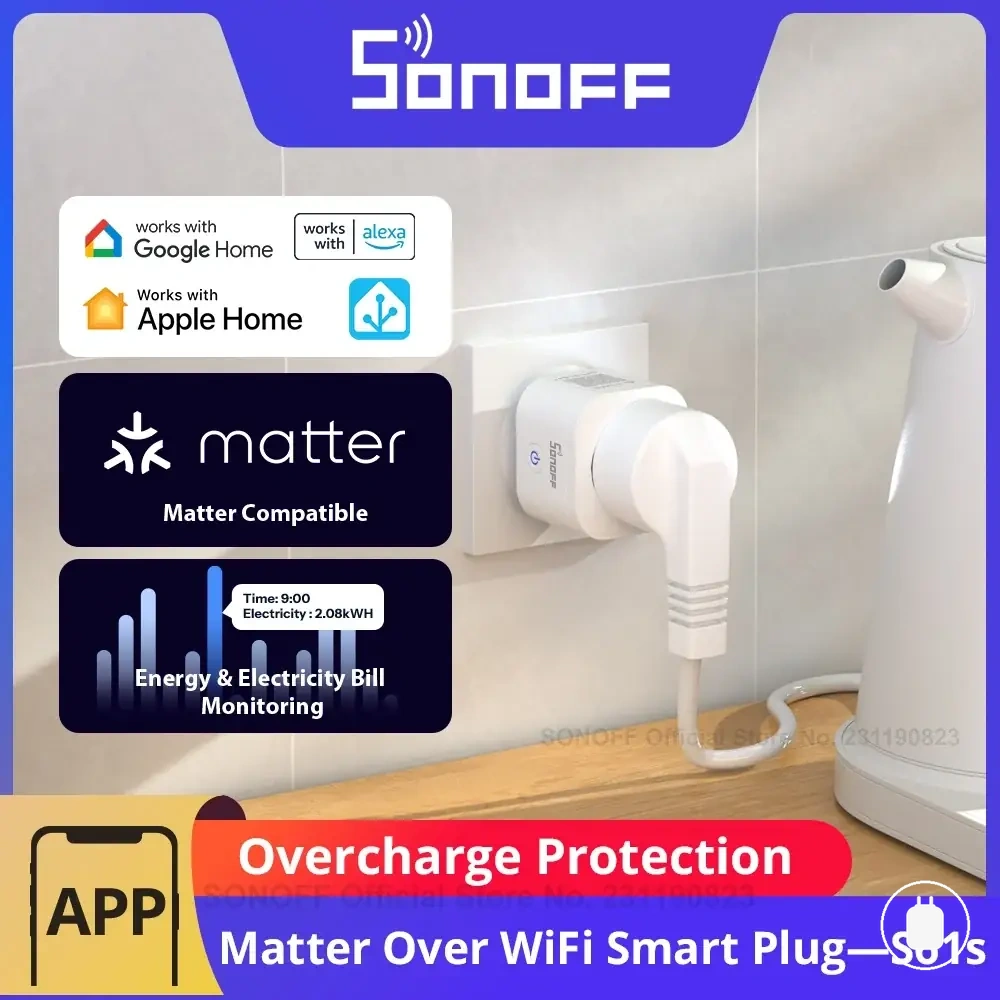
Here are product examples that may make comparison easier. Before buying, always review the compatibility criteria, essential features, and product details.
| Use case | Required capability | Better-fit plug type | Decision note |
|---|---|---|---|
| Simple automation | Basic control, schedules, and remote switching. | Regular smart plug | Suitable when automation is the main goal and energy tracking is not required. |
| Energy tracking | Usage data and consumption evidence. | Energy monitoring smart plug | Useful when monitoring information can support appliance decisions. |
| Appliance comparison | Monitoring capability and usage visibility. | Energy monitoring smart plug | Relevant when comparing appliance use is part of the decision process. |
| App reporting | Reporting features and supported app functions. | Energy monitoring smart plug | Value depends on available reporting support and the user's information needs. |
| Budget sensitivity | Required features without unnecessary additions. | Depends on use case | The suitable option depends on whether monitoring provides enough additional value. |
| Safety constraints | Suitable load conditions and compatibility requirements. | Depends on appliance requirements | Load suitability and safety conditions remain part of the decision. |